
Berliner Sportpalast (Berlin Sportpalast)
Early 20th‑century multi‑purpose arena in Schöneberg, Berlin (built 1910, demolished 1973); venue for sports, entertainment and political rallies, notably Goebbels' 1943 'Total War' speech.
Overview
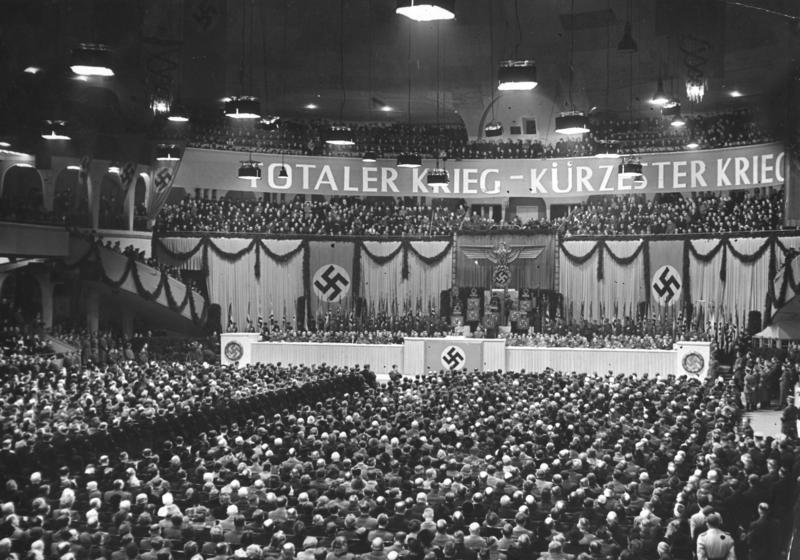
The Berliner Sportpalast was a large indoor arena in the Schöneberg district of Berlin, erected in 1910 and torn down in 1973. For much of the mid-20th century it served as one of the city's main halls for mass gatherings, combining space for sporting events with facilities for concerts, exhibitions and political meetings. At its peak the venue could accommodate roughly 14,000 spectators and for some years was among the biggest dedicated meeting halls in Berlin.
Image gallery
4 Images


Design and characteristics
The Sportpalast was a flexible, single‑volume hall designed to host a wide range of indoor activities. Its interior layout allowed for a central open floor with seating or standing areas around it, which made it suitable for winter sports exhibitions, large rallies and entertainment events. The building's adaptable plan and large capacity were key to its prominence in Berlin's public life.
History and significance
Opened in 1910, the Sportpalast became a focal point for public assemblies through the interwar period and into World War II. It gained particular historical notoriety as the site of a speech by Joseph Goebbels in February 1943 that rallied support for the so‑called "Total War" effort; that address is one of the venue's best-known associations in 20th‑century history. After the war the building continued to be used for non‑military communal events before changing fortunes and eventual demolition in 1973.
Uses and examples
The hall hosted a variety of activities over its life span, including:
- Indoor winter sport displays and competitions, where temporary ice or arenas could be fitted.
- Large political rallies and public addresses, including the famous Goebbels speech linked as a historical reference here.
- Concerts, exhibitions and cultural events that required a capacious, centrally located venue.
Legacy and location
Although the building no longer exists, the Sportpalast remains a reference point in accounts of Berlin's urban and political history. Its site was in Schöneberg at approximately the following map coordinates: 52°29′41″N 13°21′33″E. The Sportpalast illustrates how multipurpose indoor arenas shaped civic life in major European cities during the 20th century, serving both everyday leisure and extraordinary political moments.
Tags
Related articles
Author
AlegsaOnline.com Berliner Sportpalast (Berlin Sportpalast) Leandro Alegsa
URL: https://en.alegsaonline.com/art/10752