
Wels-Land District (Bezirk Wels-Land)
Wels-Land is a rural–suburban district in Upper Austria surrounding the statutory city of Wels. It comprises 24 municipalities and combines agriculture, small industry and commuter towns.
Wels-Land is an administrative district in the Austrian state Upper Austria (Oberösterreich) within the country of Austria. The district occupies territory around the independent statutory city of Wels and is primarily composed of smaller towns, market towns and rural communities. It functions as a fringe region linking the urban centre of Wels with surrounding countryside.
Image gallery
1 Image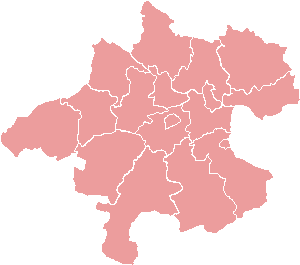
Geography and settlement
The landscape of the district is varied: low rolling hills, agricultural plains and river valleys that feed into the Traun and its tributaries. Settlement patterns combine compact market towns and dispersed village hamlets. Much of the district serves as commuter country for people working in Wels or the nearby regional capital, with a mix of residential, agricultural and light-industrial land uses.
Municipal structure
Administratively the district covers 24 municipalities. These include a range of community types:
- Market towns with historic cores and local services.
- Smaller rural municipalities dominated by agriculture.
- Commuter towns that have grown in recent decades due to proximity to Wels.
History and development
The area has medieval roots centered on trade routes and river crossings. Over centuries it developed an agricultural base and a number of local craft and market centres. In the 19th and 20th centuries industrialisation in nearby urban centres changed commuting and land use patterns, producing suburbanisation around Wels while many villages retained traditional farming activities.
Economy and transport
The district economy blends agriculture (crop cultivation, dairy farming), small and medium-sized enterprises, and service activities that serve local needs. Good road and rail connections link the district with Wels and larger cities, making it a practical location for light industry and logistics as well as for residents commuting to urban jobs.
Distinctive features
Wels-Land is notable for surrounding but not including the city of Wels, creating an administrative and functional relationship between a central statutory city and its rural hinterland. The district balances preservation of agricultural landscapes with pressures from suburban growth, and it hosts local cultural traditions, markets and community events that reflect Upper Austrian rural life.
Related articles
Author
AlegsaOnline.com Wels-Land District (Bezirk Wels-Land) Leandro Alegsa
URL: https://en.alegsaonline.com/art/107229