
Western diamondback rattlesnake (Crotalus atrox)
A venomous pit viper native to the southwestern United States and Mexico, known for its distinctive diamond pattern, audible rattle, role in ecosystems, and frequent involvement in human snakebite incidents.
Overview
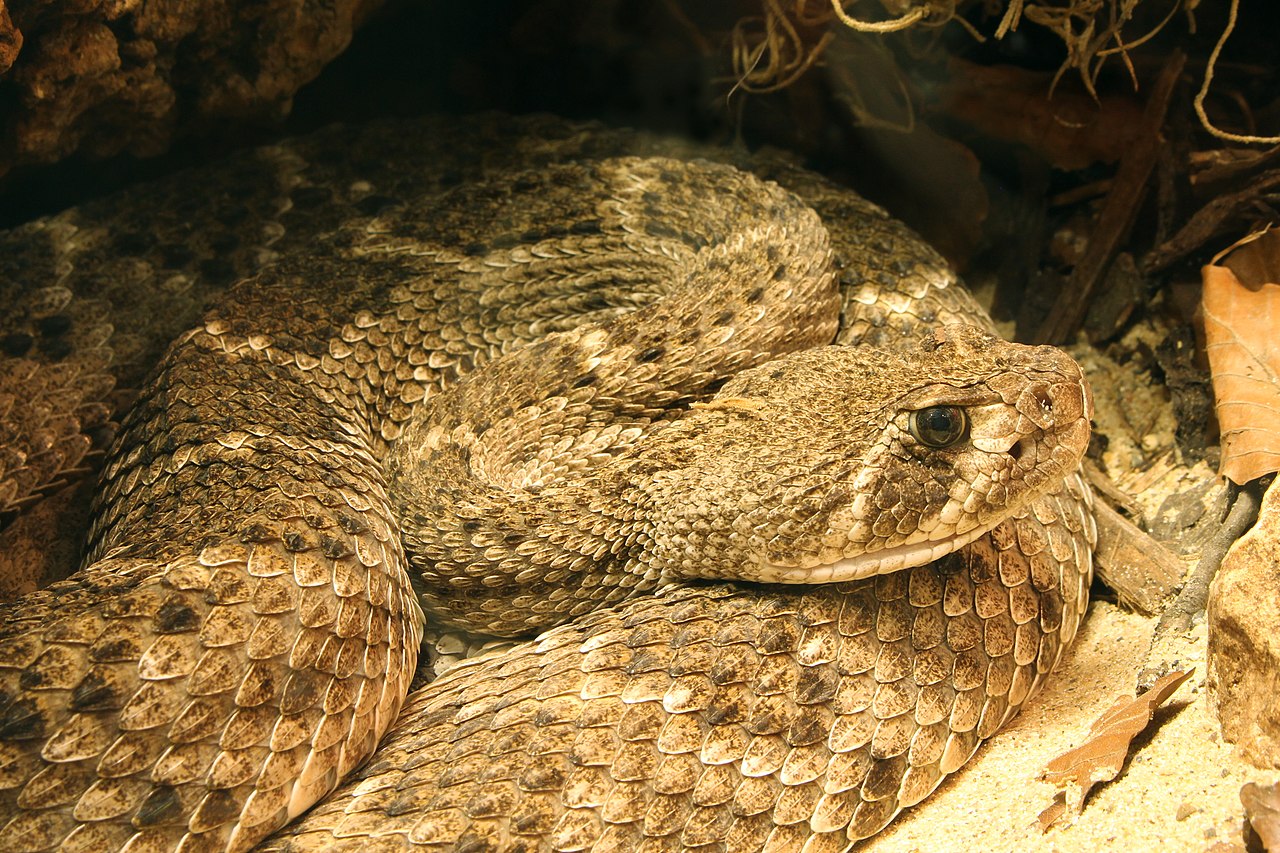
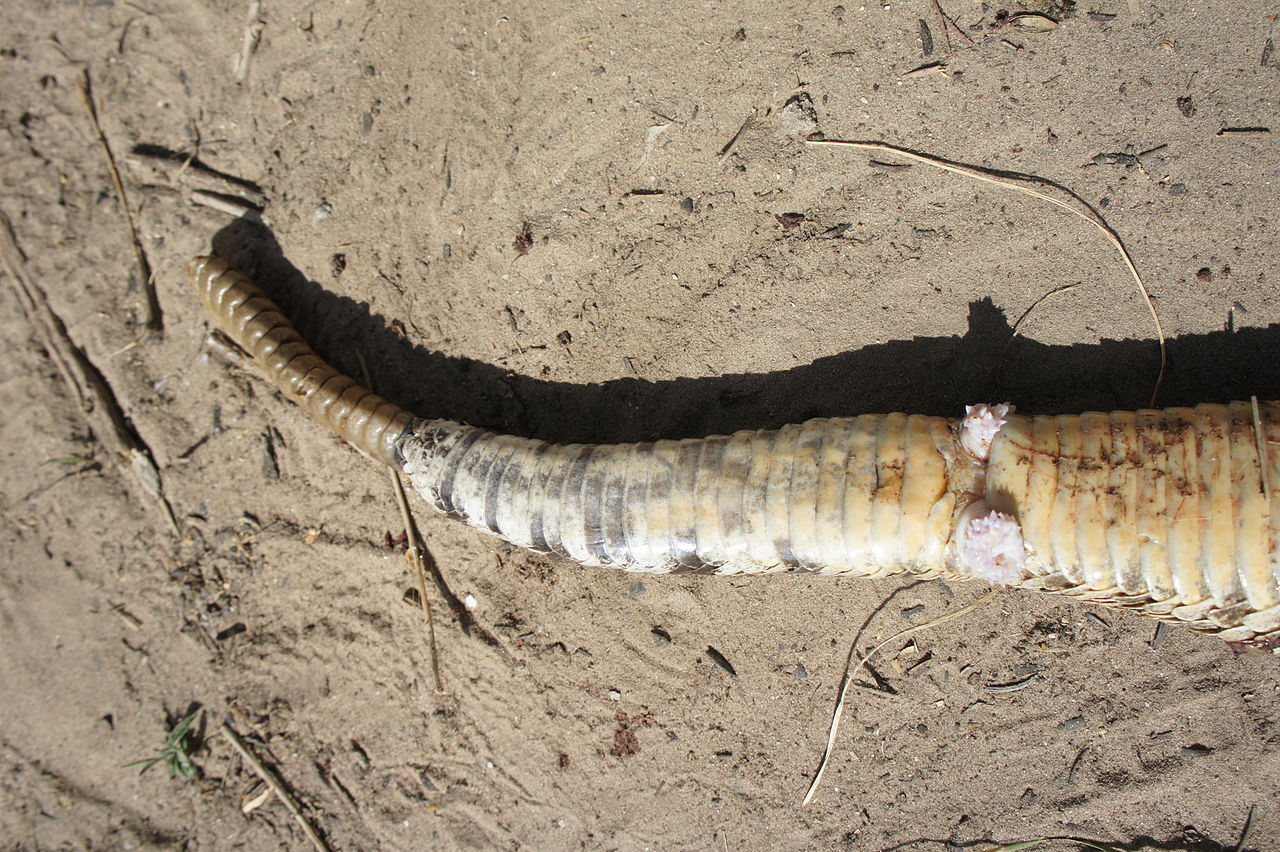
The western diamondback rattlesnake (Crotalus atrox) is a large venomous pit viper native to the southwestern United States and much of northern and central Mexico. It occupies arid and semi-arid landscapes, including deserts, scrublands, grasslands, and rocky canyons. The species is well known for the series of dark diamond-shaped markings along its back and for the segmented rattle at the tip of its tail, which produces a characteristic buzzing warning when vibrated.
Image gallery
10 Images





Identification and biology
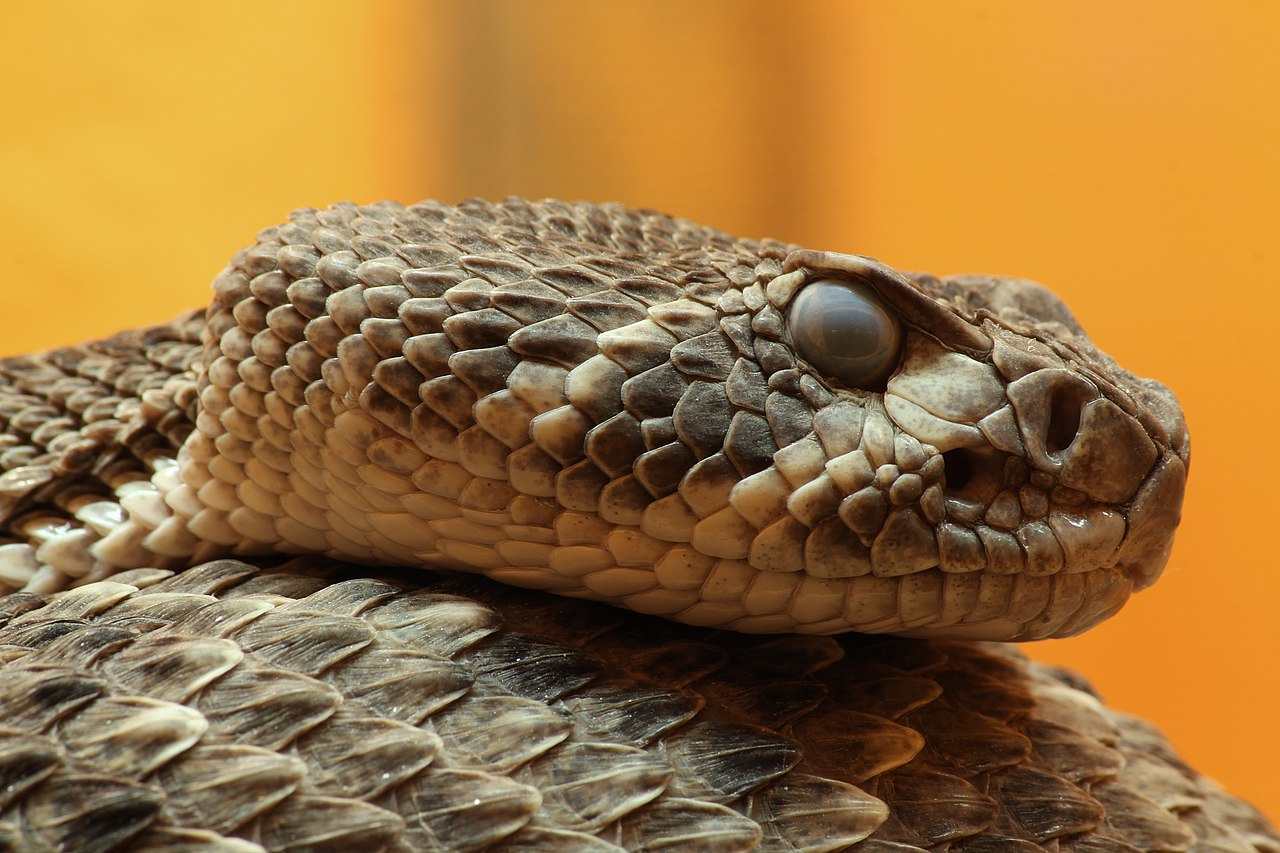
Adults are robust, with coloration that ranges from gray-brown to reddish-brown; light diamond centers are edged in darker scales. Key characteristics include heat-sensitive facial pits between the eyes and nostrils, a broad triangular head, and keeled scales. The snake is an ambush predator that locates warm-bodied prey by sight, smell and infrared-sensing pits. Its diet mainly consists of small mammals (especially rodents), birds, and occasionally lizards and other reptiles. Like other rattlesnakes it is ovoviviparous, giving birth to live young rather than laying eggs.
Venom and medical importance
The venom of Crotalus atrox contains a complex mixture of enzymes and toxins that typically produce local tissue damage, swelling, bleeding and, in severe cases, systemic effects. Bites can be medically significant; across its range this species accounts for a substantial share of venomous snakebite incidents. Prompt medical evaluation and, when indicated, antivenom treatment greatly improve outcomes. Avoidance and education are primary means of reducing bite risk.
Behavior and ecology
Western diamondbacks are primarily crepuscular to nocturnal in hot weather and more active by day in cooler seasons. They use camouflage and stillness to ambush prey and will employ their rattle as a warning to deter large animals. As mid-level predators they play an important role in controlling rodent populations, which has indirect benefits for agriculture and human health by limiting crop pests and disease reservoirs.
Range, conservation and human interactions
- Range: Widely distributed across the southwestern United States into much of Mexico; see range resources here.
- Conservation: Not generally considered globally threatened, but local populations can be affected by habitat loss, road mortality and deliberate killing.
- Human interaction: Because of its abundance near rural and suburban areas, it is frequently involved in snakebite reports; education, careful habitat management and respect for snakes reduce negative encounters. Further species information is available here.
Notable facts and distinctions
The name Crotalus comes from the Greek for "rattle," and the western diamondback is one of the most recognizable rattlesnake species. There are currently no officially recognized subspecies of Crotalus atrox. Its combination of size, distinctive pattern and audible warning makes it a commonly cited example in discussions about venomous snakes of North America.
Questions and answers
Q: What is the western diamondback rattlesnake?
A: The western diamondback rattlesnake is a venomous species of rattlesnake found in the deserts of the United States of America and Mexico.
Q: What is the responsibility of the western diamondback rattlesnake?
A: The western diamondback rattlesnake is responsible for most of the snakebites in northern Mexico and the U.S.A.
Q: Are there any subspecies of the western diamondback rattlesnake?
A: No, there are currently no subspecies found of the western diamondback rattlesnake.
Q: Where can you find the western diamondback rattlesnake?
A: The western diamondback rattlesnake can be found in the deserts of the United States of America and Mexico.
Q: Is the western diamondback rattlesnake venomous?
A: Yes, the western diamondback rattlesnake is venomous.
Q: Why does the western diamondback rattlesnake have a rattle?
A: The western diamondback rattlesnake has a rattle on its tail that makes a distinctive sound when shaken as a warning signal to potential predators or threats.
Q: Is the western diamondback rattlesnake dangerous to humans?
A: Yes, the western diamondback rattlesnake is dangerous to humans and can cause serious harm or death if bitten.
Related articles
Author
AlegsaOnline.com Western diamondback rattlesnake (Crotalus atrox) Leandro Alegsa
URL: https://en.alegsaonline.com/art/107504