
Waterloo station (London)
Major central London railway terminus in Lambeth, serving southwest England and connecting with the Underground. Owned by Network Rail, located near the South Bank in Travelcard Zone 1.
Overview
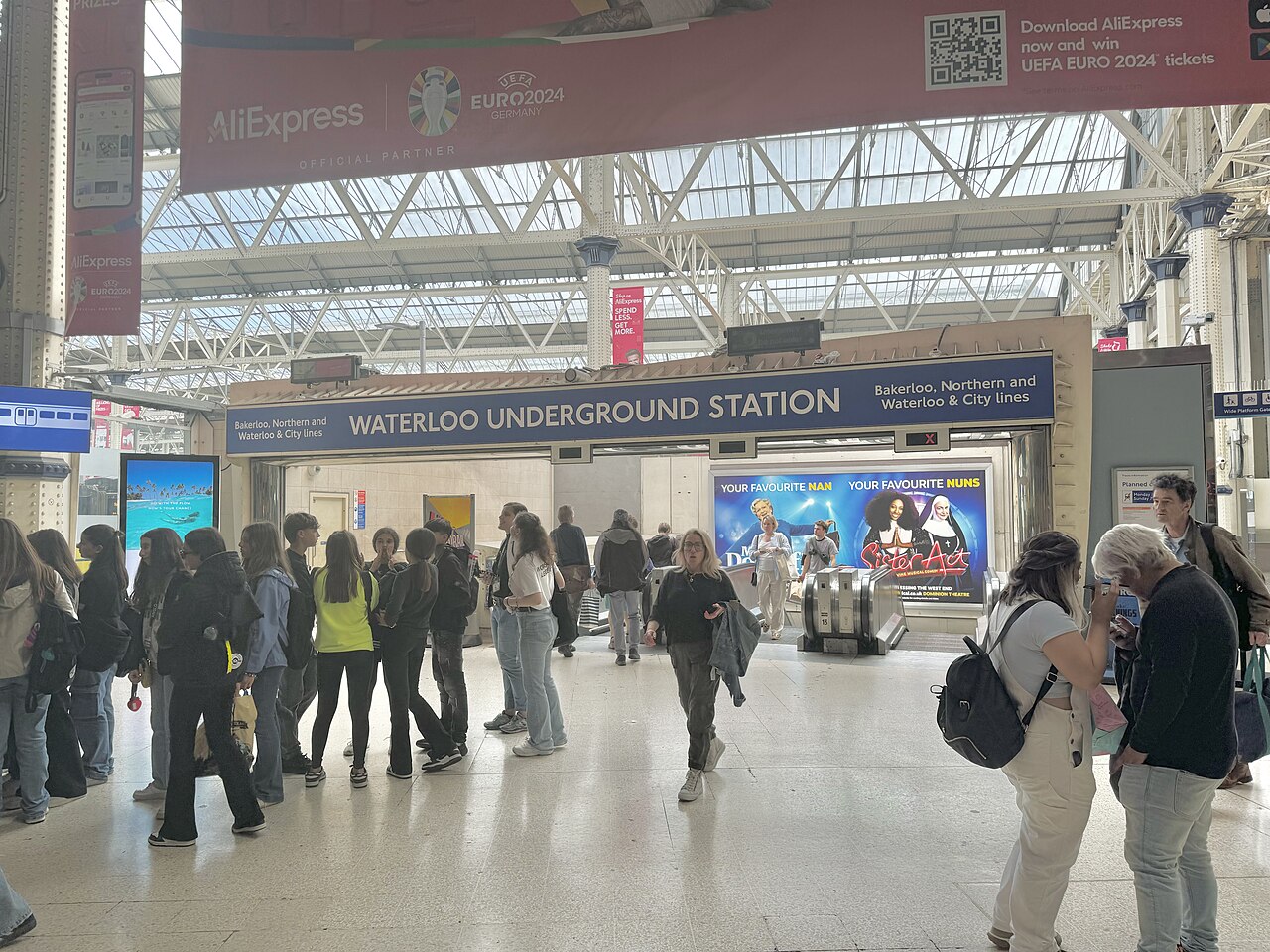
Waterloo station, commonly called London Waterloo, is one of the principal railway termini in central London. It sits close to the South Bank on the south side of the River Thames in the London Borough of Lambeth. The station is in Travelcard Zone 1 and is owned and managed by Network Rail. Waterloo handles a large volume of commuter, regional and long-distance services, and interchanges directly with multiple London Underground lines.
Image gallery
10 Images



Characteristics and layout
The station is a terminus with a wide concourse and a large set of platforms (commonly numbered up to 24). Platforms serve short-distance suburban routes as well as longer regional services toward south-west England. The site includes ticketing facilities, retail and passenger amenities, and a multi-level connection to the adjacent Underground station.
History and development
Waterloo originated in the mid-19th century and developed as the main London terminus for railways serving the south-west. The complex has been rebuilt and enlarged several times to increase capacity and modernize passenger spaces. In the 1990s a section known as Waterloo International was added to handle international services; that operation later moved and the platforms were reconfigured for domestic use.
Services, connections and uses
Regular services run from Waterloo to suburban London suburbs and towns across Surrey, Hampshire and coastal destinations to the south-west. The adjacent Underground interchange provides Bakerloo, Northern, Jubilee and Waterloo & City line connections, making the station a major multimodal hub. Local bus routes and river piers on the South Bank further expand onward travel options.
Notable facts and distinctions
- Historically among the busiest stations in the United Kingdom by passenger entries and exits.
- Has been repeatedly redeveloped to meet commuter demand and improve passenger circulation.
- Its riverside location places it near cultural institutions and walking routes on the South Bank.
For further practical information such as live departures, platform layouts and accessibility, official sources and station maps are recommended.
Related articles
Author
AlegsaOnline.com Waterloo station (London) Leandro Alegsa
URL: https://en.alegsaonline.com/art/106852
Sources
- orr.gov.uk : "Station usage estimates"
- networkrail.co.uk : "Stations run by Network Rail"
- nationalrail.co.uk : "Station Codes"