
Wat Tyler — leader of the 1381 Peasants' Revolt
Wat Tyler led the English Peasants' Revolt in 1381. He became a symbol of popular resistance after his death during a confrontation with King Richard II's party at Smithfield.
Overview
Wat Tyler (traditionally associated with c.1341–15 June 1381) emerged as a principal leader of the English Peasants' Revolt of 1381. He is best known for leading a large popular march on the capital and for his death during a tense meeting with the young King Richard II at Smithfield. Contemporary records are fragmentary, and many details of his life and origins remain uncertain.
Image gallery
3 Images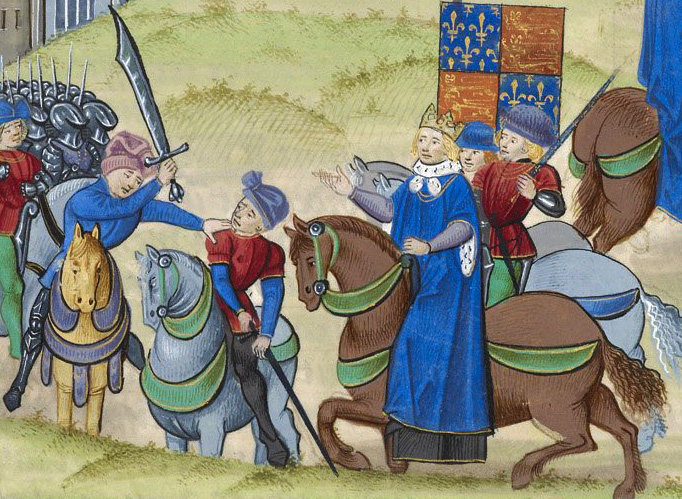


Background and causes
The uprising that brought Tyler to prominence grew from economic and social pressures in late 14th-century England: labour shortages following the Black Death, rigid feudal obligations, and the imposition of new and unpopular taxes. Rural labourers, artisans and townspeople combined forces to demand relief from feudal impositions and the repeal of harsh taxation. The movement drew particular strength in southeastern counties before converging on London.
Role in the revolt and actions
Tyler appears in surviving accounts as a determined and comparatively pragmatic leader who negotiated, set demands, and attempted to direct the crowd. The rebels entered London, freed prisoners, destroyed tax records and targeted royal officials they held responsible for grievance. Rebel demands varied by location but commonly included an end to serfdom, fair rents, and the removal of corrupt royal officers.
Meeting at Smithfield and death
The revolt reached a dramatic climax when Tyler and a delegation met the king near Smithfield. The city's establishment, including William Walworth, then serving as mayor, tried to control the encounter. According to chroniclers, Walworth struck Tyler during the confrontation and, in the confusion that followed, one of the king's squires delivered a fatal wound. Tyler died on 15 June 1381, and the rebels' central organisation rapidly disintegrated.
Aftermath and legacy
In the immediate aftermath the crown made concessions that were later revoked; many rebels were arrested and punished. Over the centuries Wat Tyler has been remembered variously as a proto-democratic hero, a social bandit and a disruptive rioter. Historians continue to debate how fully the revolt represented broad social change versus a short-lived popular protest. Tyler's death at Smithfield remains the defining moment that fixed his place in English political memory.
- Key points: popular grievances, mass march on London, Smithfield confrontation.
- Notable persons involved: Wat Tyler, Mayor William Walworth, King Richard II.
- Primary sources are uneven and often contradictory, so many details are cautious reconstructions.
Related articles
Author
AlegsaOnline.com Wat Tyler — leader of the 1381 Peasants' Revolt Leandro Alegsa
URL: https://en.alegsaonline.com/art/106759
Sources
- historyguide.org : historyguide.org/ancient/wat_tyler.html