
War (Edwin Starr song)
A 1970 Motown protest single written by Norman Whitfield and Barrett Strong, popularized by Edwin Starr as a blunt anti–Vietnam War anthem and enduring protest classic.
Overview
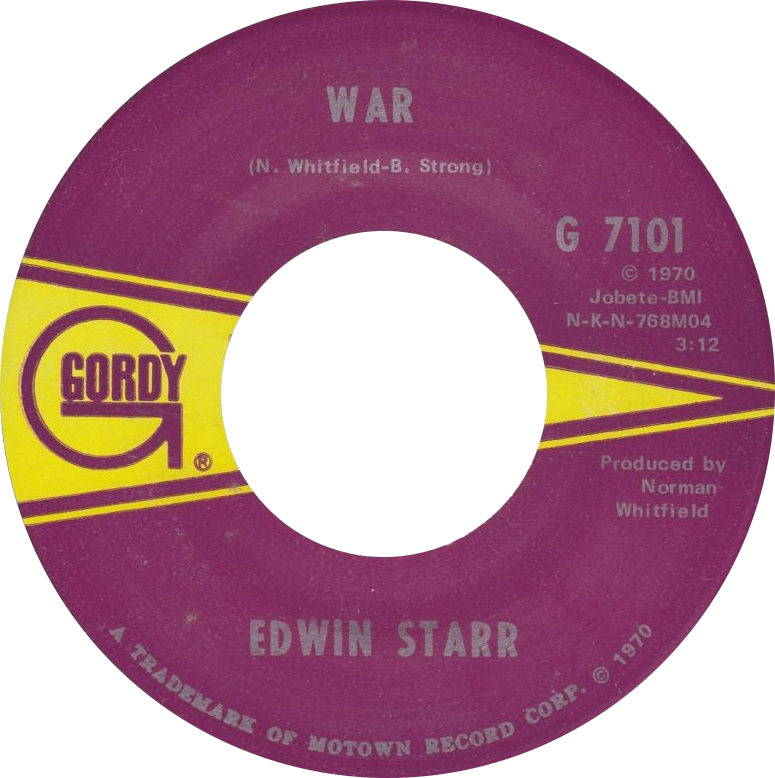
"War" is a hard‑hitting counterculture anthem and protest song written in 1969 by Norman Whitfield and Barrett Strong. Initially recorded within the Motown system, it became widely associated with the civil unrest and anti‑war sentiment of the late 1960s and early 1970s. The composition was released by Motown in 1970 and is best known in the version sung by Edwin Starr, an interpretation that made the song a defining public statement against the Vietnam War. It is often cited as a prominent example of a counterculture era record and a straight‑forward protest song.
Image gallery
4 Images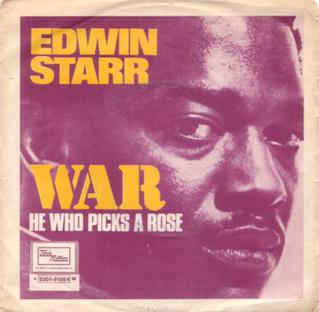
Recording and release
The song was written and produced by Whitfield and Strong for the Motown roster. Motown originally recorded a version with The Temptations, but label executives felt the political tone and raw delivery were better suited to a different release. Whitfield directed a new session that featured Edwin Starr's impassioned lead vocal, and that single version was issued to radio and retail in 1970. The arrangement emphasizes driving drums, punchy horns, and a call‑and‑response vocal structure that underscored the song's blunt message.
Musical characteristics
- Structure: concise verse–chorus form with a memorable, repeated refrain.
- Style: a blend of soul, funk and gospel intensity that heightens the lyrical protest.
- Vocal delivery: passionate and confrontational, designed to communicate moral urgency.
Reception and legacy
Edwin Starr's recording became a major hit and is widely regarded as one of Motown's most direct political statements. Beyond commercial success, the song entered public discourse as an emblem of opposition to war and has been used in political rallies, documentary soundtracks and cultural retrospectives. Its stark refrain—repeating a question about war's value—has made it a lasting shorthand for anti‑war sentiment in popular culture.
Notable facts and covers
Several artists and groups have covered or referenced the song, and it continues to appear in film and television to evoke its era or to comment on conflict. While rooted in the specific context of the Vietnam era, its lyrical simplicity and emotional directness have helped it remain relevant to subsequent generations responding to violence and military engagement.
Further reading
For more on the song's production, chart history and cultural role, see materials on Motown's late‑1960s output and retrospectives of protest music from the period. Additional resources include biographies of Whitfield and Strong and collected histories of protest songs in American popular music.
Related articles
Author
AlegsaOnline.com War (Edwin Starr song) Leandro Alegsa
URL: https://en.alegsaonline.com/art/106485