
Walter Jackson Freeman III — American theoretical neuroscientist and neurobiologist
American neurobiologist and theoretical neuroscientist known for EEG studies of the olfactory system and models of how brain activity generates meaning; Professor Emeritus at UC Berkeley.
Walter Jackson Freeman III (January 30, 1927 – April 24, 2016) was an American biologist and theoretical neuroscientist whose career combined experimental neurophysiology with conceptual work on brain dynamics. Born in Washington, D.C., Freeman spent most of his professional life at the University of California, Berkeley, where he became Professor Emeritus of Neurobiology. He is best known for long-term experimental programs that examined how coordinated patterns of brain activity relate to perception and meaning.
Image gallery
1 Image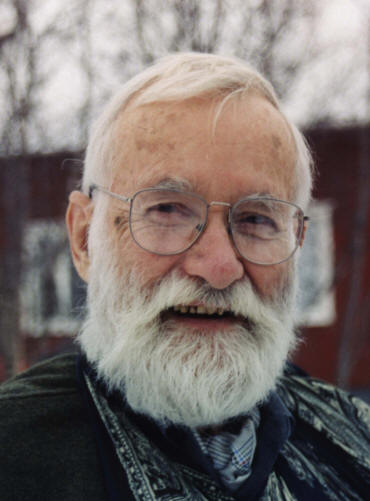
Research focus and methods
Freeman carried out extensive laboratory work using animals—especially rabbits—to record electrical activity from the olfactory system. His experiments relied heavily on techniques such as electroencephalography and local field potential recordings to monitor ensemble neural activity. Many reports emphasize how sensory input to the olfactory bulb produces transient, spatially distributed field patterns that evolve over time.
Concepts and theoretical contributions
Beyond descriptive physiology, Freeman argued that brains do not passively represent stimuli but actively construct interpretations that carry meaning. His theoretical writing and modeling treated neural tissue as a nonlinear dynamical system and investigated how large-scale collective activity can generate meaning through phase transitions, pattern formation, and state switching. These ideas influenced later work on neural populations, pattern recognition, and cognitive dynamics.
Selected approaches and examples
- Animal model: experiments primarily on rabbits to study olfactory processing.
- Techniques: multisite field recordings and EEG-style analyses (electroencephalography).
- Interpretation: emphasis on emergent, collective properties rather than single-unit coding.
Freeman combined laboratory observation with mathematical and conceptual models, producing a body of work that bridged physiology, theory and philosophy of mind. Colleagues and students remember him for his insistence on linking precise measurement with broad theoretical questions about perception and cognition.
He died at his home in Berkeley, California on April 24, 2016, of pulmonary fibrosis, aged 89. His career is often cited in discussions of dynamical systems approaches to neuroscience and the study of how population-level neural dynamics relate to behavior and experience.
Related articles
Author
AlegsaOnline.com Walter Jackson Freeman III — American theoretical neuroscientist and neurobiologist Leandro Alegsa
URL: https://en.alegsaonline.com/art/106369
Sources
- books.google.com : Soul, psyche, brain: new directions in the study of religion and brain-mind science
- news.berkeley.edu : "Neurophysiologist and philosopher Walter Freeman dies at 89"