
Walter Lassally — Cinematographer of Free Cinema and Zorba the Greek
German-born British cinematographer Walter Lassally (1926–2017) was a key figure in postwar British realism and won the 1964 Academy Award for Zorba the Greek for his location-based, naturalistic camerawork.
Walter Lassally (18 December 1926 – 23 October 2017) was a German-born cinematographer who made his career primarily in Britain and later lived much of his life in Greece. Born in Berlin, he left Germany for England in 1939 and became closely associated with mid-20th-century movements that emphasized realism in film. He received wide recognition when he won the Academy Award for Best Cinematography in 1964 for the film Zorba the Greek, directed by Michael Cacoyannis.
Image gallery
2 Images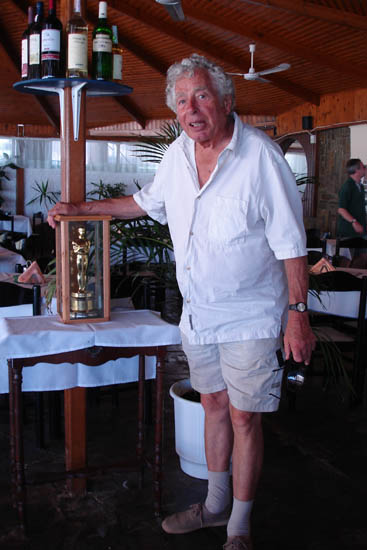
Artistic approach and technical characteristics
Lassally’s work is frequently described as naturalistic and documentary-influenced. He favored on-location shooting and used available light or subtle artificial reinforcement to preserve a scene’s atmosphere. His camera movement tended toward fluid, unobtrusive techniques that supported performance and environment rather than calling attention to the camera itself. These qualities helped create an intimate, lived-in sense of space on screen.
Career context and influence
In the 1950s Lassally was associated with the Free Cinema movement, a loose group of British filmmakers and critics who promoted personal, low-budget documentaries and dramas. That sensibility fed into the British New Wave of the late 1950s and early 1960s, which brought working-class stories and gritty realism to international attention. Lassally’s eye for texture, tone, and truthful lighting made him a sought-after collaborator for directors working in that realist mode.
Notable work and legacy
- Zorba the Greek: The film’s sun-drenched island vistas, lively dance sequences and human-scale interiors benefited from Lassally’s skill at balancing color, shadow and spontaneous movement.
- Documentary sensibility: His background in documentary-style production influenced many dramatic films that sought immediacy and authenticity.
- Teaching and influence: Through mentorship and example, his techniques influenced a generation of cinematographers interested in natural light and location work.
Later in life Lassally lived in Greece and remained engaged with filmmaking and photographic practice. He died on 23 October 2017 in a hospital on the island of Crete, having suffered complications after surgery; the hospital is reported as the place of his death via local sources (Crete), and his life and work are often discussed in the context of both British and Greek cinema. He was born in Berlin (birthplace) and his career bridged several national film cultures, reflecting a transnational contribution to mid-century cinematic realism.
For further reading on Lassally’s cinematography and the movements he worked within, consult film history surveys and technical studies of British postwar cinema (related resources).
Related articles
Author
AlegsaOnline.com Walter Lassally — Cinematographer of Free Cinema and Zorba the Greek Leandro Alegsa
URL: https://en.alegsaonline.com/art/106373
Sources
- filmreference.com : "Walter Lassally Biography (1926-)"
- flashnews.gr : "Συλλυπητήρια Βάμβουκα για την απώλεια κινηματογραφιστή Walter Lassaly"