
Walker Lake — saline terminal lake in Nevada
Walker Lake is an endorheic (closed-basin) saline lake in western Nevada fed by the Walker River. It has cultural, ecological, and recreational importance but has declined from reduced inflows and rising salinity.
Overview
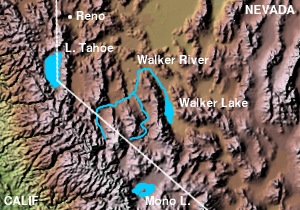
Walker Lake is a natural saline lake in the Great Basin region of the western United States. Located in Nevada, it is fed primarily by the Walker River and has no outlet, making it an endorheic or terminal lake. Because evaporation is the only way water leaves the basin, dissolved salts concentrate over time and the lake’s chemistry and level are sensitive to upstream water use and climate.
Image gallery
5 Images


Physical characteristics
The lake occupies a long, shallow basin rimmed by desert and mountain terrain. Its shorelines and water depth have varied substantially with seasonal flows and multi-year changes in river input. The saline conditions historically supported distinct aquatic communities adapted to rising salt concentrations, and the lake’s size and salinity have been key factors shaping its ecology.
History and cultural significance
Walker Lake carries significance for Indigenous peoples of the region, including the Northern Paiute, who called it Agai Pah, often translated as “trout lake.” European-American explorers later named it after Joseph R. Walker, a 19th-century mountain man and guide. For centuries it supplied fish, waterfowl, and other resources to people living around the basin.
Ecology, threats and restoration
Reduced inflows from agricultural diversions and changes in climate have lowered the lake level and increased salinity, stressing or eliminating native fish populations once common there. The decline has also affected waterfowl and shorebirds that use the lake as habitat. In response, federal, state and tribal entities have pursued a variety of measures—legal settlements, water acquisitions, and habitat projects—aimed at restoring flows, improving water quality and stabilizing the ecosystem.
Uses and recreation
Despite environmental challenges, Walker Lake remains a location for recreation such as shore fishing, boating and birdwatching, and it continues to draw visitors for scenic value and outdoor activities. Ongoing conservation work seeks to balance agricultural water needs with ecological restoration so the lake can support both wildlife and people.
Key facts and distinctions
- Type: saline, closed-basin lake (salt lake).
- Hydrology: terminal—receives inflow from the Walker River with no outflow.
- Importance: cultural site for Indigenous communities and habitat for migratory birds.
- Current focus: restoration and careful water management to reverse ecological decline.
Walker Lake exemplifies many closed-basin lakes in arid regions: its condition reflects upstream water use and climate variability, and it has become a focal point for cooperative conservation efforts that involve local communities, tribes, and government agencies.
Related articles
Author
AlegsaOnline.com Walker Lake — saline terminal lake in Nevada Leandro Alegsa
URL: https://en.alegsaonline.com/art/106251