
Waldorf Astoria New York
Historic luxury hotel in Midtown Manhattan, opened in 1931 at 301 Park Avenue; celebrated for its Art Deco architecture, landmark status, private rail platform and role in American social and political life.
Overview
The Waldorf Astoria New York is a historically significant luxury hotel in Midtown Manhattan, New York City. The current tower, at 301 Park Avenue, is a 47‑story, approximately 625‑foot building completed in 1931 and noted for its Art Deco styling. It succeeded an earlier, famous hotel complex on Fifth Avenue that once occupied the site later used by the Empire State Building. Operated in recent decades under the Hilton umbrella, the property has been identified with high society, diplomacy, and major social events for much of the 20th century.
Image gallery
10 Images


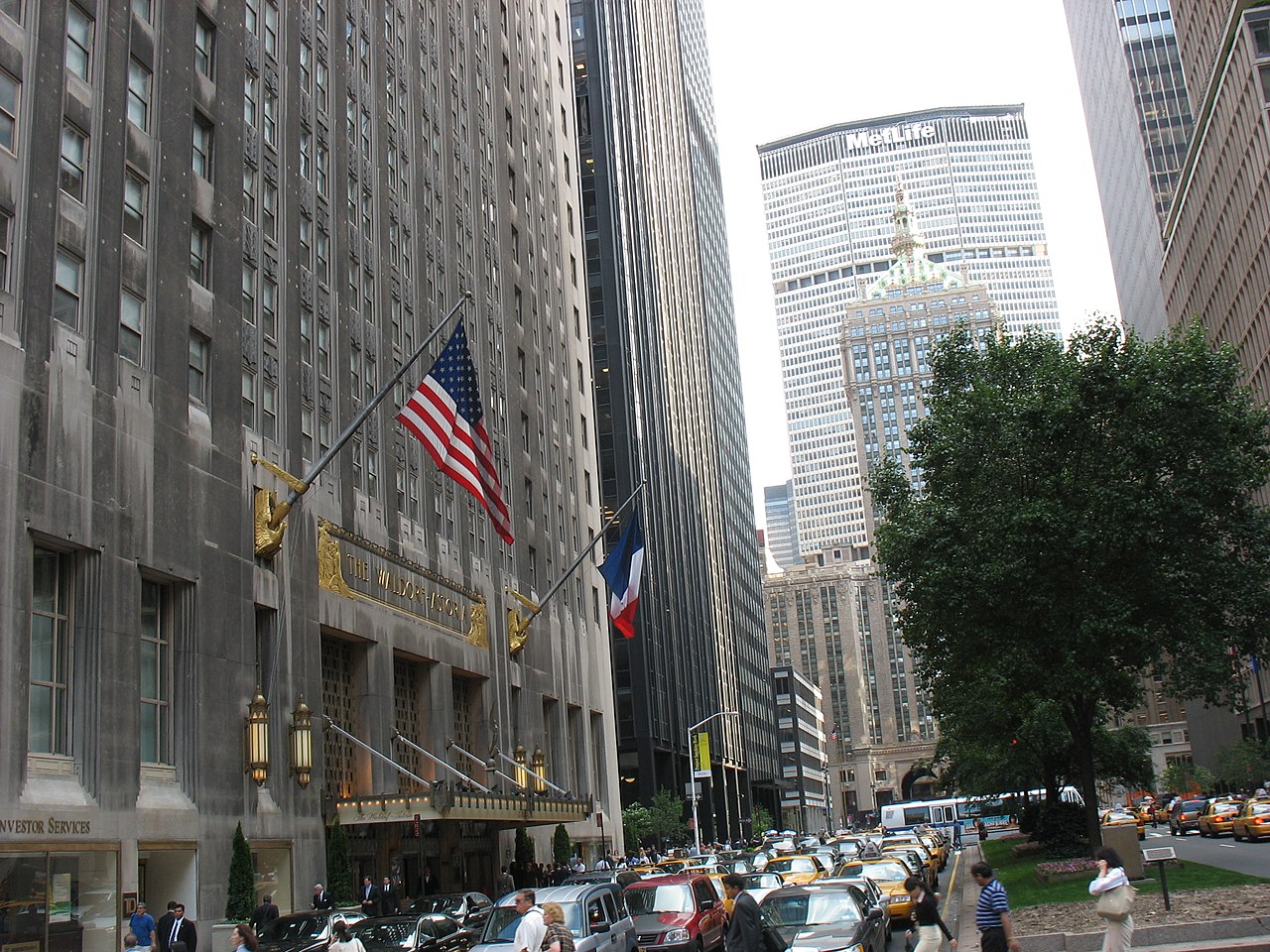


Architecture and public spaces
Designed by the New York firm Schultze & Weaver, the 1931 structure was intended as a modern, self‑contained hotel with grand public rooms and a range of guest amenities. The main lobby and its adjacent shops and salons were created to evoke the period character of the era while providing retail and service functions. Upper floors include a distinct, exclusive section often described as a "hotel within a hotel," historically known as the Waldorf Towers, which offers larger suites and residential‑style accommodations.
Facilities and notable features
- Multiple restaurants and dining rooms blending American and European culinary traditions, historically including formal dining options and private banquet spaces.
- Ballrooms and meeting rooms used for dinners, charity balls, conferences, and state functions.
- Retail shops, beauty and grooming services accessible from the main lobby.
- A private rail platform, part of the access network serving Grand Central Terminal, built for discreet arrival and departure; it was used by prominent figures such as Franklin D. Roosevelt and others including military and political leaders like Douglas MacArthur.
History and development
The name "Waldorf Astoria" reflects the merger of two earlier hotels, the Waldorf and the Astoria, that were prominent in late 19th and early 20th century New York. In 1931, the company opened the present Park Avenue building to replace the old Fifth Avenue complex, consolidating the hotel's reputation as a center of luxury hospitality. Over the decades the Waldorf Astoria hosted state visitors, presidents, entertainers and private clients and became associated with many social customs and signature dishes credited to grand hotel cuisine.
Significance and contemporary status
The hotel is widely recognized for its architectural character, its place in New York's social history, and several distinctive operational features such as the Towers suites and the private rail platform. In recent years the property underwent extensive renovation and partial conversion to residential use, part of a broader trend in which historic large hotels adapt to new market conditions while attempting to preserve key public interiors and landmark qualities. The Waldorf Astoria continues to be cited in discussions of 20th‑century hospitality design and the cultural life of Manhattan.
Why it matters
The Waldorf Astoria remains a touchstone in accounts of American urban luxury: an address associated with diplomacy, celebrity, and high‑profile gatherings. Its surviving public rooms, the legacy of the original Waldorf and Astoria hotels, and its 1931 Art Deco tower combine architectural and social history in one site. Visitors and researchers often consider the hotel both for its physical features and for its role as a stage for events that shaped aspects of modern American civic and cultural life.
Further reading and archival materials may be found through institutional records, hotel archives and municipal preservation resources; for more on the neighborhood, consult materials related to Fifth Avenue, Grand Central Terminal and the development of Midtown New York City.
Questions and answers
Q: Where is the Waldorf-Astoria Hotel located?
A: The Waldorf-Astoria Hotel is located in mid-town Manhattan, New York City.
Q: How many floors does the present building have?
A: The present building at 301 Park Avenue in Manhattan has 47 floors.
Q: What type of architecture is the hotel known for?
A: The Waldorf Astoria Hotel is known for its Art Deco architecture, designed by architects Schultze and Weaver.
Q: What brands are associated with the Waldorf Astoria brand?
A: The Waldorf Astoria brand includes Waldorf Astoria Hotels & Resorts, Conrad Hotels & Resorts and Denizen Hotels.
Q: What amenities can be found inside the modern hotel?
A: Inside the modern hotel there are three American and classic European restaurants, a beauty parlor off the main lobby, several shops surrounding the lobby and an even more luxurious "hotel within a hotel" called The Waldorf Towers operated by Conrad Hotels & Resorts.
Q: Is there a railway platform connected to Grand Central Terminal?
A: Yes, there is a railway platform connected to Grand Central Terminal that was used by Franklin D. Roosevelt, Adlai Stevenson and Douglas MacArthur among others.
Q: Was there an elevator large enough for Franklin D. Roosevelt's car at Grand Central Terminal?
A:Yes, there was an elevator large enough for Franklin D. Roosevelt's car at Grand Central Terminal that allowed people to access the railway platform easily.
Related articles
Author
AlegsaOnline.com Waldorf Astoria New York Leandro Alegsa
URL: https://en.alegsaonline.com/art/106218
Sources
- emporis.com : Waldorf-Astoria Hotel
- skyscraperpage.com : Waldorf-Astoria Hotel
- en.structurae.de : Waldorf-Astoria Hotel
- newyorkology.com : "Waldorf-Astoria's private rail platform forever closed"
- careers.state.gov : "United States Mission to the United Nations"
- bxscience.edu : "Senior Class of 2008 News: Prom Information"
- nydailynews.com : "The $1,000 prom night: New Yorkers dropping average of $1K on big event"
- rcws.org : rcws.org/events_petroushka.htm