
Grand Central Terminal
Historic railroad terminal in Midtown Manhattan, famed for its Beaux-Arts design, role as a commuter hub, public concourse, and distinction as the station with the most platforms.
Overview
Grand Central Terminal is a major railroad terminal in Midtown Manhattan, located at 42nd Street and Park Avenue in New York City. Opened to the public in the early 20th century, it serves as the primary city terminal for commuter rail services and as an iconic public space. The building is often called Grand Central Station or simply Grand Central. It is widely recognized as the world’s largest station by number of platforms, and its main concourse is a frequent meeting place for residents and visitors.
Image gallery
3 Images

Architecture and layout
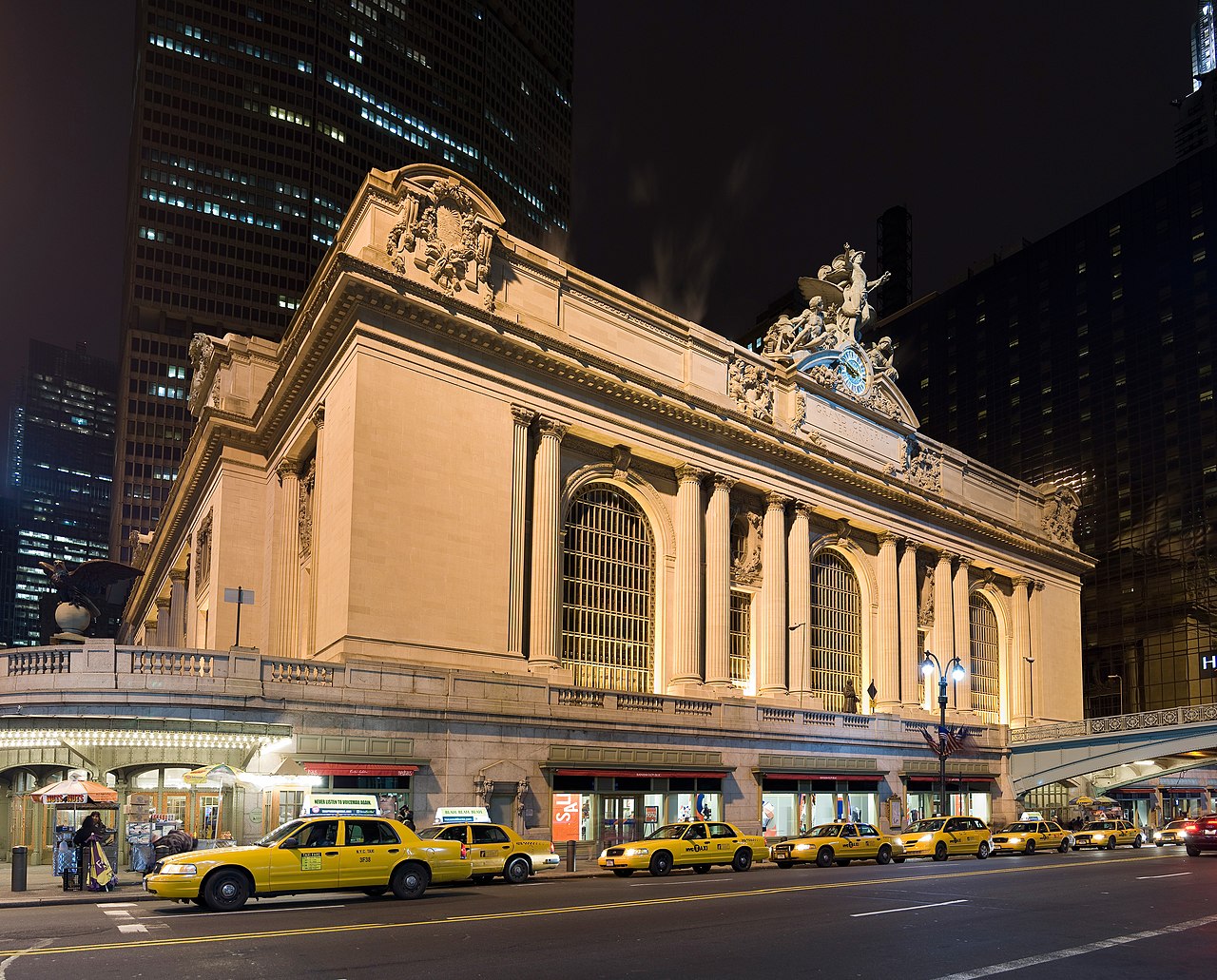
Designed in the Beaux-Arts style, the terminal combines monumental public rooms with extensive rail infrastructure below grade. Key elements include the vast main concourse with its celestial ceiling mural, the noteworthy facade facing Park Avenue, and multiple levels of tracks and platforms. Passenger facilities include waiting areas, ticketing and information services, retail shops and restaurants housed within the terminal’s historic rooms.
History and development
Grand Central Terminal replaced an earlier station complex on the same site during a period of rapid urban growth and electrification of railroads. Constructed and completed in the early 1900s, it was conceived to handle large volumes of commuter traffic and to modernize rail operations in Manhattan. Over the decades the terminal has undergone restorations and adaptive reuses to preserve architectural details while upgrading mechanical systems and public amenities.
Function and significance
The terminal functions primarily as a commuter-rail hub serving passengers traveling between the city and surrounding suburbs. Beyond transportation, it is a cultural landmark, hosting public events, markets and serving as a popular filming location. Its retail and dining concourse draws millions of visitors annually, making it both a transit facility and a destination in its own right.
Distinctive features and notable facts
- Famous main concourse with high vaulted ceiling and historic clock at the information booth.
- Integrated retail and dining areas set within preserved historic rooms.
- Recognized for preservation efforts that restored many original finishes and details.
- Often referenced simply as Grand Central in common usage.
As a working transportation hub and protected historic landmark, Grand Central Terminal illustrates how infrastructure, architecture and commerce can coexist in a busy urban center. For travelers and visitors it remains one of New York City’s most distinctive public spaces.
Questions and answers
Q: What is Grand Central Terminal?
A: Grand Central Terminal, often called Grand Central Station, is a train station in New York City.
Q: Where is Grand Central Terminal located?
A: Grand Central Terminal is located at 42nd Street and Park Avenue in Midtown Manhattan.
Q: What is the size of Grand Central Terminal compared to other train stations in the world?
A: Grand Central Terminal is the largest train station in the world by number of platforms.
Q: Is Grand Central Terminal primarily used for long-distance train travel?
A: Grand Central Terminal serves both long-distance and local train travel.
Q: What is the significance of the location of Grand Central Terminal?
A: The location of Grand Central Terminal in Midtown Manhattan makes it easily accessible to many parts of New York City.
Q: Can you get to other cities from Grand Central Terminal?
A: Yes, you can travel to other cities from Grand Central Terminal using various train routes.
Q: Is Grand Central Terminal a popular tourist destination in New York City?
A: Yes, Grand Central Terminal is a popular tourist destination in New York City due to its unique architecture and historical significance.
Related articles
Author
AlegsaOnline.com Grand Central Terminal Leandro Alegsa
URL: https://en.alegsaonline.com/art/40169