
Vulgar Latin: the everyday speech behind the Romance languages
Vulgar Latin was the informal, spoken variety of Latin used across the Roman world; its regional forms evolved into the modern Romance languages such as Italian, Spanish, French, Portuguese and Romanian.
Overview
Vulgar Latin refers to the non-literary, commonly spoken form of Latin used by ordinary people in the Roman world. Unlike the formal, written registers preserved in literature, law and inscriptions, Vulgar Latin encompassed the everyday vocabulary, pronunciation and grammar of farmers, soldiers, merchants and urban dwellers throughout the empire. The Latin term vulgus means "common people," and the phrase highlights the social rather than strictly structural nature of the distinction.
Image gallery
3 Images

Characteristics
Vulgar Latin differed from Classical Latin in pronunciation, syntax and word use. Some broad tendencies include:
- Regular simplification of complex inflectional endings and greater reliance on prepositions and fixed word order to express relationships.
- Sound changes and vowel shifts that varied by region and time, which later shaped distinct phonologies in daughter languages.
- Borrowing and semantic shifts from contact with local languages and dialects across the provinces.
History and development
Vulgar Latin developed as the spoken complement to the formal register during the Republic and Imperial eras. It spread with Roman administration, military settlement and trade, and diverged regionally as communications weakened after the fall of central Roman authority. Across centuries the continuous, localized evolution of Vulgar Latin dialects produced the family of Romance languages.
Legacy and examples
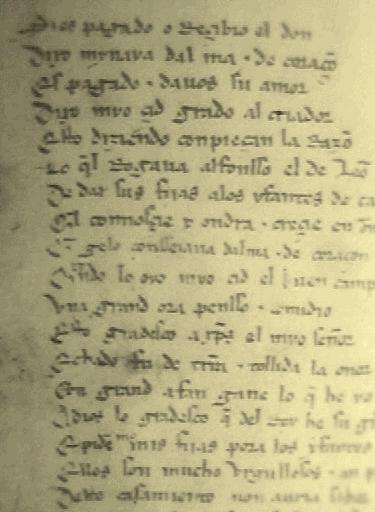
Modern Romance languages are direct descendants of regional varieties of Vulgar Latin. Well-known members of this family include Italian, Spanish, French, Portuguese and Romanian. Linguists trace specific changes — such as loss of case endings, development of definite articles, and shifts in vowel quality — from reconstructed Vulgar forms into these languages. Comparative study also relies on texts and inscriptions produced in less formal contexts and on medieval documents that preserve transitional forms.
Distinctions and notable facts
Vulgar Latin is not a single uniform language but a spectrum of regional and social varieties, sometimes incorrectly contrasted as a single opposite to "Classical Latin." Its study combines philology, historical linguistics and archaeology. For introductions and summaries of the topic see resources on the Romans, dialect formation and dialect studies, and overviews of the Romance languages. These provide accessible entry points for how everyday speech shaped the languages spoken by millions today.
Author
AlegsaOnline.com Vulgar Latin: the everyday speech behind the Romance languages Leandro Alegsa
URL: https://en.alegsaonline.com/art/106017