
Romance languages: origins, characteristics, and major varieties
Language family derived from Latin, including Spanish, French, Italian, Portuguese and Romanian; overview of history, structure, distribution, and notable distinctions.
Overview
The Romance languages form a branch of the Indo‑European family that developed from the colloquial Latin spoken across the Roman world. Often called Romance or Romanic languages, they include globally influential tongues such as Spanish, Portuguese, French, Italian and Romanian. Over centuries these languages diverged from Classical Latin into regionally distinct systems while retaining a core vocabulary and many grammatical patterns inherited from Latin.
Image gallery
8 Images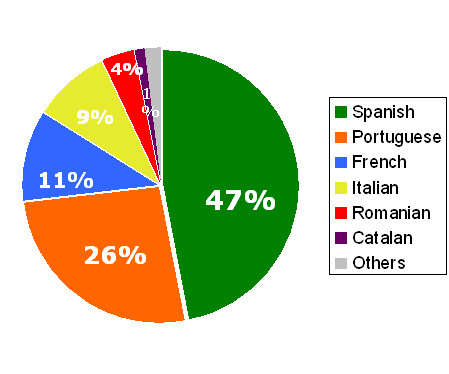




Origins and historical development
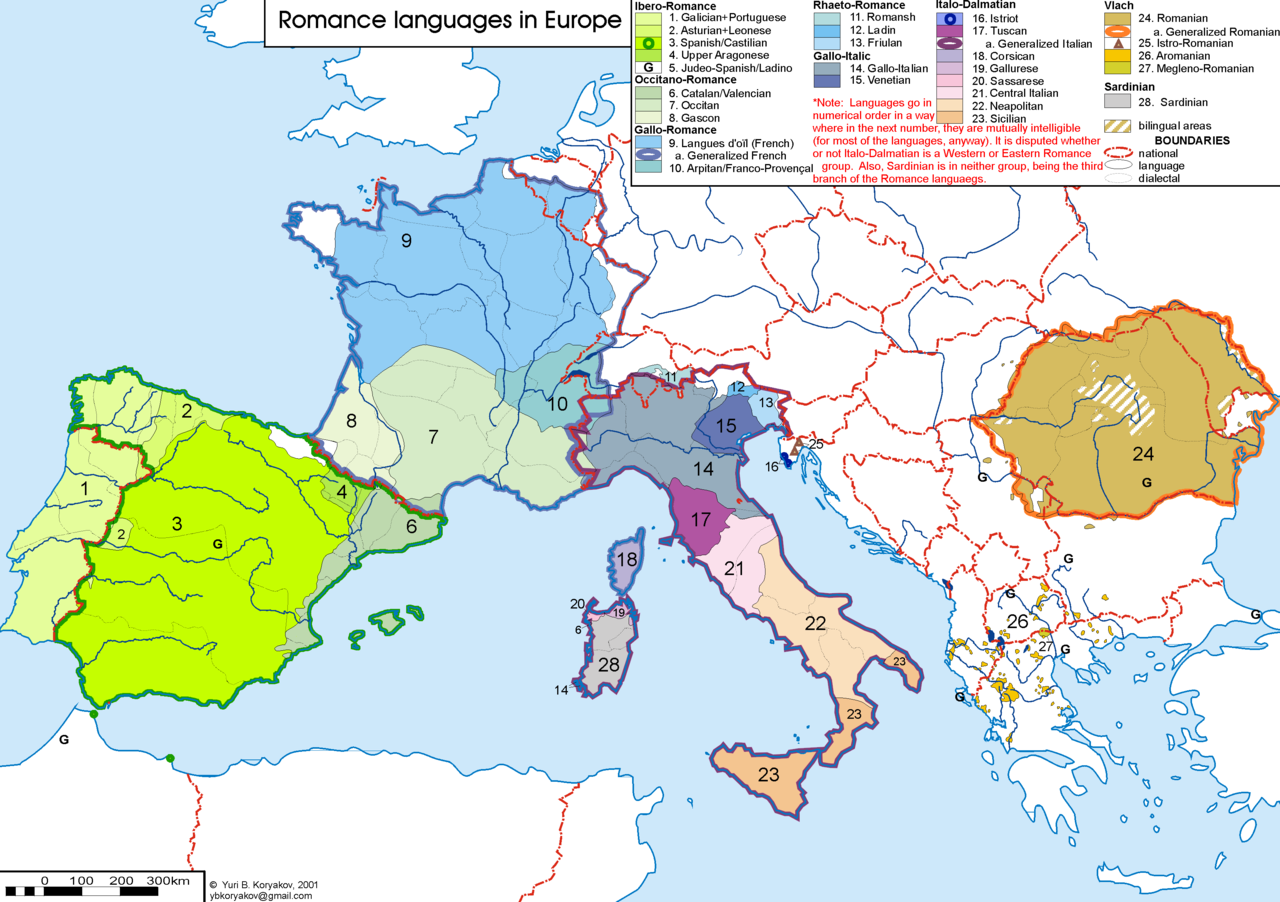
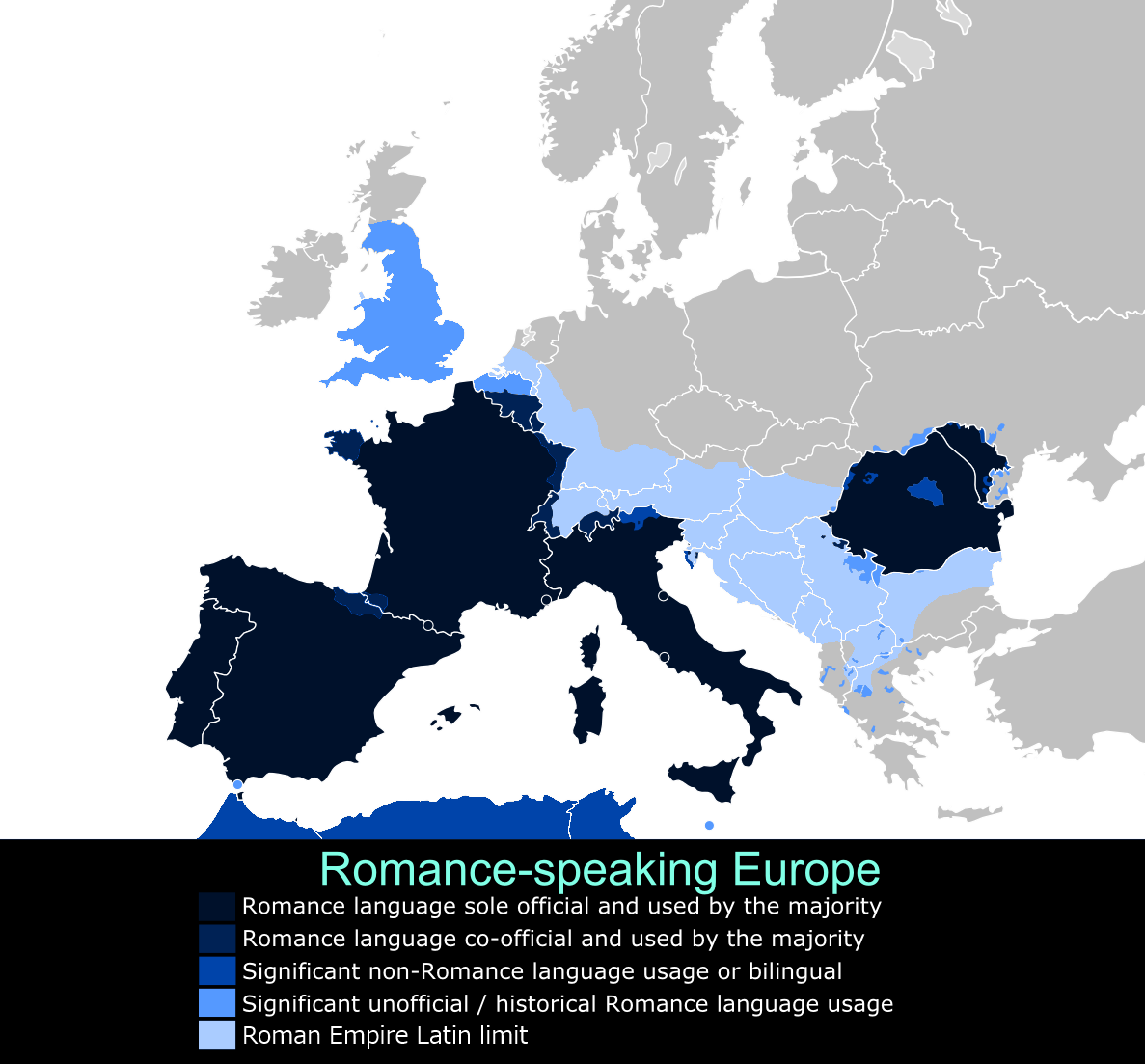
The Romance group originated in the varieties of Vulgar Latin used by soldiers, settlers and administrators of the Roman Empire. As Roman political control receded and local speech patterns evolved under contact with pre‑Roman languages and later invaders, the dialects gradually became separate languages. The distribution of the Romance languages in Europe closely follows the footprint of the Western Roman Empire, whereas Greek and other languages predominated in the eastern provinces. Romanian, surviving east of the Danube, preserves its Romance identity despite centuries of Balkan influence.
Key linguistic characteristics
Compared with Classical Latin, most Romance languages simplified the system of noun cases and increased reliance on fixed word order and prepositions. They maintain grammatical gender (typically masculine and feminine), pervasive verb conjugations that mark person, number, tense and mood, and a large shared lexical core. Phonological changes — such as vowel shifts, palatalization, and loss of final consonants — played a major role in producing distinct modern forms like Spanish, French and Italian.
Major varieties, distribution and use
Some Romance languages became world languages through exploration and colonization, notably Spanish and Portuguese in the Americas and parts of Africa and Asia, and French across Africa, the Caribbean and parts of Asia and the Pacific. Others, such as Catalan, Occitan, Sardinian and Romansh, are regionally important. Romanian is the primary Romance language in Eastern Europe. Today these languages function in national administration, literature, media and international diplomacy.
Distinctive facts and relationships
Not all Romance languages are equally mutually intelligible: some neighboring varieties show high mutual comprehension, whereas others have diverged more sharply. Certain languages or dialect groups preserve archaic features (for example, Sardinian retains conservative phonology), while others show strong substrate or superstrate influences from Celtic, Germanic, Arabic or Slavic languages. Standardization, literary traditions and state policies have also shaped how varieties are classified and named.
Further reading and reference topics
- language family overview
- Indo‑European context
- Vulgar Latin and popular speech
- Latin language background
- Spanish language
- Portuguese language
- French language
- Italian language
- Romanian language
- Western Roman Empire
- grammatical inflection
- case systems in Latin
- Classical Latin
- Roman Empire territorial extent
- Greek influence in the east
- Latin heritage in Romania
- Moldova and related dialects
- Moldovan nomenclature
Questions and answers
Q: What are the Romance languages?
A: The Romance languages are a language family in the Indo-European languages that originated from Vulgar Latin.
Q: Where did the name "Romance languages" come from?
A: The Romance languages are called so because they originate from Latin, the language spoken by the Western Roman Empire.
Q: What are some of the most spoken Romance languages?
A: The most spoken Romance languages are Spanish, Portuguese, French, Italian, and Romanian.
Q: What is "Vulgar Latin"?
A: In Latin, "vulgar" is the word for "common" and so "Vulgar Latin" means "Common Latin". It refers to the Latin spoken colloquially during the Roman Empire.
Q: What happened to the grammatical inflection system of Classical Latin in the Romance languages?
A: The grammatical inflection system of Classical Latin has been simplified and lost most of its complex case structure in the Romance languages.
Q: Where in Europe are the Romance languages mostly spoken?
A: The area that the Romance languages are spoken in Europe is mostly extent of the Western Roman Empire.
Q: What happened to Latin in the Eastern Roman Empire?
A: Latin was superseded by the Greek language in the Eastern Roman Empire. However, Latin survived in Romania, whose language, Romanian, is a Romance language. In Moldova, it is sometimes called Moldovan.
Author
AlegsaOnline.com Romance languages: origins, characteristics, and major varieties Leandro Alegsa
URL: https://en.alegsaonline.com/art/83880