
Vladimir Kramnik: Russian World Chess Champion and Opening Innovator
Vladimir Kramnik (born 1975) is a Russian chess grandmaster who became Classical and later undisputed World Chess Champion; noted for his positional play and revival of the Berlin Defence.
Vladimir Kramnik, born 25 June 1975, is a Russian chess grandmaster who rose to the top of the chess world at the turn of the 21st century. He held the title of Classical World Chess Champion from 2000 until 2006 and became the undisputed World Chess Champion after winning a unification match in 2006. Kramnik is widely respected for a strategic, prophylactic style and for several durable contributions to opening theory.
Image gallery
5 Images

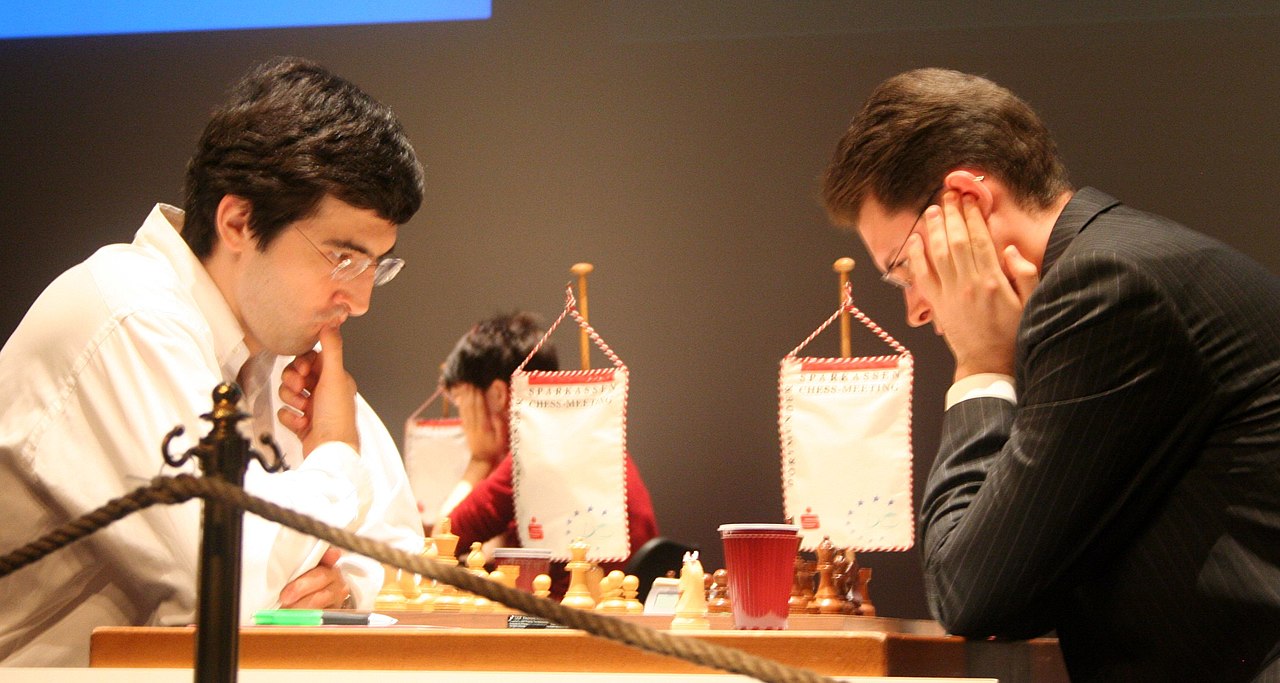


Major matches and championship history
Kramnik's breakthrough came in October 2000, when he defeated the long-reigning champion Garry Kasparov in a match played in London. That victory ended Kasparov's continuous dominance and established Kramnik as the leading classical-world titleholder. In 2004 Kramnik successfully retained his title in a closely fought match against challenger Peter Leko in Brissago, Switzerland, after the overall match score left the champion in place.
In 2006 Kramnik faced the FIDE World Champion Veselin Topalov in a high-profile unification match organized under the auspices of FIDE. Kramnik won that match and thus ended almost a decade of divided claims to the world title, becoming the first undisputed world champion since the split of 1993. The reunified title later changed hands when Viswanathan Anand won the 2007 world championship cycle; Kramnik subsequently challenged Anand in the 2008 title match but did not regain the crown.
Style, openings and contributions
Kramnik is best known for a calm, technically exact approach that emphasizes long-term positional advantages, accurate endgame play, and a deep understanding of strategic imbalances. One of his most lasting legacies is the revival and popularization of the Berlin Defence in the Ruy Lopez; a line he used effectively against top opposition and which has since become a staple at elite levels as a reliable neutralizing weapon.
- Positional mastery and endgame technique: Kramnik is often praised for his capacity to convert small advantages.
- Opening innovation: his use of the Berlin Defence reshaped preparation at the highest level.
- Practical approach: combines careful strategic planning with strong defensive resources.
Legacy, later career and notable facts
Beyond matches for the world title, Kramnik remained a fixture among the world's elite for many years, taking part in super-tournaments, team events and rapid/blitz competitions. His influence extends through opening theory, published analysis, and the many grandmasters who have studied his technique. The 2006 unification match attracted particular attention not only for its sporting stakes but also for off-board disputes that became a well-noted episode in modern championship history.
In later years Kramnik reduced his tournament activity and announced his retirement from professional classical competition; he has since been involved in occasional events, commentary and projects that draw on his deep experience. His career is often cited as an example of how strategic depth and opening preparation together can determine outcomes at the very highest level of chess.
Notable games and resources
For readers wanting to study Kramnik's play, useful starting points include his 2000 games against Kasparov, his 2004 title defence against Leko, and the 2006 unification match with Topalov. Overviews and collections of his important games, annotated matches and opening analyses are available in many chess books and online archives; general reference pages and databases provide move-by-move records and commentary for deeper study.
Kramnik's career illustrates several broader themes in modern chess: the importance of preparation, the rise of specialized defensive systems that can blunt aggressive play, and the continuing centrality of classical match play in testing a player's depth of understanding. For further reading consult authoritative chess resources and tournament archives that track world championship history and elite games.
Questions and answers
Q: Who is Vladimir Kramnik?
A: Vladimir Kramnik is a Russian chess grandmaster who was the Classical World Chess Champion from 2000 to 2006 and the undisputed World Chess Champion from 2006 to 2007.
Q: When did Vladimir Kramnik become the Classical World Chess Champion?
A: Vladimir Kramnik became the Classical World Chess Champion in October 2000 after defeating Garry Kasparov in a match played in London.
Q: Who did Kramnik defend his title against in late 2004?
A: Kramnik successfully defended his title against challenger Peter Leko in a drawn match played in Brissago, Switzerland in late 2004.
Q: Who did Kramnik defeat in October 2006 to become the first undisputed World Champion since Garry Kasparov split from FIDE in 1993?
A: Kramnik defeated Veselin Topalov, the reigning FIDE World Champion, in October 2006 to become the first undisputed World Champion since Garry Kasparov split from FIDE in 1993.
Q: Who did Kramnik lose the title to in 2007?
A: Kramnik lost the title to Viswanathan Anand in 2007, who won the World Chess Championship tournament (not a classical match between the two players) ahead of Kramnik.
Q: Did Kramnik play Anand at the World Chess Championship match in 2008?
A: Yes, Kramnik played Anand at the World Chess Championship match in 2008, but he lost the match.
Q: Who did Kramnik defeat to become the Classical World Chess Champion?
A: Kramnik defeated Garry Kasparov to become the Classical World Chess Champion.
Related articles
Author
AlegsaOnline.com Vladimir Kramnik: Russian World Chess Champion and Opening Innovator Leandro Alegsa
URL: https://en.alegsaonline.com/art/105727
Sources
- chessbase.com : "ChessBase.com - Chess News - Kramnik drops out of Wijk Super-Tournament"
- kramnik.com : "kramnik.com"