
Bleeding (Hemorrhage): Causes, Types, Severity, and Management
Bleeding (hemorrhage) is the loss of blood from the circulatory system. This article describes types, causes, signs, severity scales, first aid and medical treatments, and historical context.
Bleeding (also spelled haemorrhage in British English) is the escape of blood from the closed circulatory system. It ranges from minor surface cuts to life-threatening loss from major blood vessels. Clinicians distinguish external bleeding, which is visible on the skin or through body openings, from internal bleeding, where blood collects inside tissues or body cavities.
Image gallery
5 Images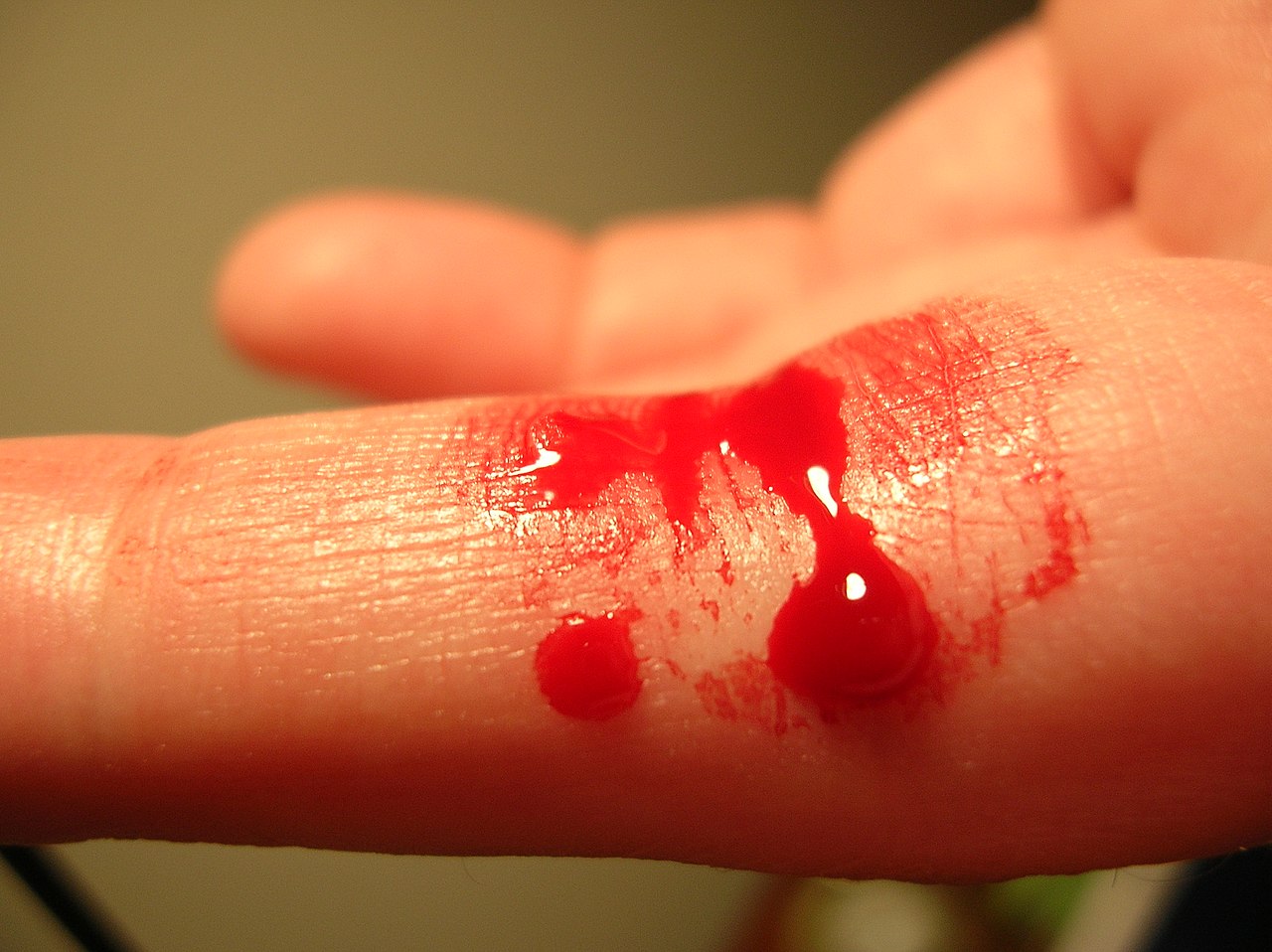



Types and common causes
Bleeding may be classified by location and mechanism. External bleeding can occur through a break in the skin or via natural openings such as the vagina, mouth, nose, ear or anus. Internal bleeding arises when blood escapes from blood vessels into tissues or cavities.
- Trauma: cuts, fractures, and penetrating injuries.
- Surgical or procedural bleeding.
- Medical conditions: peptic ulcers, ruptured aneurysms, ectopic pregnancy.
- Coagulation disorders and medications: hemophilia, thrombocytopenia, anticoagulants and antiplatelet drugs.
- Physiological causes: heavy menstrual bleeding and postpartum hemorrhage.
Signs, severity and classification
Severity depends on the rate and total volume lost. Small losses cause minimal symptoms, while larger or rapid losses produce lightheadedness, pallor, rapid heartbeat, low blood pressure and, if untreated, shock. The World Health Organization and other clinical systems describe graded levels of hemorrhage; a commonly used clinical estimate is that healthy adults tolerate roughly 10–15% blood volume loss without serious effects. Blood donation typically removes about 8–10% of a donor's blood volume, whereas exsanguination refers to loss sufficient to cause death. A person may die after losing roughly half to two-thirds of total blood volume if bleeding is not controlled.
Immediate care and medical management
Initial first aid focuses on stopping bleeding and maintaining circulation: apply direct pressure, elevate the injured limb if practical, and use pressure dressings. For severe limb bleeding, a properly applied tourniquet or hemostatic dressing may be lifesaving. Professional treatment includes intravenous fluids, blood transfusion, clotting factor replacement, reversal of anticoagulant drugs, and definitive control by surgery, endoscopy, or angiographic embolization. Antifibrinolytic drugs such as tranexamic acid are used in many trauma and surgical settings to reduce bleeding.
Historical and notable points
Historically, deliberate bloodletting was a common medical practice for centuries but has been abandoned as medical science advanced. Today, bleeding remains a major cause of morbidity and mortality worldwide, particularly in trauma, obstetrics and in people on anticoagulant therapy. Public education on basic hemorrhage control and access to emergency care can markedly reduce deaths from severe bleeding.
For general information or further reading, see resources on blood donation, circulation and clotting, and reviews linked by health authorities and emergency medicine guidelines. Additional context is available through clinical and public health sources referenced at blood resources and trauma care guidance (circulatory system overviews).
Questions and answers
Q: What is bleeding?
A: Bleeding is the loss of blood or blood escape from the circulatory system.
Q: How can bleeding occur internally?
A: Bleeding can occur internally where blood leaks from blood vessels inside the body.
Q: Where can bleeding occur externally?
A: Bleeding can occur externally through a natural opening such as the vagina, mouth, nose, ear, or anus or through a break in the skin.
Q: What is desanguination?
A: Desanguination is a major blood loss.
Q: What is exsanguination?
A: Exsanguination is losing enough blood to cause death.
Q: Can a person die from losing all their blood?
A: A person does not have to lose all of their blood to die. People can die from losing half to two-thirds of their blood.
Q: What is the scale established by the World Health Organization (WHO) to measure different degrees of blood loss?
A: The World Health Organization (WHO) established a scale to measure different degrees of blood loss, from level 0 to 4. Level 0 indicates no blood loss, whilst level 4 represents the highest level of hemorrhaging, with a risk of fatality.
Related articles
Author
AlegsaOnline.com Bleeding (Hemorrhage): Causes, Types, Severity, and Management Leandro Alegsa
URL: https://en.alegsaonline.com/art/12142
Sources
- healthline.com : "Bleeding Health Article"
- dictionary.reference.com : "Dictionary Definitions of Exsanguination"
- blood.co.uk : "Blood Donation Information"