
Vincent d'Indy: French composer, teacher and founder of the Schola Cantorum
Biography and assessment of Vincent d'Indy (1851–1931): his education, compositional style, role in reviving early music, founding of the Schola Cantorum, influence and controversies.
Overview
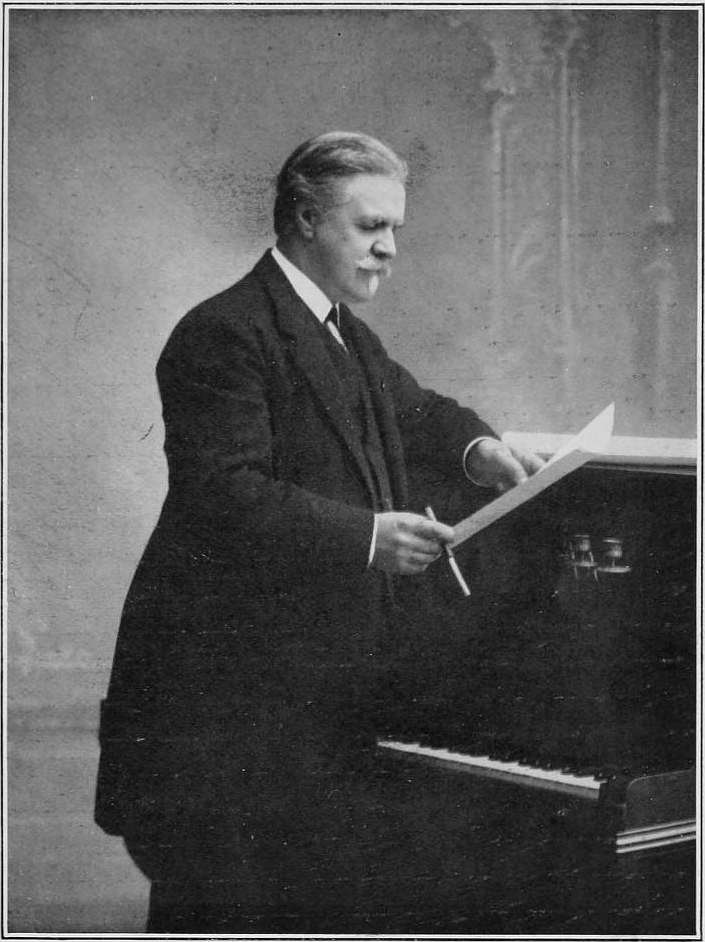
Paul Marie Théodore Vincent d'Indy (27 March 1851 – 2 December 1931) was a notable French composer and influential music teacher. Born and raised in Paris, he became a public figure in French musical life through both his creative output and his institutional activity. Active from the late 19th century into the early 20th, d'Indy combined conservative aesthetic views with a strong interest in historical music and rigorous musical training.
Image gallery
5 Images


Training and musical influences
D'Indy's earliest encouragement came from family members who valued music; he later entered the Paris Conservatoire and studied privately with the organist and composer César Franck, whose techniques and ideas left a lasting mark on his approach to structure and harmony (César Franck). He admired the works of earlier masters such as Beethoven and later Romantic figures like Liszt and Wagner, reading and responding to their models in his own composition (Beethoven, Liszt and Wagner). D'Indy attended important contemporary events such as the first complete performance of Wagner's Ring cycle at Bayreuth in 1876, which shaped his sense of large-scale dramatic form and orchestration (Bayreuth 1876).
Compositional style and notable works
His music spans orchestral, choral, chamber and vocal genres. D'Indy is often associated with the use of cyclic form and thematic transformation—techniques that link movements through recurring motifs—and with occasional incorporation of folk or regional melodies into larger formal structures. Among his better-known works is the Symphonie sur un chant montagnard français (Symphony on a French Mountain Air), which exemplifies his interest in native song and symphonic construction. He also wrote chamber pieces, choral music, and stage works, applying a conservative but disciplined language that favored clarity of form and contrapuntal skill.
Teaching, advocacy and the Schola Cantorum
Frustrated with what he perceived as shortcomings at the Paris Conservatoire, d'Indy helped establish an alternative institution devoted to a more historically grounded and technical education. In 1894 he co-founded the Schola Cantorum in Paris, a school emphasizing counterpoint, Renaissance and Baroque repertory, plainchant, and liturgical music. The Schola attracted young musicians seeking rigorous grounding in composition and early music practice and became an important center for French musical pedagogy during the early 20th century.
Contributions to early music and performance
D'Indy played a part in the late-19th-century revival of earlier French music, organizing performances and editions of works by composers such as Jean-Philippe Rameau and Claudio Monteverdi that had largely fallen out of regular performance. His advocacy helped renew interest in pre-Classical repertories at a time when national musical identity and historical awareness were increasingly important to institutions and audiences.
Legacy and controversies
Vincent d'Indy's legacy is mixed. He left behind a substantial body of compositions and a pedagogical institution that influenced generations of French musicians. At the same time, his conservative aesthetic and increasingly nationalistic political positions generated controversy and have complicated later assessments of his importance. Today his music and his role as an educator are subjects of renewed scholarly and performance interest: some works continue to appear in concert programs and recordings, while historians place his achievements and failings in the broader context of French musical life around 1900.
Summary of significance
- Composer who combined Romantic models with formal discipline and folk influences.
- Student of César Franck and participant in the major musical events of his era.
- Co-founder of the Schola Cantorum (1894), advocating historical and technical study of music.
- Active in reviving works by Rameau and Monteverdi and in shaping French pedagogical practice.
Related articles
Author
AlegsaOnline.com Vincent d'Indy: French composer, teacher and founder of the Schola Cantorum Leandro Alegsa
URL: https://en.alegsaonline.com/art/105395
Sources
- credoreference.com : "d'Indy, (Paul Marie Théodore) Vincent"
- credoreference.com : "Indy, Vincent d'"