
Benin City — Capital of Edo State and historic center of the Benin Kingdom
Benin City, capital of Edo State in southern Nigeria, is a historic urban center—seat of the Benin Kingdom—known for bronze art, the Oba's palace, markets, and industries such as rubber and palm‑oil processing.
Overview
Benin City is the administrative capital of Edo State in southern Nigeria. The city lies inland from the Benin River and is linked by road and air to other parts of the country, including routes that connect it with larger coastal cities such as Lagos. It functions as a regional centre for government, commerce, education and cultural life within the surrounding rainforest belt.
Image gallery
10 Images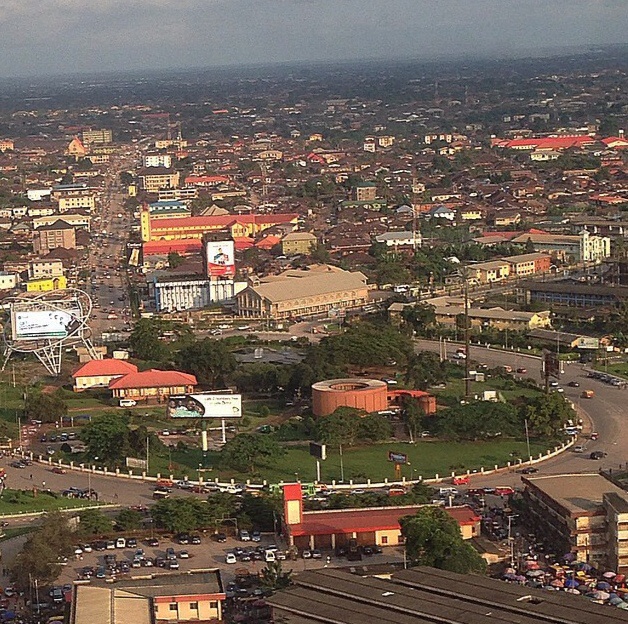


History and cultural significance
Benin City grew from the capital of the historic Benin Kingdom, a long‑standing West African polity ruled by the Oba (king). The court and palace produced a sophisticated administrative system and a remarkable artistic tradition. Artists of Benin are internationally renowned for metalwork and ivory carving, commonly referred to as the Benin Bronzes, and for other forms of wood carving and crafts. Traditional institutions and festivals associated with the Oba remain central to local identity.
Arts, festivals and heritage
The city is noted for its continuing craft traditions: bronze casting, woodcarving and textiles are practiced by guilds and workshops. Annual and seasonal festivals, including ceremonies at the royal palace, sustain ritual life and attract visitors. In recent decades Benin’s historic artworks have been the focus of scholarly study and of wider public discussion about conservation and the return of cultural property to Nigeria.
Landmarks and institutions
- Royal palace: The Oba’s palace complex is a focal point of history and ceremony.
- Museums and workshops: Local museums and artisan quarters display and produce traditional art.
- Education: The city hosts higher‑education institutions and research centres that serve the region.
Economy and industries
Benin City has long been a centre for processing agricultural products. It is an important node in Nigeria’s rubber industry, where latex is traded and processed. Traditional processing of palm nuts into palm oil and related products remains economically significant for local markets and rural producers. Small‑scale manufacturing, informal trade, markets and services comprise much of the urban economy.
Transport, climate and contemporary issues
The city is served by a regional airport and by road networks that link it to other states. The climate is tropical with a marked rainy season that supports nearby agriculture. Current urban challenges include managing growth, preserving cultural heritage amid development, and addressing infrastructure needs. Debates over the care and international repatriation of historic artworks are also prominent in public life.
Significance
As both a modern administrative capital and the heir to a long precolonial tradition, Benin City occupies a distinctive place in Nigeria’s cultural geography. Its artistic legacy, palace institutions and active markets continue to attract researchers, artisans and visitors, while its industries sustain livelihoods across the surrounding region.
Related articles
Author
AlegsaOnline.com Benin City — Capital of Edo State and historic center of the Benin Kingdom Leandro Alegsa
URL: https://en.alegsaonline.com/art/10533
Sources
- bartleby.com : Benin, City, Nigeria,
- wikidata.org : wikidata.org/wiki/Q320704
- d-nb.info : 4069263-2
- aleph.nkp.cz : ge616228
- viaf.org : 133708730
- worldcat.org : lccn-n82020280