
Benin: Overview of the Republic’s Geography, History, Society, and Government
Concise encyclopedia entry on Benin: geography, people, languages, historical kingdoms, colonial era, post‑independence politics, economy, culture, and international relations.
Benin is a sovereign state in West Africa and lies on the Gulf of Guinea in the southern part of the continent. Its constitutional capital is Porto‑Novo (Porto‑Novo), while the seat of government and the nation’s largest urban center is Cotonou (seat of government, Cotonou). The majority of the population is concentrated along a relatively narrow coastal strip bordering the Bight of Benin (Bight of Benin), with inland areas characterized by savanna, small river basins and, to the north, the start of the Sahelian zone.
Image gallery
10 Images




People, language and religion
French is the country’s official language, a legacy of colonial rule; its use in administration, education and the courts reflects that history (colonial influence). A number of indigenous languages are widely spoken across the country, notably Fon (Fon) and Yoruba (Yoruba), among others. Religious life in Benin is plural and syncretic: Christianity—particularly Roman Catholicism—Islam (Islam) and traditional faiths such as Vodun coexist, often blending local practices with imported forms of worship.
Historical background
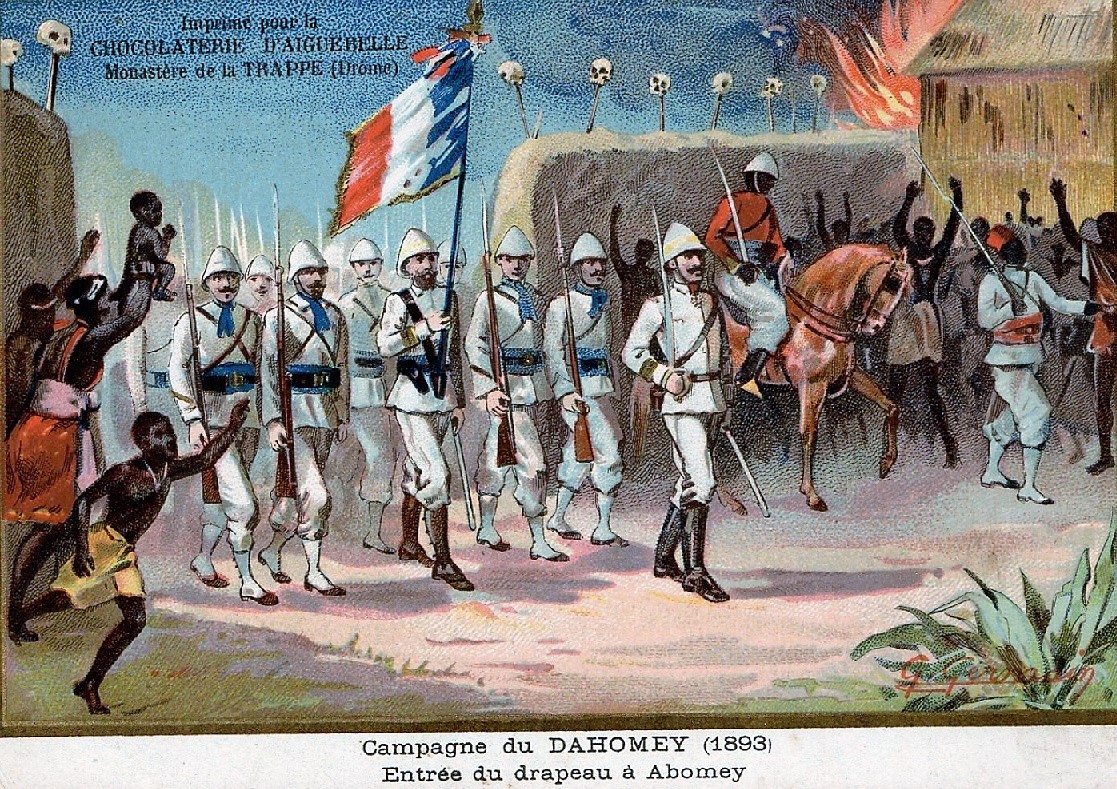
The territory of modern Benin was central to several pre‑colonial states, most prominently the Kingdom of Dahomey, which rose to prominence from the 17th through the 19th centuries. During the same period the coastline was part of what European traders called the Slave Coast, where transatlantic slave traffic took many people from ports and coastal settlements via traders—often European merchants (European traders)—to colonies in the Americas (the Americas). Key coastal entrepôts and neighboring towns served as departure points (ports) for this tragic commerce. In the late 19th century the French military and political presence led to the incorporation of the area into French West Africa as French Dahomey (French Dahomey). After World War II and changing international attitudes, the colony moved toward self‑government and achieved full independence in 1960.
Benin’s modern political trajectory includes a period when the country adopted Marxist–Leninist principles during a one‑party era (Marxist–Leninist) that organized public life along state‑centered lines; that period is often described as a state with socialist orientation, known officially at the time as the People’s Republic of Benin. Political reforms in the late 1980s and early 1990s produced a transition to a multiparty constitution and the present Republic, which has pursued democratic elections and market‑oriented policies since.
Government, international ties and organizations
Benin participates actively in regional and global institutions. It is a member of the United Nations and the African Union, and it engages with a wide range of multilateral groups. Other affiliations include:
- Organisation of Islamic Cooperation
- South Atlantic Peace and Cooperation Zone
- La Francophonie / Community of Sahel‑Saharan States
- African Petroleum Producers Association
- Niger Basin Authority
Economy, society and culture
Benin’s economy is diversified but leans heavily on agriculture, small‑scale commerce and informal trade. Cotton is a key cash crop and export commodity, while fishing and port activity support coastal communities. Cotonou and other coastal cities function as hubs for regional trade and transportation. Cultural life is rich: traditional arts, music, ceremonies and the Vodun religious heritage continue to play central roles in daily life and attract scholarly and tourist interest.
Education, public health and infrastructure development remain priorities for national policy. Civil society and media are active contributors to public debate, and the country’s democratic institutions have been tested and strengthened through repeated nationwide elections since the early 1990s.
Notable facts and distinctions
Benin is often noted for its historical role in West African geopolitics, its concentration of population along a narrow coastal plain, and its cultural influence—especially as the birthplace of Vodun religious traditions and as the successor state to the Kingdom of Dahomey. Contemporary Benin balances efforts at economic modernization with preserving cultural heritage and participating in regional cooperation. Readers seeking government documents, statistical updates or cultural resources can consult official and multilateral sources for the most current information (country overview, capital, major city).
Questions and answers
Q: What is the official language of Benin?
A: The official language of Benin is French.
Q: What are some other languages commonly spoken in Benin?
A: Other languages commonly spoken in Benin include Fon and Yoruba.
Q: What is the largest religious group in Benin?
A: The largest religious group in Benin is Roman Catholicism.
Q: What organizations is Benin a member of?
A: Benin is a member of the United Nations, the African Union, the Organisation of Islamic Cooperation, South Atlantic Peace and Cooperation Zone, La Francophonie, the Community of Sahel-Saharan States, the African Petroleum Producers Association and the Niger Basin Authority.
Q: When was slavery made illegal in Benin?
A: Slavery was made illegal in Benin after it was colonized by France.
Q: Who ruled over Dahomey from 17th to 19th century?
A: From 17th to 19th century, Dahomey was ruled by the Kingdom of Dahomey.
Q: When did Dahomey gain independence from France? A: Dahomey gained official independence from France in 1960.
Related articles
Author
AlegsaOnline.com Benin: Overview of the Republic’s Geography, History, Society, and Government Leandro Alegsa
URL: https://en.alegsaonline.com/art/10535
Sources
- washingtonpost.com : "Benin has a new president: Patrice Talon, an ironic outsider politician"
- imf.org : "Benin"
- cia.gov : "Distribution of family income – Gini index"
- nationsencyclopedia.com : "Benin – International Cooperation"
- state.gov : "Background Note: Benin"
- globaltwitcher.auderis.se : Painted Hunting Dog: Lycaon pictus, GlobalTwitcher.com, ed. N. Stromberg
- aflit.arts.uwa.edu.au : "Benin"
- state.gov : International Religious Freedom Report 2007: Benin
- cia.gov : Literacy
- state.gov : "Benin"
- recipes.wikia.com : "Beninese Cuisine."