
Verbenaceae — the verbena family
Verbenaceae is a family of flowering plants in Lamiales, including shrubs, trees and herbs. Members have opposite leaves, tubular flowers and variable fruit; many are ornamental or ecologically important.
The Verbenaceae are a family of flowering plants in the order Lamiales. Members range from low-growing woody shrubs and small trees to herbaceous perennials and annuals. They are generally dicotyledonous plants recognized by a suite of floral and vegetative traits and by their ecological roles in many temperate to tropical landscapes.
Image gallery
4 Images


Characteristics
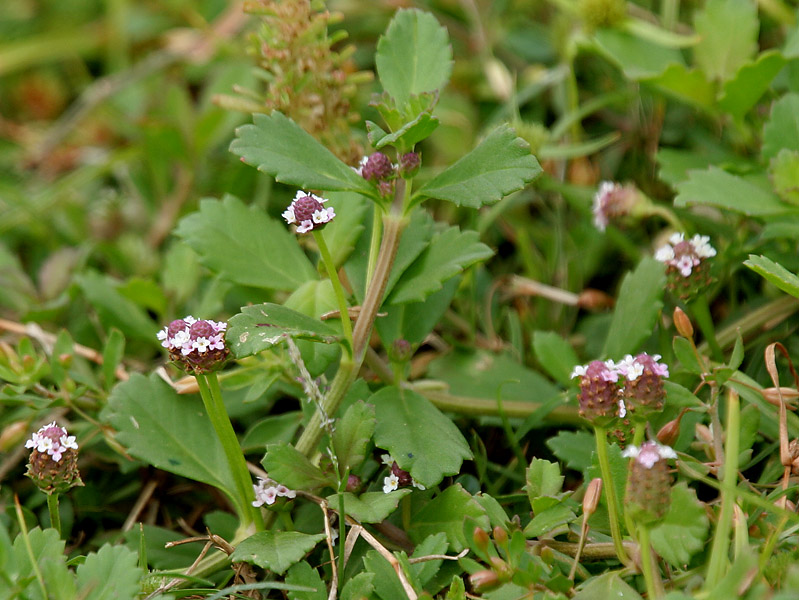
Typical features include opposite or sometimes whorled leaves (opposite or whorled), usually simple and without prominent stipules. Flowers may be nearly regular or somewhat irregular, often arranged in cymes or clusters, with a tubular corolla that ends in lobes. Stamens are commonly reduced to two or four functional members (two or four), and the ovary and fruit type vary across the family.
- Leaves: opposite, simple, sometimes aromatic.
- Inflorescence: cymose or paniculate clusters.
- Flowers: tubular corolla with 4 lobes; stamens 2 or 4.
- Fruits: drupe-like or dry units; seeds often in one to several pyrenes.
Taxonomy and history
Verbenaceae has a complex taxonomic history. Traditional classifications grouped many genera by shared morphological traits, but molecular phylogenetic studies over recent decades have led to redefinition of the family and transfer of some genera to related families. Today a more narrowly circumscribed Verbenaceae is recognized by botanists, while its relationships within Lamiales continue to be refined by ongoing research (Lamiales).
Distribution and ecology
Members of Verbenaceae are most diverse in tropical and subtropical regions but occur in temperate zones as well. Several species are important nectar sources, attracting butterflies, bees and hummingbirds. The habit varies from ground-hugging herbs to lianas and shrubs, allowing the family to occupy a wide range of habitats from open fields to forest edges.
Uses and notable genera
Several well-known garden plants belong to or were historically associated with Verbenaceae, such as verbena and lantana, and others like Stachytarpheta and Duranta are widely cultivated for ornament. Species have been used in traditional medicine, erosion control and as nectar plants in restoration plantings. Horticulture remains the family’s most visible economic role.
Distinguishing facts
Although Verbenaceae shares similarities with families like Lamiaceae, it is commonly distinguished by fruit structure and certain floral characters. Molecular evidence has reshaped the family’s composition, so names and placements of some genera have changed in modern treatments. For further general information see broader references linked here: flower structure, growth forms, and stamen variation.
Related articles
Author
AlegsaOnline.com Verbenaceae — the verbena family Leandro Alegsa
URL: https://en.alegsaonline.com/art/104633