
Verandah (veranda): definition, history, types and uses
A verandah (also veranda) is a roofed, open gallery attached to a building. This entry describes its form, components, regional varieties, historical development and practical roles in architecture.
Overview
A verandah is a roofed, open platform attached to the exterior of a building, typically open to the air on one or more sides. It commonly runs along the front or around the perimeter of a house and serves as a transitional space between interior rooms and the outdoors. The terms verandah and veranda are interchangeable in English; spelling differs by region and tradition.
Image gallery
6 Images
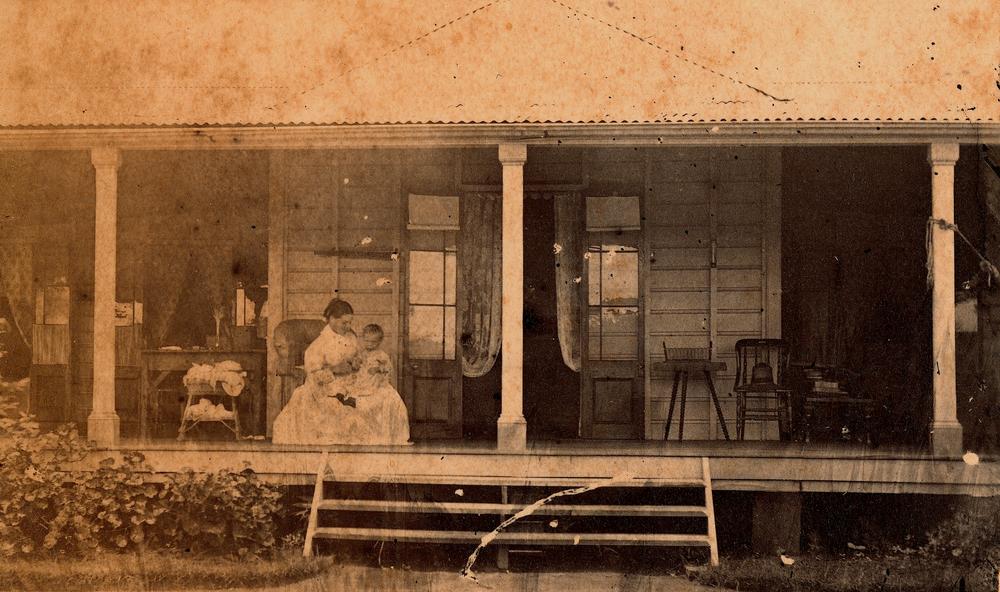


Character and components
Common elements include a continuous or projecting roof that ties into the main structure, a raised or level floor, vertical supports such as posts or columns, and often a balustrade or low wall. Floors are frequently timber or masonry; supports may be timber, cast iron, masonry or steel depending on the era and region. Verandahs may be completely open, screened to exclude insects, or partly enclosed with glazing to form a sunroom.
Types and variations
- Wraparound verandah: extends along two or more sides of a building and encourages cross-ventilation.
- Front verandah (porch): focuses on the main entrance and can be decorative or practical.
- Screened verandah: fitted with mesh to reduce insects while allowing air flow.
- Enclosed verandah: glazed or insulated to create a year-round living space.
History and development
Verandahs became prominent in vernacular and colonial architectures in tropical and subtropical regions because they moderate heat and rainfall while enabling outdoor living. The name is often linked to the Portuguese word varanda and to similar terms in South and Southeast Asian languages. From the 18th and 19th centuries onward, verandahs were adapted by builders in Britain, its colonies, the Americas and elsewhere to suit local climates, materials and social customs.
Regional examples
In Australia, broad timber verandahs are a characteristic of timber houses designed for shade and ventilation. In the Indian subcontinent and Southeast Asia, verandahs form shaded galleries that connect rooms and protect walls from sun and rain. In the southern United States and the Caribbean, porches and verandahs became important social spaces for cooling and greeting visitors. Local details—such as decorative brackets, fretwork, turned posts or cast-iron lace—vary by region and period.
Functions and cultural importance
Functionally, a verandah provides weather protection for doors and windows, shades interiors to reduce solar gain, and promotes natural ventilation. Socially it can be a semi-public area for conversation, relaxation and roadside interaction. Many traditional communities regard the verandah as an extension of domestic life where informal gatherings and daily chores take place.
Construction, materials and maintenance
Construction must consider drainage, connection to the main roof, structural support and materials resistant to local weather and pests. Timber verandahs require regular painting or treatment; metalwork needs protection against corrosion. Enclosed versions need attention to insulation and moisture control to avoid decay where humid climates are present.
Modern adaptations and distinctions
Contemporary architecture often reinterprets the verandah for energy-efficient shading, to blur indoor–outdoor boundaries and to increase usable living area. Verandahs overlap with porches, porticos, loggias and lanais; they are generally identified by their runs along a façade, continuous roofed coverage and open sides that connect interiors with the exterior environment.
Preservation and contemporary value
Preserving historic verandahs supports cultural heritage and contributes to the character of streetscapes. When restored or adapted sensitively, verandahs continue to offer practical climatic benefits and social value in both traditional and modern housing.
Related articles
Author
AlegsaOnline.com Verandah (veranda): definition, history, types and uses Leandro Alegsa
URL: https://en.alegsaonline.com/art/104628
Sources
- dsal.uchicago.edu : "Glossary of Anglo-Indian words - verandah"