
Vatican Apostolic Library (Vatican Library)
Historic research library of the Holy See, founded in the 15th century; houses extensive manuscripts, early printed books, and conservation and digitization programs for scholars worldwide.
The Vatican Apostolic Library, commonly called the Vatican Library, is the principal library of the Holy See and one of the world's oldest research collections. Its formal title in Latin is Bibliotheca Apostolica Vaticana. The institution preserves an extensive range of cultural heritage materials and supports scholarly use, administration, conservation and publication. For official information see the library's site: Vatican Library official page and the Holy See's portal: Holy See.
Image gallery
10 Images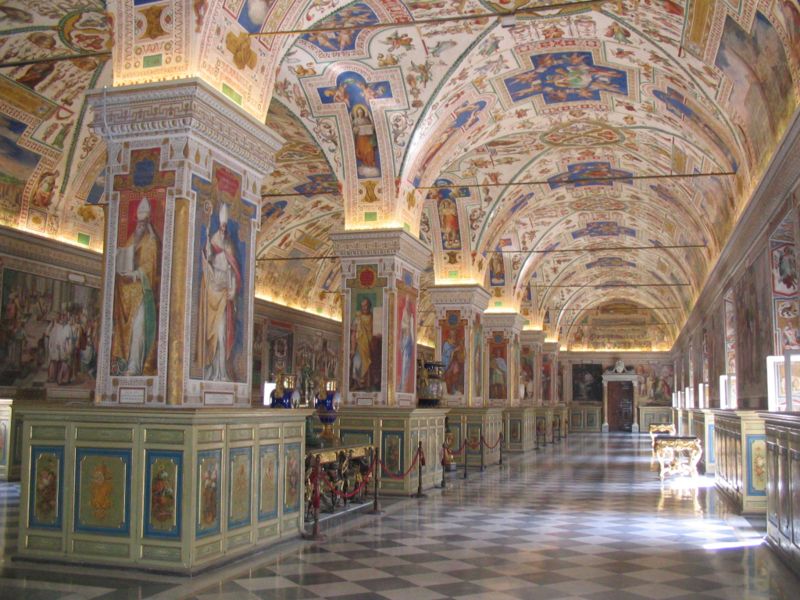



Collections and holdings
The library's holdings span antiquity to the present and include manuscripts, codices, early printed books, and archival documents. The collections are often described in broad figures: substantial numbers of codices and medieval manuscripts, many thousands of incunabula (early printed books), and a total running into the millions of printed volumes and items. For curated catalog entries and collection summaries consult the library's catalog resources: collections overview and manuscript guides: manuscript catalog.
Typical categories
- Ancient and medieval manuscripts, including biblical and classical texts.
- Incunabula and early printed works illustrating the spread of printing technology.
- Papal registers, archival records, maps, and specialized collections used in research.
History and development
The Vatican Library developed from papal collections assembled over centuries and was formally organized in the late fifteenth century; a pivotal date often cited for its institutional foundation is 1475. Since then it has expanded through papal patronage, donations, purchases and scholarly exchange. Major cataloging and preservation projects have shaped the library's role as a center for textual scholarship and historical research; see historical notes: foundation and early history.
Services, scholarship and access
The library functions primarily as a research institution. Qualified scholars may consult original materials in controlled reading rooms after obtaining authorization. The institution also mounts exhibitions for public display and produces critical editions and facsimiles. Training and professional education are part of its mission: the library maintains educational programs and a specialized school for librarians and manuscript specialists: library school.
Conservation, reproduction and digitization
Conservation and restoration are central activities. A dedicated workshop repairs, stabilizes and produces high-quality facsimiles to facilitate study while protecting originals. Those services are complemented by broad digitization initiatives that increase remote access for researchers and the public. For information on conservation projects and facsimile services see: conservation and workshop.
Because of its deep historical holdings and ongoing projects, the Vatican Library is a key institution for the study of religion, medieval and classical literature, book history, and the development of libraries and archives in Europe. Scholars typically consult catalogues and digital resources before requesting in-person access; the library's reference pages provide practical guidance for researchers and visitors: visitor and research information.
Related articles
Author
AlegsaOnline.com Vatican Apostolic Library (Vatican Library) Leandro Alegsa
URL: https://en.alegsaonline.com/art/104354