
Uvula (anatomy, function, and clinical significance)
The uvula is the small conical tissue that hangs from the soft palate. This article reviews its anatomy, roles in speech and swallowing, clinical conditions, and surgical considerations.
Overview
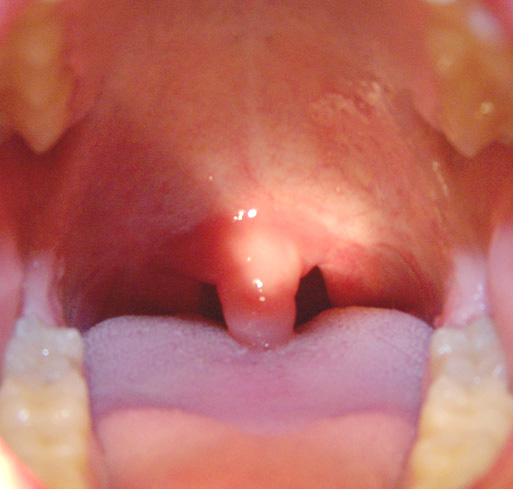
The uvula is the small, fleshy projection that hangs at the back of the mouth from the middle of the soft palate. Visible when the mouth is open and the throat is examined, it is part of the posterior oral cavity and lies above the entrance to the pharynx and throat. Although modest in size, the uvula contributes to several functions that affect breathing, swallowing and vocalization.
Image gallery
3 Images

Anatomy and structure
The uvula consists of mucous membrane, connective tissue, small salivary glands and a band of muscle (the musculus uvulae). It is supplied by branches of the pharyngeal plexus and receives sensory and motor innervation typical of the soft palate. Variations exist: some people have a bifid (split) uvula from birth, while in other cases it can become enlarged or inflamed.
Functions
Its roles are interrelated rather than singular. The uvula helps seal the nasopharynx during swallowing, contributes to the lubrication of the throat through glandular secretions, and influences the resonance of certain speech sounds—particularly in languages that use uvular consonants. Touching or stimulating the area can trigger the gag reflex, which in turn can cause retching or vomit in sensitive individuals.
Clinical significance and treatments
- Inflammation (uvulitis) may cause pain, swelling and breathing difficulty and is treated according to the underlying cause.
- Enlarged uvulae can contribute to snoring and obstructive sleep apnea; surgical reduction (uvulectomy or combined procedures) is sometimes performed.
- A bifid uvula can be a minor form of cleft palate and may affect speech; it is usually assessed by specialists when present.
Notable facts and distinctions
Although often associated with the gag response, the uvula is only one part of a larger reflex network. Its removal or alteration may change voice quality or airway mechanics in some people but is not universally necessary or beneficial. Cultural and historical notes record rare practices and medical uses, yet modern treatment is guided by clinical need and patient-specific considerations.
For further general reading on anatomy and related reflexes, see additional resources: throat anatomy, soft palate, gag reflex, emesis and reflexes.
Related articles
Author
AlegsaOnline.com Uvula (anatomy, function, and clinical significance) Leandro Alegsa
URL: https://en.alegsaonline.com/art/103765