
Soft palate (velum) — anatomy, function, and clinical significance
The soft palate is the flexible back part of the roof of the mouth that closes off the nasal passages during swallowing and shapes certain speech sounds; it is involved in breathing, reflexes, and some medical conditions.
The soft palate, also called the velum, is the movable, muscular portion at the back of the roof of the mouth. It extends posterior to the hard palate and ends in the hanging projection known as the uvula. Unlike the hard palate, the soft palate contains muscle and mucous membrane rather than bone, which gives it flexibility for several important actions.
Image gallery
10 Images


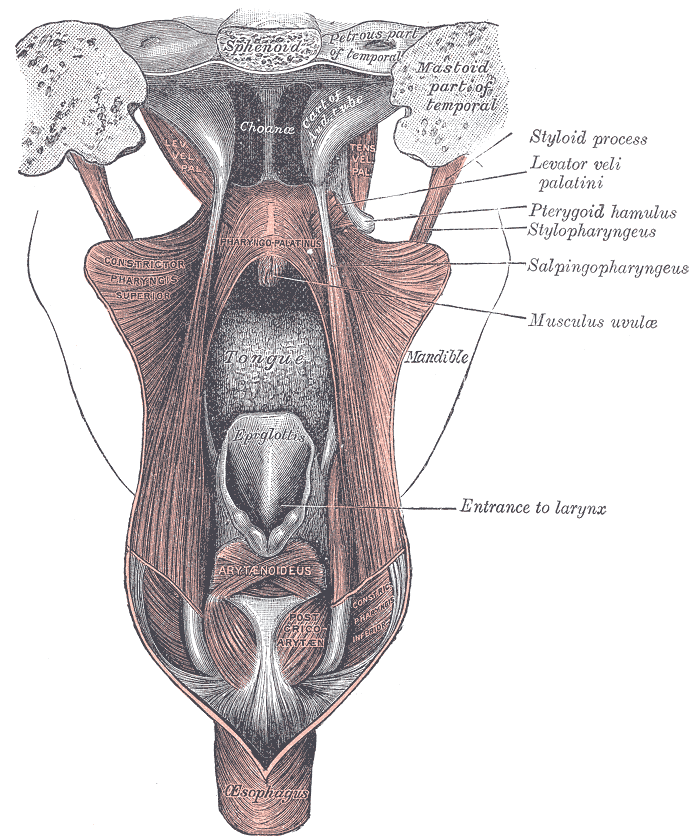
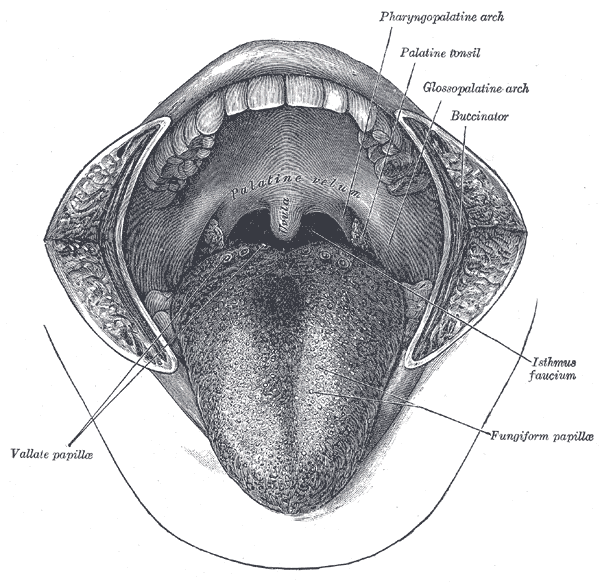


Anatomy and supporting structures
The soft palate is made of several paired and unpaired muscles—including the levator veli palatini, tensor veli palatini, palatoglossus, palatopharyngeus and the musculus uvulae—covered by mucosa. Its blood supply and nerves come from branches of the facial, maxillary, and pharyngeal vascular and nerve plexuses; motor control is largely via the pharyngeal plexus, while tensor veli palatini receives a branch of the trigeminal nerve.
Functions
During swallowing the soft palate elevates to close off the nasal cavity, preventing food or liquid from entering the nose. It also contributes to speech by modifying airflow and resonance for certain consonants and vowels, and it plays a role in breathing and airway protection. Contact with the soft palate can trigger the gag reflex in many people.
Clinical significance
- Cleft palate: a birth defect affecting the soft and/or hard palate that can impair feeding, speech, and middle ear function.
- Obstructive sleep apnea and snoring: excess tissue or poor muscle tone in the soft palate can contribute to airway collapse during sleep.
- Infections, tumors, and trauma: conditions that may require surgical repair such as palatoplasty or partial resection.
Examination of the soft palate is a routine part of head and neck and dental exams. Its mobility and symmetry provide clues about nerve function and developmental anomalies. Surgical and prosthetic treatments aim to restore separation of the nasal and oral cavities and improve speech, swallowing, and sleep-related breathing where needed.
Author
AlegsaOnline.com Soft palate (velum) — anatomy, function, and clinical significance Leandro Alegsa
URL: https://en.alegsaonline.com/art/91565