
Ureteral cancer
Ureteral cancer is a rare malignancy of the ureters, most commonly an upper tract urothelial (transitional cell) carcinoma. This article covers presentation, diagnosis, treatment options, risk factors, and prognosis.
Overview
Ureteral cancer arises in the lining of the ureters, the paired muscular tubes that convey urine from the kidneys to the bladder. It is uncommon compared with bladder cancer and is often grouped with cancers of the renal pelvis under the term upper tract urothelial carcinoma. Most cases are urothelial (transitional cell) carcinomas; other histologic types occur but are rare. For basic anatomy and function see ureter and for related urinary system information see urine and kidneys.
Image gallery
2 Images
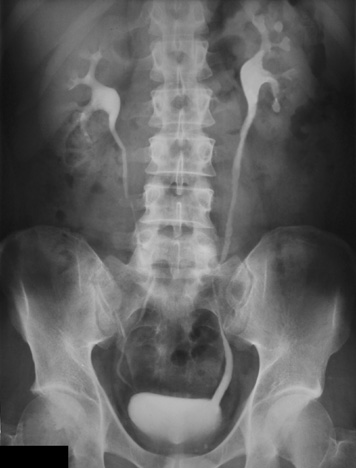
Typical presentation
Symptoms are variable and may be subtle. Common complaints that prompt investigation include visible or microscopic blood in the urine and flank pain from obstruction. Some patients present after imaging for unrelated problems detects a lesion. Clinical features that raise suspicion include:
- Hematuria (blood in the urine)
- Flank or abdominal pain from urinary blockage
- Recurrent urinary tract infections or unexplained weight loss in advanced cases
Diagnosis and staging
Diagnosis relies on a combination of imaging, endoscopic inspection and tissue sampling. Cross-sectional imaging such as CT urography is commonly used to visualize the upper urinary tract. Direct visualization with ureteroscopy allows biopsy for histologic confirmation. Urine cytology and specialized urine tests may support the diagnosis but are less sensitive for upper tract tumors. Staging follows common cancer staging principles and guides treatment choices.
Treatment approaches
Management depends on tumor grade, stage, location and patient factors. Options include:
- Surgical resection: radical nephroureterectomy with bladder cuff excision is a standard for high-grade or invasive disease.
- Kidney-sparing techniques: segmental ureterectomy or endoscopic resection/ablation for selected low-grade, low-volume tumors.
- Systemic therapy: chemotherapy is used for advanced or metastatic disease; radiation may have a role in select situations.
Decisions are individualized and often made by a multidisciplinary team including urology, medical oncology and radiology.
Risk factors, epidemiology and prognosis
Ureteral cancer is rare compared with lower urinary tract cancer. It is more frequent in older adults. Known associations include tobacco smoking and exposures to certain industrial chemicals; hereditary conditions that predispose to upper urinary tract urothelial cancer have also been described. Prognosis varies widely: early, localized tumors treated with complete resection can have favorable outcomes, while invasive or metastatic disease carries a poorer prognosis. Long-term surveillance is important because of risks of recurrence in the bladder or contralateral upper tract.
Distinctions and further information
Ureteral tumors share histologic features with bladder urothelial cancer but differ in presentation, accessibility for biopsy and surgical management. Follow-up typically includes periodic imaging and cystoscopic evaluation of the bladder because of the risk of subsequent tumors. For patient-oriented resources and clinical guidelines see general reference and specialty resources at kidney-related sites or urinary health. Additional clinical research and guideline summaries can be found through professional organizations and designated registries here.
Related articles
Author
AlegsaOnline.com Ureteral cancer Leandro Alegsa
URL: https://en.alegsaonline.com/art/103588
Sources
- mayoclinic.org : Ureter Cancer
- seer.cancer.gov : SEER Survival Monograph: Cancer Survival Among Adults: US SEER Program, 1988-2001, Patient and Tumor Characteristics
- cancer.gov : Transitional Cell Cancer (Kidney/Ureter)