
United States Department of the Treasury
Federal Cabinet department responsible for government revenue, public debt, currency production, tax administration, sanctions and financial law enforcement in the United States.
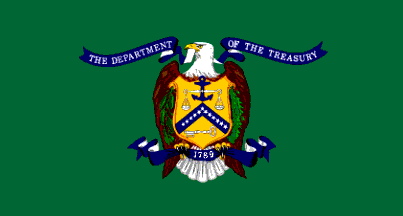
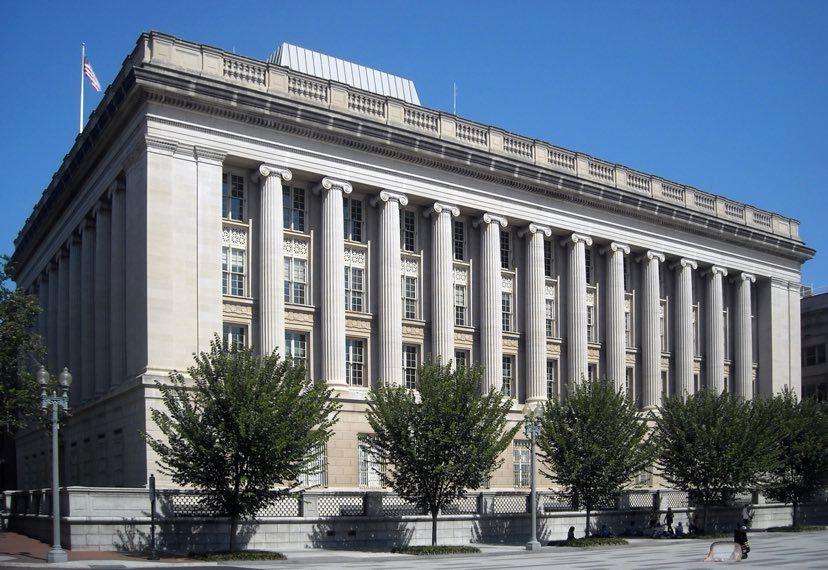
The United States Department of the Treasury is the federal Cabinet department that serves as the nation's treasury and manages many aspects of public finance. As a department of the United States government, it administers revenue collection, debt issuance, currency production, and a range of financial regulatory and enforcement programs. The department is commonly referred to simply as the Treasury.
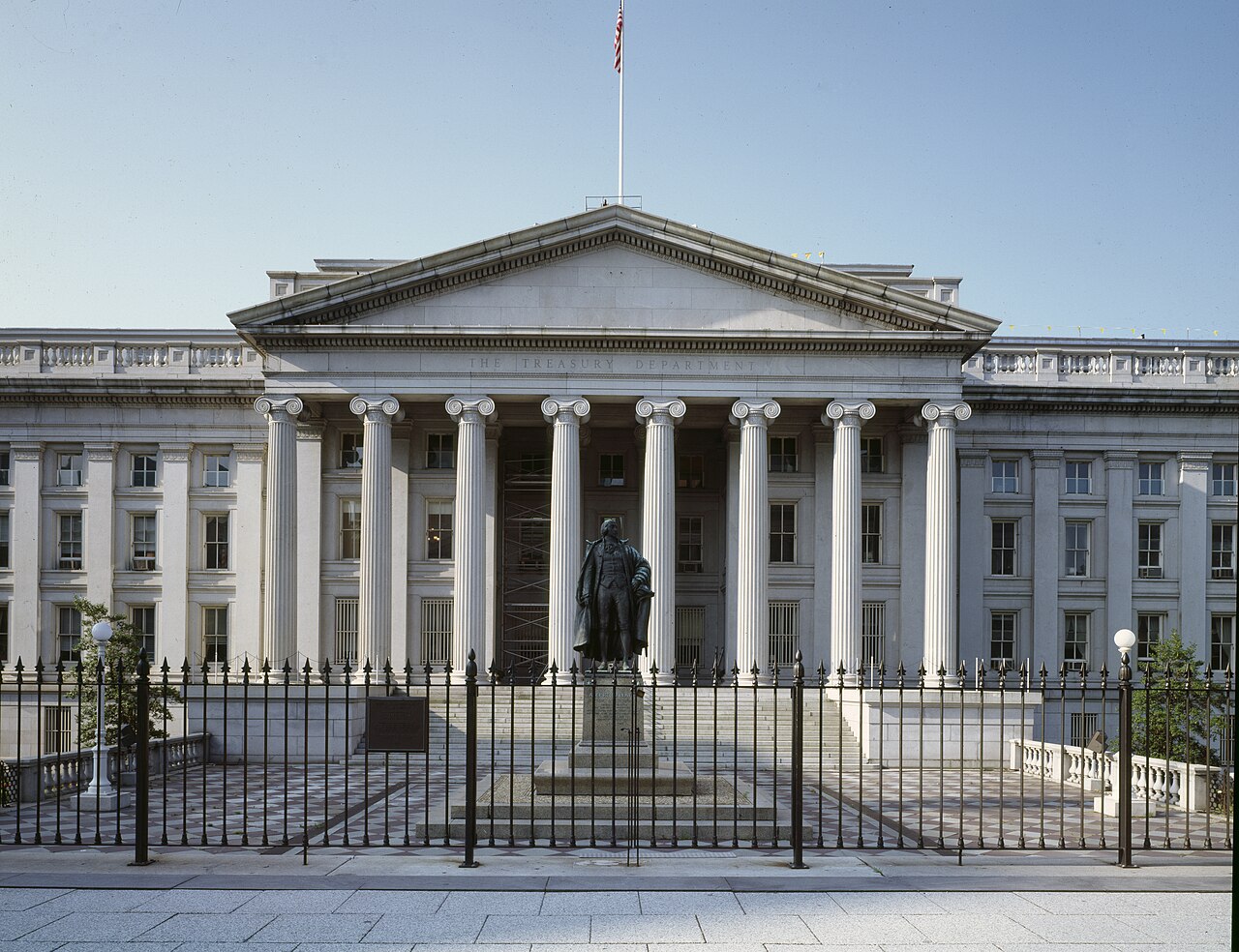
The Treasury was created by an Act of Congress in 1789 to organize and manage the new nation's finances. The first Secretary of the Treasury was Alexander Hamilton, who devised early policies for funding the national debt, establishing credit, and laying groundwork for a stable monetary system. Hamilton's influence shaped the department's initial mission and its place in the executive branch; his statue remains a prominent feature outside the Treasury building.
Image gallery
9 Images



Principal components
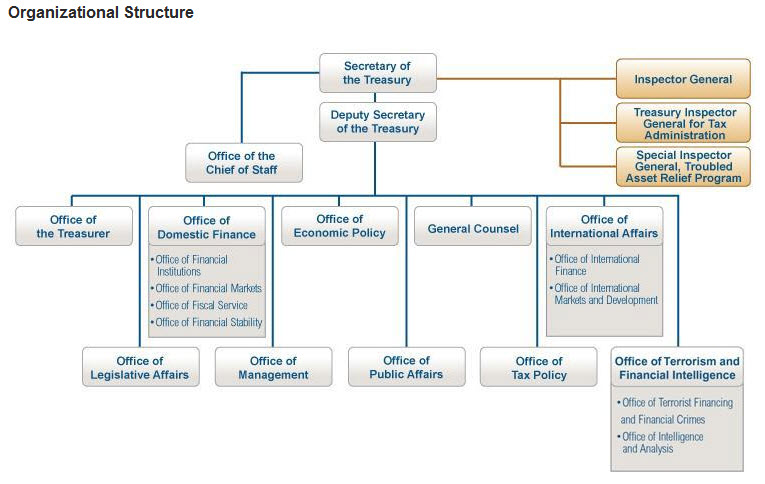
- Internal Revenue Service (IRS) — tax collection and administration.
- U.S. Mint — production of coinage.
- Bureau of Engraving and Printing — production of paper currency and security documents.
- Office of Foreign Assets Control (OFAC) — implements and enforces economic sanctions.
- Financial Crimes Enforcement Network (FinCEN) — combats money laundering and illicit finance.
- Office of the Comptroller of the Currency (OCC) and related supervisory offices — chartering and supervising banks and national banking regulations.
Core functions of the Treasury include managing federal receipts and payments, producing and distributing the nation’s currency and coinage, borrowing to finance the government, and advising on economic policy. It also enforces economic sanctions, administers anti‑money‑laundering rules, and works with other agencies on financial stability and consumer protection initiatives.
Over time the department's role has expanded beyond simple bookkeeping. During the 19th and 20th centuries federal revenue systems and financial regulation grew in complexity: a Civil War–era revenue bureau was an early ancestor of today’s tax administration, and later developments added specialized bureaus to handle currency production, bank supervision, and financial crimes. The Treasury now operates at the intersection of fiscal policy, law enforcement, and financial oversight.
Notable distinctions include its separation from monetary policy authorities: while the Treasury manages fiscal operations, the Federal Reserve is responsible for monetary policy and interest‑rate decisions. The Secretary of the Treasury serves in the President’s Cabinet and plays a central role in economic policy, international finance, and responses to economic crises. For further institutional and historical details consult official resources and specialized histories of U.S. public finance (Treasury, United States, government references).
Related articles
Author
AlegsaOnline.com United States Department of the Treasury Leandro Alegsa
URL: https://en.alegsaonline.com/art/103040