
United States House Committee on Financial Services
House committee that drafts and oversees U.S. policy for banking, securities, housing, insurance and related regulators; conducts hearings, writes legislation, and supervises financial agencies.
Overview — The United States House Committee on Financial Services is a standing committee of the United States House of Representatives responsible for federal policy affecting the broad financial services industry. Commonly referred to as the House Banking Committee, it plays a central role in shaping federal law for capital markets, consumer finance, housing and related areas.
Image gallery
1 Image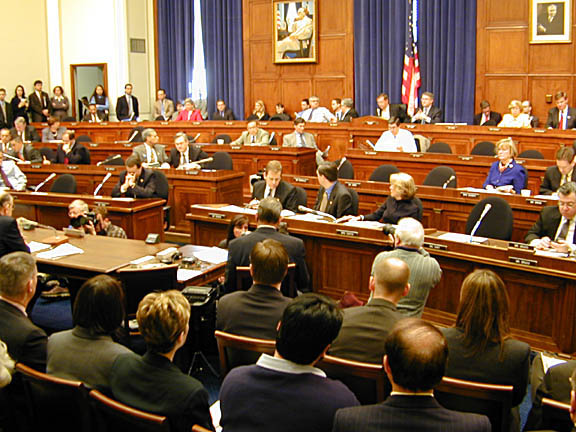
Jurisdiction and responsibilities
The committee has legislative jurisdiction and oversight authority over matters including securities markets, mortgage finance and housing policy, insurance, banking, and payment systems. It also monitors and reviews the work of major federal financial regulators such as the Federal Reserve, the United States Department of the Treasury, and the U.S. Securities and Exchange Commission, among others.
Structure and operation
The committee is led by a chair from the majority party and a ranking member from the minority party. To manage its wide remit, it is divided into subcommittees focused on discrete areas — for example capital markets, consumer protection and financial institutions, housing and insurance, monetary policy and oversight. These subunits hold hearings, mark up legislation, and conduct investigations.
Typical activities
- Drafting and considering bills that affect financial regulation and markets.
- Holding public hearings with agency officials, industry representatives and experts.
- Conducting oversight of federal agencies and reviewing regulatory implementation.
- Considering nominations to key financial posts and responding to financial crises.
History and significance
Tracing its roots to earlier congressional panels that handled banking and currency, the committee evolved as the U.S. financial system grew more complex. Over time it has overseen major reforms, crisis responses and the creation of regulatory institutions, reflecting the central role of finance in the national economy.
Notable distinctions
While many congressional committees touch economic topics, this committee is distinctive for concentrating legal authority over both private-market rules and the oversight of executive agencies that implement those rules. Its decisions influence consumer protections, market integrity and the resilience of the banking and housing systems.
Questions and answers
Q: What is the House Banking Committee?
A: The House Banking Committee is the committee of the United States House of Representatives that oversees the entire financial services industry, including the securities, insurance, banking and housing industries.
Q: What does the Financial Services Committee oversee?
A: The Financial Services Committee oversees the work of the Federal Reserve, the United States Department of the Treasury, the U.S. Securities and Exchange Commission and other financial services regulators.
Q: Who is responsible for overseeing all aspects of financial services in America?
A: The United States House Committee on Financial Services is responsible for overseeing all aspects of financial services in America.
Q: What industries are overseen by this committee?
A: This committee oversees the securities, insurance, banking and housing industries.
Q: Does this committee have any authority over state-level regulations?
A: No, this committee only has authority over federal-level regulations related to financial services.
Q: What organizations does this committee regulate?
A: This committee regulates organizations such as The Federal Reserve, The United States Department of Treasury, and The U.S. Securities and Exchange Commission among others.
Related articles
Author
AlegsaOnline.com United States House Committee on Financial Services Leandro Alegsa
URL: https://en.alegsaonline.com/art/103058
Sources
- archives.gov : "Chapter 5. Records of the Banking and Currency Committees"