
United Arab Republic (1958–1961)
A short encyclopedia overview of the United Arab Republic: the political union of Egypt and Syria (1958–1961), its aims in pan‑Arabism, political structure, flag, causes of collapse and historical legacy.
Overview
The United Arab Republic (UAR) was a short‑lived political union formed by the Arab Republic of Egypt and the Syrian Republic. It was proclaimed on 1 February 1958 as an experiment in Arab unity inspired by the pan‑Arab movement that gained strength after World War II. The UAR brought together two states under a single government and presidency and represented one of the most prominent attempts to create a supra‑national Arab polity in the 20th century.
Image gallery
10 Images





Formation and political structure
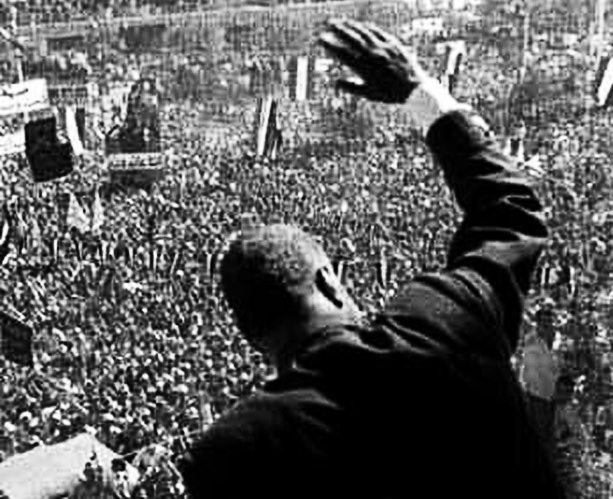
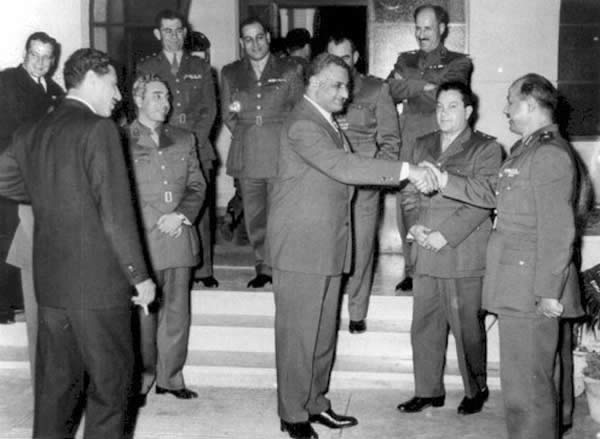
The union grew out of a combination of Syrian political crises, pressure from Arab nationalist groups, and the stature of Egyptian president Gamal Abdel Nasser, who became the head of the new state. The UAR established a centralized government based in Cairo. In practice, many key institutions, senior appointments and policy decisions were dominated by Egyptian officials, a factor that produced friction with Syrian politicians and military officers who had expected greater parity.
Territory, population and major cities
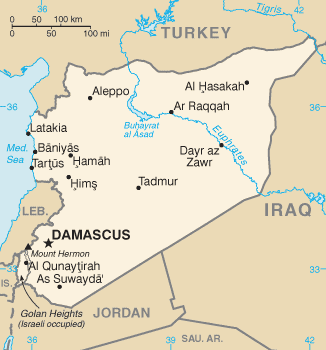
At the time of the union, the UAR encompassed the territories of modern Egypt and Syria, giving it a large geographic footprint in the eastern Mediterranean and the Levant. Its capital and administrative center was Cairo, which remained the largest city. Other major urban centers of the union included Alexandria and Giza in Egypt, and Damascus and Aleppo in Syria. The combined population numbered in the tens of millions, reflecting the population sizes of the two member states in that era.
Symbols: flag and identity
The UAR adopted a horizontal tricolor flag of red, white and black with two green stars on the white stripe. The tricolor is part of the family of pan‑Arab colors historically associated with Arab nationalism; the two green stars were widely understood to represent the two member states, Egypt and Syria. These visual symbols were intended to express unity and the shared political ideals of the new republic.
Reasons for collapse and aftermath
Despite initial enthusiasm, the union faced significant political and administrative problems. Syrian elites objected to the concentration of authority in Cairo, and economic and military arrangements did not meet expectations in Damascus. Growing discontent culminated in a Syrian military coup on 28 September 1961, which led Syria to secede from the UAR and restore its independent statehood. Egypt, however, continued to use the name "United Arab Republic" for several years afterward as a political statement, before eventually adopting a different official name in the early 1970s.
Legacy and historical significance
The United Arab Republic remains an important episode in modern Middle Eastern history. It illustrates both the appeal and the practical limits of pan‑Arab nationalism: while the UAR demonstrated the emotional and political force of the unity idea, its brief lifespan highlighted the difficulties of merging distinct political systems, balancing regional interests and reconciling competing elites. Elements of the UAR experience influenced later regional initiatives and continue to be referenced in discussions of Arab cooperation and integration.
Notable facts
- The UAR was formally proclaimed on 1 February 1958 and Syria withdrew in September 1961.
- Gamal Abdel Nasser served as the president of the UAR and was its most visible leader.
- Egypt used the name "United Arab Republic" for some years after Syria's departure, reflecting the political resonance of the term.
Related articles
Author
AlegsaOnline.com United Arab Republic (1958–1961) Leandro Alegsa
URL: https://en.alegsaonline.com/art/102950