
Tumors of the hematopoietic and lymphoid tissues
Overview of tumors arising in blood-forming and lymphoid tissues, including types, causes, diagnosis, treatment options, history, and how they differ from solid tumors.
Tumors of the hematopoietic and lymphoid tissues are cancers that arise in the cells that form blood or in the immune-system organs that process lymph. These disorders are often referred to collectively as blood cancers. They can affect circulating blood cells, the bone marrow where blood cells develop, the lymphatic system that channels immune cells, and lymph nodes dispersed throughout the body. Because they involve mobile cells and immune organs, their clinical behavior and methods of detection differ from those of solid tumors.
Image gallery
2 Images
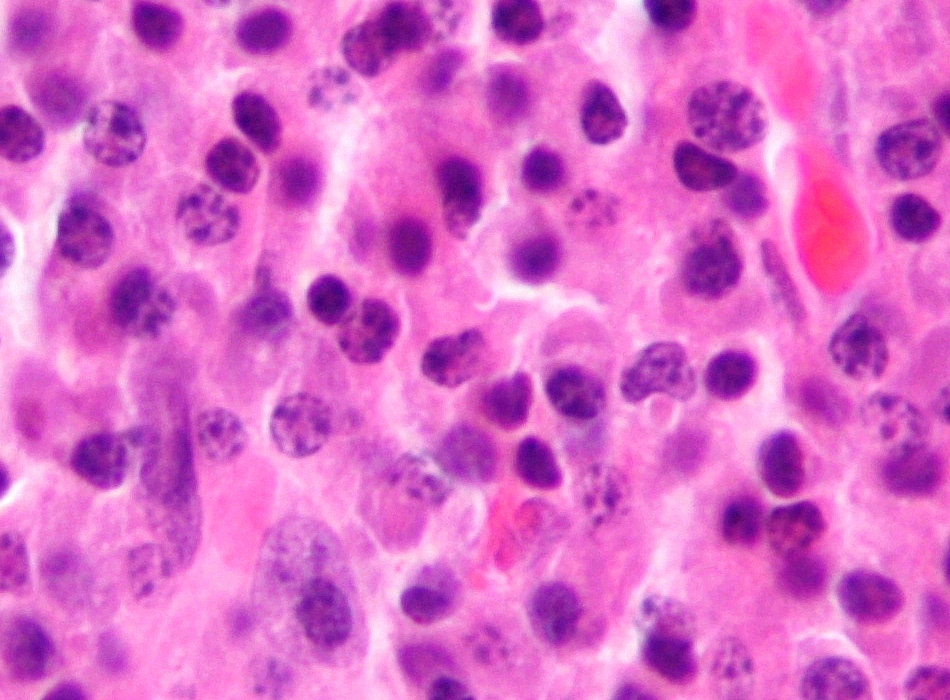
Major categories and defining features
The principal groups of these tumors are distinguished by the lineage of the malignant cell and its tissue of origin. Common categories include:
- Leukemias — diffuse cancers of blood-forming cells, typically identified by abnormal cells in the peripheral blood and bone marrow.
- Lymphomas — tumors that primarily involve lymph nodes or other lymphoid tissues; major subtypes are Hodgkin lymphoma and non-Hodgkin lymphoma.
- Plasma cell neoplasms — disorders such as multiple myeloma that arise from antibody-producing plasma cells.
- Myeloproliferative and myelodysplastic neoplasms — clonal disorders of marrow precursors that may progress to acute leukemia.
Causes and biology
These cancers result from genetic and epigenetic changes in hematopoietic or lymphoid precursor cells that give a clone a growth advantage. Well-known mechanisms include chromosomal translocations, point mutations, and altered signaling pathways; for example, specific molecular lesions are targets for drugs in some diseases. Contributing factors can include age, prior chemotherapy or radiation, certain infections, and inherited susceptibility, though many cases arise without a clear external cause.
Diagnosis and classification
Diagnosis typically combines clinical assessment, blood tests, and tissue examination. Key tools are peripheral blood counts and smears, bone marrow biopsy, immunophenotyping by flow cytometry, cytogenetic and molecular testing, and imaging to evaluate lymph nodes or organ involvement. These tests define the tumor type and guide prognosis and therapy.
Treatment approaches and outcomes
Treatment strategies depend on the specific diagnosis and patient factors. They may include chemotherapy, targeted small-molecule agents, immunotherapies (including monoclonal antibodies and engineered cell therapies), radiation for localized disease, and hematopoietic stem cell transplantation to replace diseased marrow. Prognosis varies widely: some hematologic malignancies are highly curable, others are managed chronically, and some remain difficult to treat. Rapid specialist assessment by a hematologist or oncologist is important.
History, clinical importance, and distinctions
Recognition of malignant blood diseases dates to the 19th century, when physicians first described abnormal white blood counts and marrow changes. Since then, advances in cellular pathology, cytogenetics and molecular biology have transformed understanding and led to targeted treatments. A notable distinction from solid tumors is their systemic nature: malignant cells circulate or home to multiple organs, so staging and therapy are often systemic rather than localized. Non-malignant hematologic conditions can present with similar symptoms, so accurate diagnosis is essential.
For more general information on blood disorders and patient resources visit the pages linked here: blood, the bone marrow overview, and the lymphatic system summary. Consultation with specialized clinicians remains the cornerstone of care for these varied and often complex diseases.
Related articles
Author
AlegsaOnline.com Tumors of the hematopoietic and lymphoid tissues Leandro Alegsa
URL: https://en.alegsaonline.com/art/102009
Sources
- doi.org : 10.1182/blood-2009-03-209262
- pubmed.ncbi.nlm.nih.gov : 19357394