
Tubular bells (chimes)
Tubular bells, or chimes, are tuned percussion instruments made from vertically suspended metal tubes struck by mallets to produce bell-like tones for orchestras, bands, and recordings.
Overview
Tubular bells, commonly called chimes in many scores and instrument lists, are a class of tuned percussion instruments consisting of a set of metal tubes hung vertically and struck with mallets. They belong to the pitched percussion family and produce sustained, bell-like tones that are familiar from orchestral music, film scores and popular recordings. The sound is often used where a bell-like color is required without the size or logistical constraints of actual cast bells.
Image gallery
4 Images
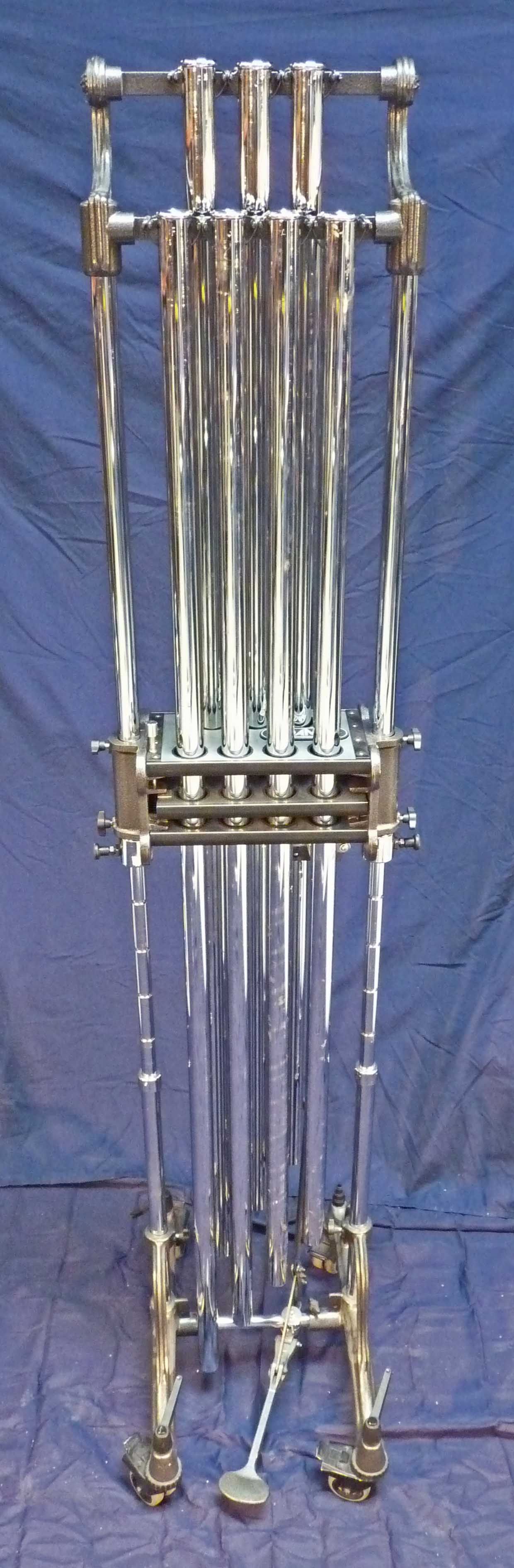


Design and characteristics
Each tube is tuned by its length (and to a lesser extent diameter and wall thickness) so that the set covers a musical range, typically around two octaves in many orchestral instruments. Tubes are usually made from steel or other metals and are suspended from a frame to allow free vibration. Players strike the tubes with mallets of varying hardness; soft mallets emphasize warmth, while harder mallets bring out brighter partials. The instrument is voiced to emphasize a clear fundamental and bell-like overtones.
History and development
Tubular bells were developed in the 19th century as a practical way to imitate the sonority of large church or tower bells within concert and theatre settings. Their portability and consistent tuning made them attractive to orchestras and military bands. Over time manufacturers standardized ranges and mounting systems so that sets could be used in a wide variety of ensembles and venues.
Uses and repertoire
Tubular bells appear in symphonic scores, marching and concert band literature, dance and theatre music, and in recorded popular music. They are often called for to provide a ceremonial or sacred sonority. A well-known popular example is the prominent use of the instrument on Mike Oldfield's album Tubular Bells, which helped to popularize the timbre beyond classical circles. Orchestral composers use them for climactic moments and to suggest church bells at a manageable scale.
Playing technique and notation
Players typically strike a tube a short distance from its top with a rubber or felt-headed mallet and allow the note to ring unless a damped effect is desired. Dampening is performed with the hand or a cloth. Notation normally assigns parts to a single staff or voice within the percussion section; scores may label the instrument as tubular bells or chimes. For more on classification in percussion, see percussion family references.
Variations and distinctions
Although the terms "tubular bells" and "chimes" are often used interchangeably, the name "chimes" can also refer to other bell-like instruments (for example, chromatic handchimes used in handbell choirs). Tubular bells differ from cast church bells in construction and harmonic profile, and from keyboard-type bell instruments in the way they are struck and sustained. Their characteristic bright, resonant, bell-like tone makes them a distinctive resource in the modern ensemble palette.
Related articles
Author
AlegsaOnline.com Tubular bells (chimes) Leandro Alegsa
URL: https://en.alegsaonline.com/art/101938