
Tuning fork
A two-pronged metal instrument that produces a near-pure musical pitch when struck. Used as a pitch reference for musicians, in auditory testing, and in demonstrations of resonance and vibration.
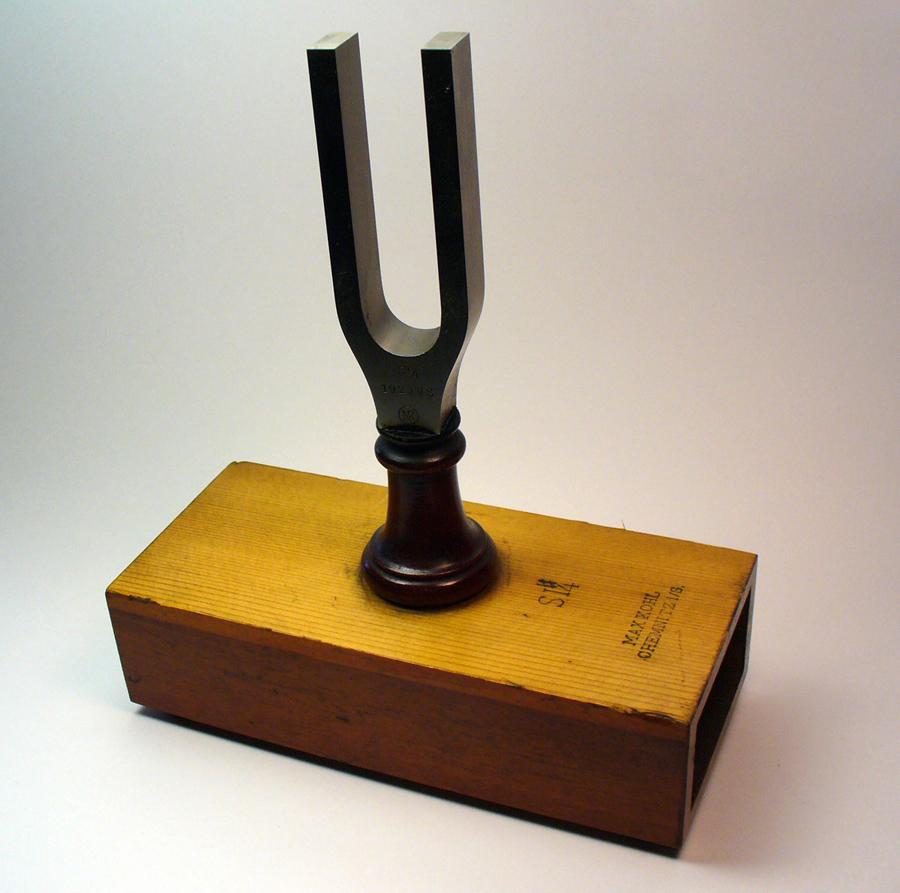
A tuning fork is a small U-shaped metal instrument that acts as a simple sound resonator. It consists of two parallel prongs, called tines, joined by a curved base and a stem used as a handle. When a tine is struck gently, the fork vibrates in a characteristic mode that produces a clear, steady pitch with relatively few strong overtones. After the initial transient, the tone is perceived as nearly pure and stable, which is why tuning forks have long been used as a reference source.
Image gallery
6 Images


Design and acoustic properties
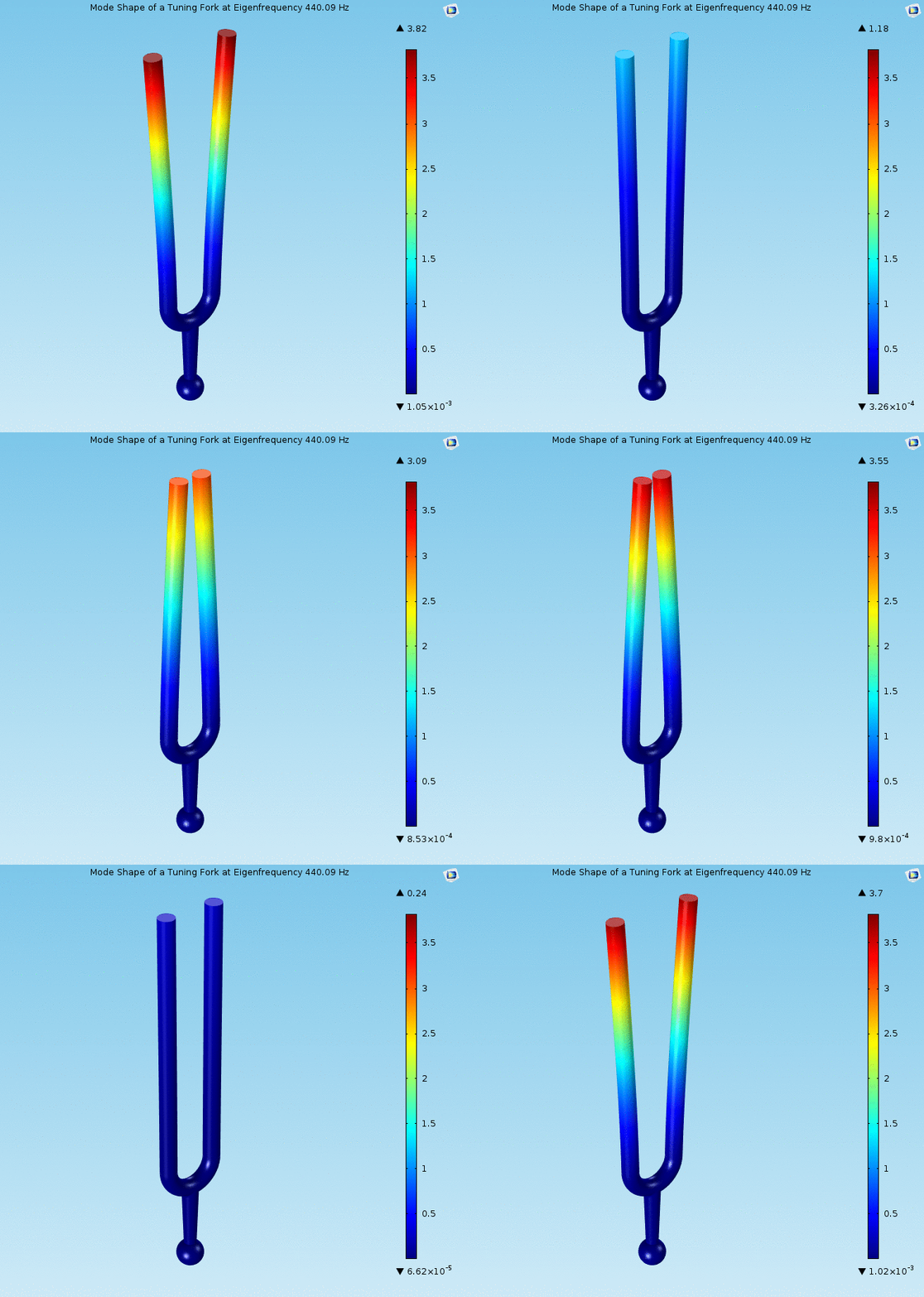
Most tuning forks are made from hardened steel or other metal alloys; aluminum and specialty alloys are also used for particular purposes. The pitch produced depends primarily on tine length, thickness and material density. In practice, keeping the cross section and material constant, a longer tine produces a lower frequency. The tines vibrate in opposite directions (an anti-symmetric mode) so that the fork itself radiates relatively little sound; placing the stem against a sounding board or resonator amplifies the tone without altering its pitch.
Physics of vibration
The fundamental vibration mode of a tuning fork concentrates motion in the tines while the base remains comparatively still. This reduces energy loss to supports and gives a slow decay of the fundamental compared with many instruments, producing the perception of a pure sustained pitch. The frequency is sensitive to geometry and material properties; keeping material and cross section constant, the frequency varies predictably with tine length and thickness. Controlled manufacturing and heat treatment help ensure stable, repeatable frequencies.
Common uses
- Musical tuning: a standard reference pitch is provided to tune instruments and voices; many forks are marked with their frequency or with common concert pitches (for example, A = 440 Hz is widely used).
- Medical applications: clinical hearing tests such as the Rinne and Weber examinations use tuning forks to help distinguish conductive from sensorineural hearing loss.
- Education and demonstration: physics classes and laboratories use forks to illustrate resonance, harmonic content and standing-wave behavior.
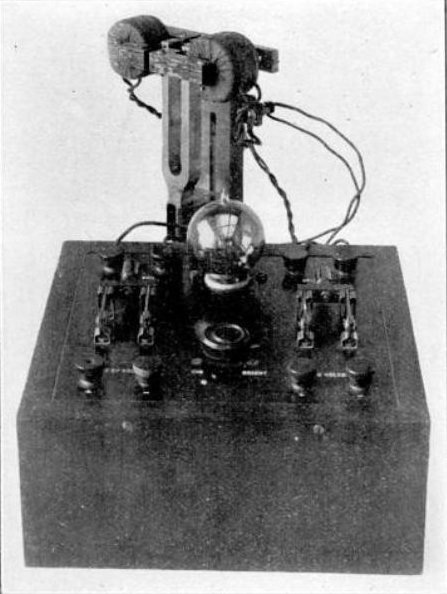
- Specialized timing and sensing: historically and in some niche instruments, forks have been integrated as steady mechanical oscillators or sensors because of their predictable frequency.
Variants, calibration and care
Variants include forks with weighted ends to lower frequency without lengthening tines and forks made to specific industrial or scientific tolerances. A quality fork is often stamped with its nominal frequency; accurate use may require occasional comparison with an electronic standard. To avoid damage, forks should be struck against a soft surface (rubber, leather or a dedicated pad) and stored to prevent bending or corrosion. The stem transmits vibration and may be touched lightly to resonant surfaces to increase audibility.
History and further reading
Tuning forks were invented in the early 18th century and rapidly became a convenient standard for pitch and for acoustic experiments. Their simplicity and reliability helped spread their use in music, science and medicine. For introductory discussions of pitch, frequency and resonance see general acoustics resources and instrument-making guides; additional practical notes are available in tuning and auditory testing references (further reading on pitch and frequency). For basic definitions and classifications see a simple description of a two-pronged fork and related resonant devices, or a focused explanation of how a fork resonates when set into motion.
Manufacturers and educators often supply calibration and usage guidance; consult trusted instrument makers or clinical protocols when precise frequency or diagnostic accuracy is required. For instrument care and examples of common reference pitches, many introductory music and acoustics texts provide practical guidance and demonstration exercises (introductory acoustics).
Questions and answers
Q: What is a tuning fork?
A: A tuning fork is a two-pronged fork made from a U-shaped bar of metal, usually steel.
Q: What are the prongs of a tuning fork called?
A: The prongs of a tuning fork are called tines.
Q: How does a tuning fork create sound?
A: A tuning fork creates sound by resonating at a specific constant pitch when set vibrating by striking it against an object.
Q: What type of tone does a tuning fork produce?
A: A tuning fork produces a pure musical tone.
Q: What needs to happen before a tuning fork produces the pure musical tone?
A: Before a tuning fork produces the pure musical tone, some high overtone sounds need to die out.
Q: What is the main use of a tuning fork?
A: The main use of a tuning fork is as a standard of pitch to tune other musical instruments and in some tests of hearing.
Q: What factor determines the pitch of a tuning fork?
A: The pitch of a tuning fork is determined by the length of the two prongs.
Related articles
Author
AlegsaOnline.com Tuning fork Leandro Alegsa
URL: https://en.alegsaonline.com/art/102027
Sources
- books.google.com : Sound
- amazon.com : amazon.com/dp/0387983740/
- tf.nist.gov : Calibration of Police Radar Instruments, National Bureau of Standards, 1976
- radarguns.com : "Radar Gun FAQ"
- radarguns.com : RadarGuns.com
- radars.com.au : "A detailed explanation of how police radars work"