
Transmutation: from alchemy to nuclear change
Transmutation is the conversion of one chemical element into another—historically a goal of alchemists and today a subject of nuclear science with natural and artificial mechanisms and practical applications.
Overview
Transmutation denotes a change of one chemical element into a different element. In ordinary chemistry atoms keep the same nucleus and only electrons are rearranged; transmutation requires altering the nucleus itself so that the number of protons (and often neutrons) changes. That fundamental distinction separates mythical or symbolic transformations from the physical processes addressed by modern science.
Image gallery
1 Image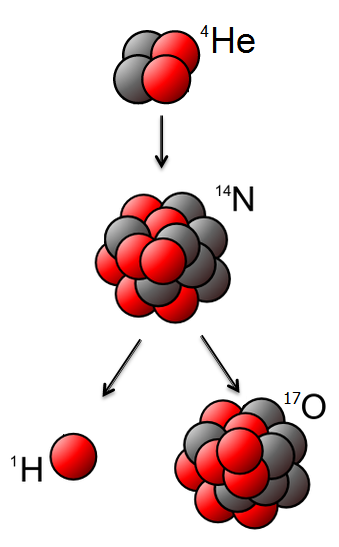
Historical background
The idea of turning common metals into precious ones is central to classical alchemy. Alchemists aimed especially to convert lead into gold, and they developed elaborate laboratory techniques and symbolic frameworks during centuries of experimentation. Those efforts did not achieve element-to-element conversion by chemical means, but they contributed to early laboratory methods and the rise of experimental science.
Physical processes of transmutation
Natural and artificial mechanisms can change one element into another. Natural transmutation occurs in radioactive decay and in stars by nucleosynthesis. Artificial transmutation is induced in laboratories or reactors by particle bombardment or neutron capture. Key discoveries in the 20th century—such as the identification of the neutron by James Chadwick and the demonstration of artificial radioactivity by Irène Joliot-Curie—helped establish the physics behind these conversions and opened routes to controlled transmutation.
Common methods
- Radioactive decay: an unstable nucleus emits particles or radiation and becomes a different element.
- Neutron capture: absorption of a neutron followed by beta decay can increase proton number.
- Particle bombardment: accelerators or reactors fire protons, neutrons, or heavier ions to induce nuclear reactions.
- Stellar nucleosynthesis: fusion processes in stars create heavier elements from lighter ones over cosmic time.
Uses and importance
Modern transmutation has practical roles: production of medical and industrial isotopes, research in nuclear physics, and proposals for reducing long-lived radioactive waste by converting problematic isotopes to shorter-lived ones. It also clarifies the limits of ancient alchemical dreams—while nuclear methods can produce small amounts of gold or other elements, the processes are energetically costly and uneconomical for metal production.
Distinctions and notable facts
Transmutation is a nuclear process, not a chemical reaction; changing elemental identity requires altering protons in the nucleus. The term covers both naturally occurring changes and deliberate, engineered reactions. For further reading on historical practice and modern techniques, see works about alchemy and introductions to nuclear physics.
Related articles
Author
AlegsaOnline.com Transmutation: from alchemy to nuclear change Leandro Alegsa
URL: https://en.alegsaonline.com/art/101181