
Irène Joliot-Curie — French chemist and Nobel laureate
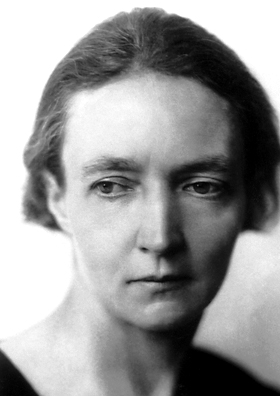
Irène Joliot-Curie (1897–1956) was a French chemist and nuclear researcher. Co‑winner of the 1935 Nobel Prize in Chemistry with Frédéric Joliot for the discovery of artificial radioactivity; daughter of Pierre and Marie Curie.
Overview
Irène Joliot-Curie (1897–1956) was a French scientist known for pioneering work in radiochemistry and nuclear physics. Daughter of Pierre and Marie Curie, she continued her parents' research tradition and in 1935 shared the Nobel Prize in Chemistry with her husband, Frédéric Joliot, for producing radioactive isotopes artificially. For a concise biography, see brief life summary.
Image gallery
7 Images



Scientific contributions
Working at the Radium Institute in Paris, Irène and Frédéric demonstrated that stable elements could be made radioactive by bombardment with particles, a process now called artificial radioactivity. This discovery expanded experimental nuclear techniques and opened new possibilities for medical isotopes, laboratory tracers and subsequent nuclear research. Further details on her research context are available at research overview.
Education and career
Trained in physics and chemistry in Paris, Irène spent much of her career in collaborative laboratory work, combining experimental skill with careful chemical separation methods. She directed and participated in research groups that bridged basic nuclear physics and chemical analysis, helping establish procedures still used in radiochemistry laboratories. Background material on her family and early influences can be found at family and early life.
Notable facts
- Co‑recipient of the 1935 Nobel Prize in Chemistry with Frédéric Joliot for the discovery of artificial radioactivity.
- Member of a three‑generation family prominent in radioactivity research; her parents were Pierre and Marie Curie.
- Contributions helped pave the way for the medical and industrial use of radioactive isotopes.
- Her legacy is discussed in historical and scientific retrospectives: further reading.
Later in life Irène Joliot-Curie remained active in research and in promoting the peaceful applications of atomic science. Like several early workers in radioactivity, she later suffered health problems linked to long‑term exposure to ionizing radiation and died in 1956. Her work is remembered for both its technical impact on nuclear chemistry and for advancing the role of women in twentieth‑century science.
Questions and answers
Q: Who was Irène Joliot-Curie?
A: Irène Joliot-Curie was a French scientist.
Q: What did Irène Joliot-Curie win a Nobel Prize for?
A: Irène Joliot-Curie won the Nobel Prize for Chemistry in 1935.
Q: Who did Irène Joliot-Curie share her Nobel Prize with?
A: Irène Joliot-Curie shared her Nobel Prize with her husband, Frédéric Joliot.
Q: Who were Irène Joliot-Curie's parents?
A: Irène Joliot-Curie's parents were Pierre and Marie Curie.
Q: When was Irène Joliot-Curie born and when did she die?
A: Irène Joliot-Curie was born on September 12, 1897, and died on March 17, 1956.
Q: In what year did Irène Joliot-Curie win the Nobel Prize for Chemistry?
A: Irène Joliot-Curie won the Nobel Prize for Chemistry in 1935.
Q: What was Irène Joliot-Curie's relationship with Frédéric Joliot?
A: Irène Joliot-Curie was married to Frédéric Joliot and they shared the Nobel Prize for Chemistry in 1935.
Related articles
Author
AlegsaOnline.com Irène Joliot-Curie — French chemist and Nobel laureate Leandro Alegsa
URL: https://en.alegsaonline.com/art/120954
Sources
- nobelprize.org : "Irène Joliot-Curie biography"
- wikidata.orgQ7504.html : wikidata.orgq7504.html
- authority.bibsys.no : 90528062
- catalogo.bne.es : XX1128504
- catalogue.bnf.fr : cb12275132b
- data.bnf.fr : (data)
- cantic.bnc.cat : a11202828
- ci.nii.ac.jp : DA03311448
- d-nb.info : 119054450
- isni.org : 0000 0001 1876 0751
- id.loc.gov : n87134762
- kopkatalogs.lv : 000235537
- culture.gouv.fr : 19800035/221/29095
- id.ndl.go.jp : 00437029
- aleph.nkp.cz : jn20000603240