
Transistor radio: portable solid-state radio receivers
Battery-powered portable radio receivers using semiconductor transistors for amplification. Small, energy-efficient devices that became widely available in the 1950s and displaced many vacuum-tube sets.
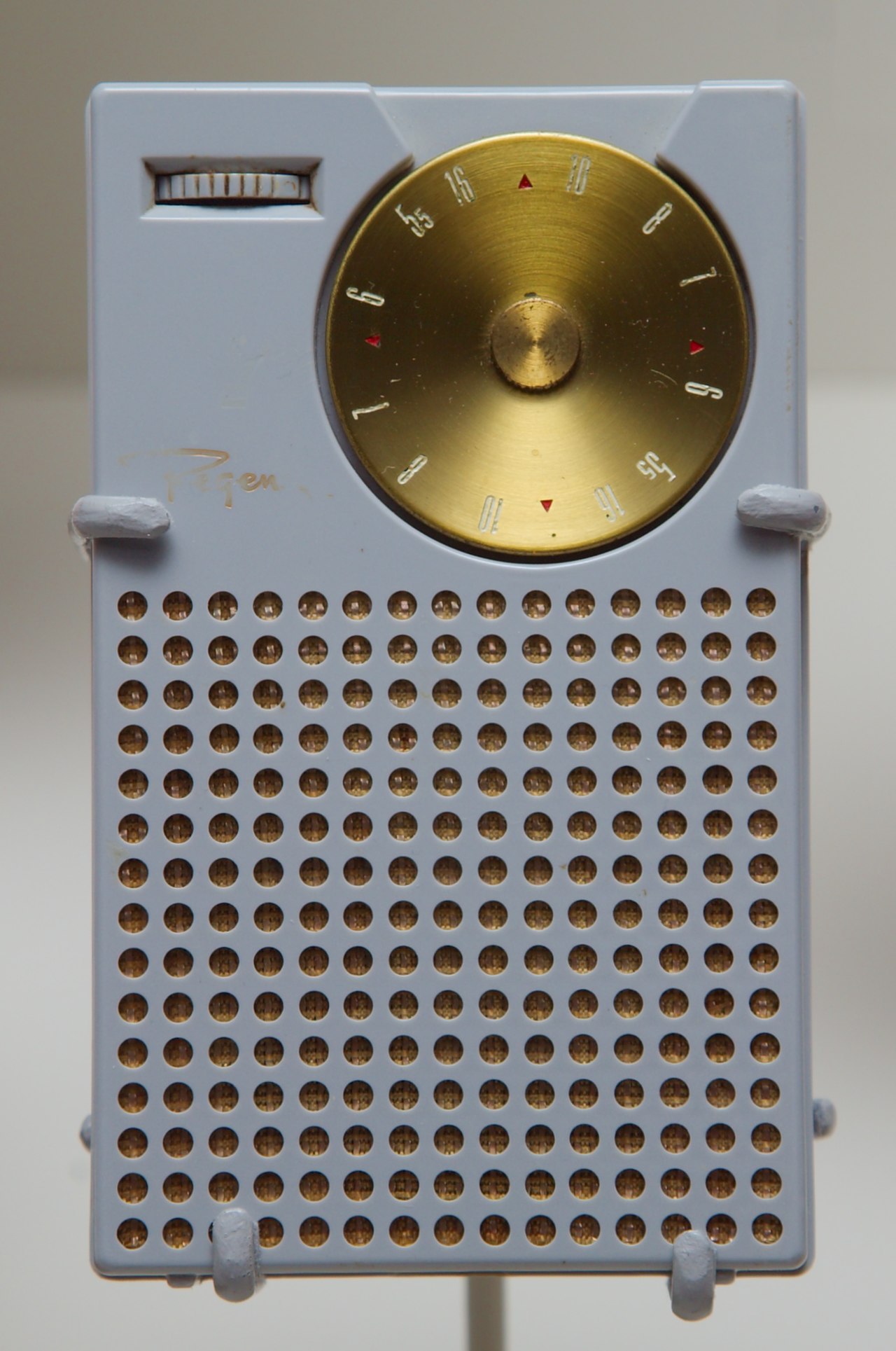
A transistor radio is a compact, battery-powered radio receiver that relies on semiconductor devices to amplify and process broadcast signals. By replacing bulkier vacuum tubes with solid-state components, these receivers made audio radio portable, affordable, and practical for everyday use. They played a major role in personal and mass communication in the mid‑20th century and remain an important example of early consumer electronics.
Image gallery
9 Images



Characteristics and components
Transistor radios generally contain several key parts: an antenna and tuner to select frequencies, a set of transistors to amplify small signals, filters and intermediate-frequency stages for selectivity, and an audio stage driving a speaker or headphones. Typical advantages include small size, low heat output, and greater mechanical robustness compared with tube designs. Many models emphasize low power consumption, allowing long operation from small batteries.
History and development
The first commercially successful transistor radios appeared in the 1950s as transistor technology matured. Early solid‑state receivers offered performance suitable for home and portable listening, and their affordability led to mass adoption. Over the following decade, desktop and portable tube radios rapidly declined in popularity as consumers preferred lighter, more reliable transistor sets; references to the older vacuum tube era highlight the contrast in size and maintenance requirements.
Uses, examples and cultural impact
Portable transistor radios became a primary way people accessed news, music, and sports while away from home. As inexpensive personal devices they influenced youth culture, mobile listening habits, and emergency communications. Manufacturers produced models focused on portability, shortwave reception, or high-fidelity sound, and these broadcasting receivers often included features such as tone controls, telescoping antennas, and multiple bands.
Technical distinctions and legacy
Unlike vacuum tubes, transistors require less warm‑up time and draw far less power, enabling pocketable designs and prolonged battery life. Although modern digital tuners and integrated circuits have largely replaced discrete early transistor stages, the transistor radio stands as a milestone in consumer electronics that demonstrated the practical benefits of solid‑state technology.
Today the term evokes both a particular form factor and a pivotal transition in radio engineering: the move from thermionic amplification to compact semiconductor circuits that opened radio listening to broader audiences.
Related articles
Author
AlegsaOnline.com Transistor radio: portable solid-state radio receivers Leandro Alegsa
URL: https://en.alegsaonline.com/art/101157