
Toyota Hilux
Compact pickup truck produced by Toyota since 1968, known for durability, global use, and multiple body and drivetrain variants; sold under different names in some markets.
Overview
The Toyota Hilux is a compact-to-midsize pickup truck produced by Toyota since 1968. It has been sold in many markets around the world under the Hilux name and under alternate names in some regions. In North America, earlier generations were commonly marketed as the Toyota Truck or Toyota Pickup (North American names) and the model line influence continued when Toyota introduced the Tacoma in the mid-1990s (Tacoma introduction). Toyota's long production run began in 1968 (first introduced 1968) and the vehicle has received periodic redesigns and updates, including notable updates in the 2010s.
Image gallery
10 Images
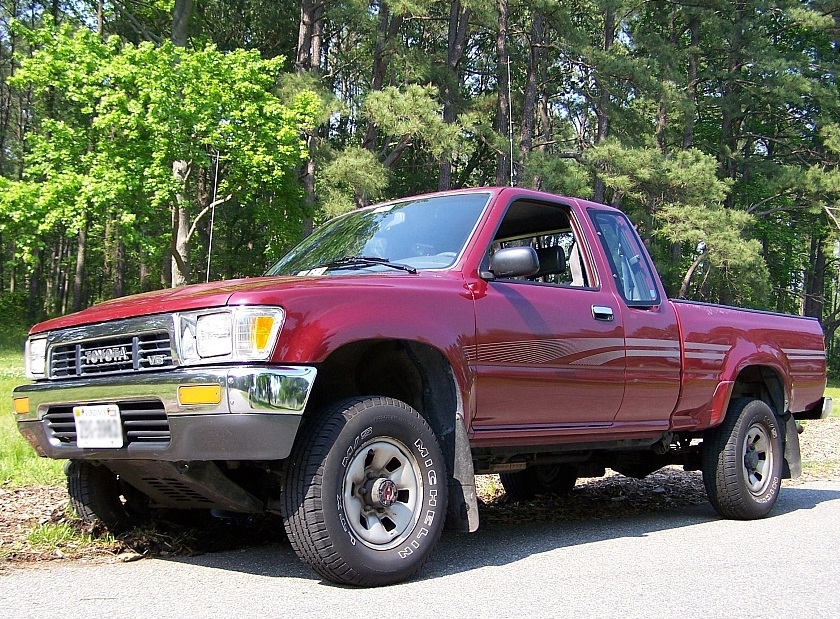


Design and characteristics
The Hilux is built on a ladder-frame chassis and has been offered with rear-wheel drive and four-wheel drive configurations. Engine choices historically include petrol and diesel options, with naturally aspirated and turbocharged diesels especially popular in export markets. The truck is offered in multiple cab styles (single, extended/extra, and double/crew cabs) and in a variety of bed lengths and equipment levels to suit commercial and private users.
- Chassis: body-on-frame ladder design for load-carrying and durability.
- Drivetrain: RWD or selectable 4WD; manual and automatic transmissions across different markets.
- Engines: petrol and diesel, tuned for efficiency, torque, or emissions compliance depending on region.
- Body styles: single-cab, Xtra/extended cab, and double/crew cab options.
History and market development
Introduced by Toyota in the late 1960s as a compact work truck, the Hilux evolved through multiple generational redesigns to meet changing safety, emissions, and comfort expectations. Toyota has continually adapted the model for local markets with region-specific engines, trim levels, and suspension tuning. Since the 1970s the Hilux became a global workhorse; in North America the nameplate history includes the Toyota Truck branding used from the 1970s (market history) and the later separation of Toyota's compact pickup line into the Tacoma nameplate in 1995 (North American Tacoma).
Uses, reputation and cultural impact
The Hilux is widely used in agriculture, small business, construction, emergency services and as personal transport in many regions. Its reputation for mechanical simplicity and robustness has made it popular in environments with limited service infrastructure. The model has also featured in motorsport and off-road events and is often modified for expedition travel. Toyota's broader brand and dealer networks (Toyota) helped establish the Hilux as a dependable choice for fleet buyers and owner-operators.
Variants, notable features and distinctions
Across its production life the Hilux has been offered in light-duty and heavier-duty trims, special editions with upgraded suspension or cosmetic packages, and market-specific variants (e.g., models optimized for fuel economy or for higher payload). It is commonly classified as a compact or mid-size pickup depending on regional segment definitions (vehicle class). The long production span and frequent updates—dating back to its 1968 launch (original introduction)—mean that Hilux models are highly diverse in capability and specification.
Because of its global presence and varied configurations, the Hilux remains an important model in Toyota's light commercial vehicle lineup. Enthusiasts and buyers value its balance of practicality, aftermarket support, and a reputation for resilience that has been reinforced over decades of use around the world.
Related articles
Author
AlegsaOnline.com Toyota Hilux Leandro Alegsa
URL: https://en.alegsaonline.com/art/100974
Sources
- tfltruck.com : "Old vs. New: 1995 Toyota Tacoma vs. 2016 Toyota Tacoma" · web.archive.org
- paultan.org : "2016 Toyota Hilux pick-up slated for May 21 debut" · web.archive.org
- autoindustriya.com : "2018 Toyota HiLux gets new top-spec 'Conquest' in the Philippines" · web.archive.org