
Torres Strait Islanders
Indigenous Melanesian peoples of the Torres Strait Islands (Queensland, Australia). Distinct from Aboriginal Australians, with unique languages, seafaring culture, art and long-standing ties to Papua New Guinea.
Overview
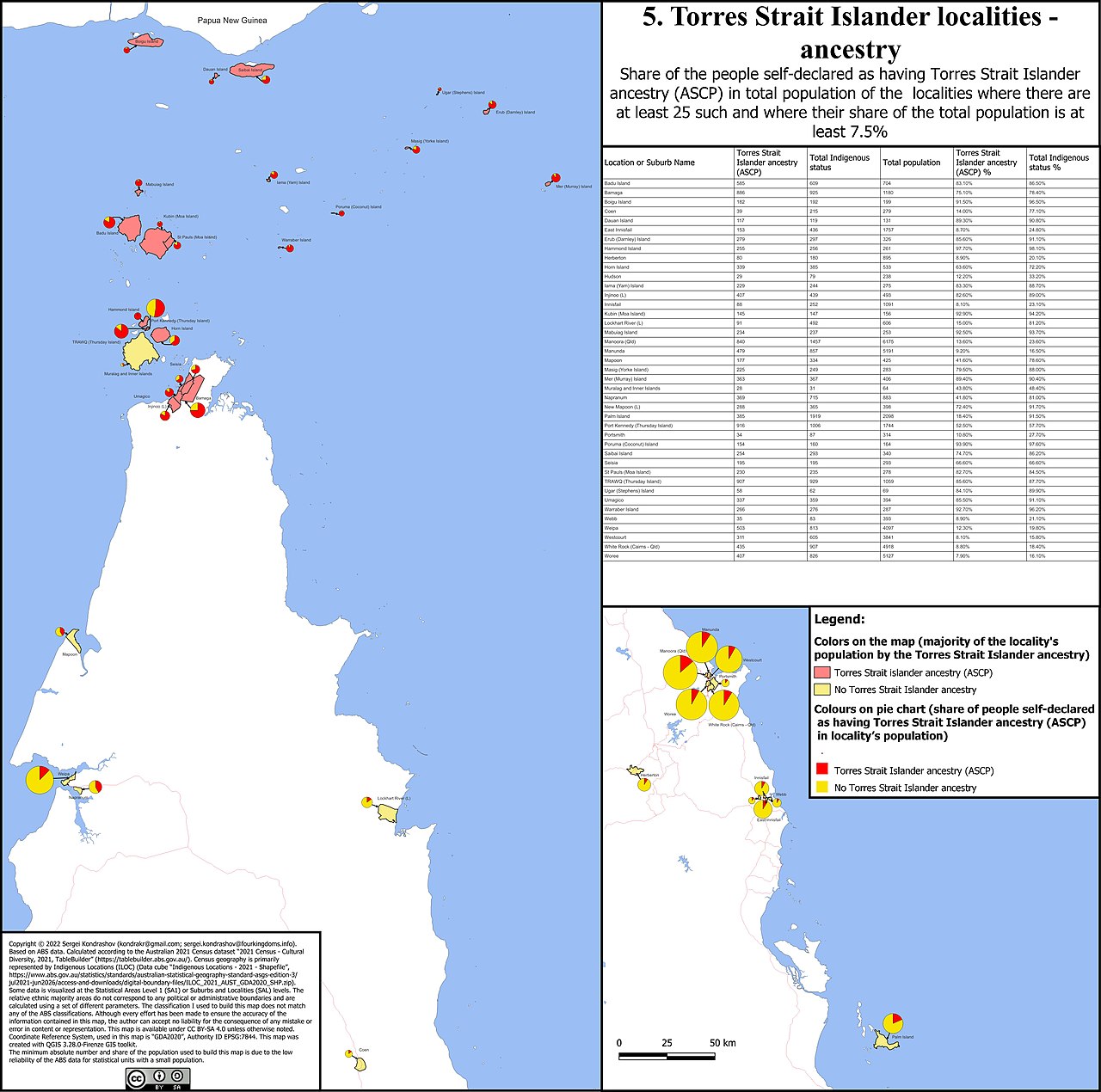
The Torres Strait Islanders are the Indigenous peoples of the Torres Strait Islands, located between the northern tip of Queensland and Papua New Guinea. In Australian contexts they are recognised as a distinct group from other Aboriginal peoples and as the traditional inhabitants of that island region and nearby coastal areas. Many Islanders live on the islands themselves, while significant communities also live on the Australian mainland and in urban centres.
Image gallery
10 Images



Culture and characteristics
Torres Strait Islander culture has strong maritime foundations. Traditional life revolves around sea country — fishing, hunting, and canoe navigation — and a seasonal knowledge of tides, winds and reef systems. Languages of the region include several distinct tongues such as Meriam Mir and Kala Lagaw Ya, and a creole that developed through sustained contact. Visual and performing arts are prominent: headdresses (often called dhari or dhoeri), drumming (warup), dance and intricate shell and beadwork are central to ceremonial life and contemporary artistic expression.
Social organization and traditions
Communities are organised by island and by clan or family groups with strong kinship ties and totemic links to particular marine and land areas. Customary rules govern use of resources and seasonal movements, and many Islanders continue to practice traditional fishing, gardening and exchange networks alongside wage work. Christianity and mission histories have influenced religious life, but many traditional ceremonies and stories remain important for cultural continuity.
History and regional connections
Torres Strait Islanders share cultural and ancestral connections to coastal and island peoples of nearby New Guinea and other parts of Melanesia. Contact with European explorers, traders and later missionaries and colonial administrations altered social patterns, economy and law, yet Islanders retained distinctive identities. International agreements and cross-border arrangements recognise longstanding traditional movement and customary activities between Australia and neighbouring Papua New Guinea.
Contemporary life and significance
Today Torres Strait Islanders are active in politics, education, arts and public life, advocating for recognition of land and sea rights, cultural heritage and social services tailored to island realities. Their flag and cultural symbols are widely used in ceremonies and public events. Islanders contribute to Australia’s cultural diversity through contemporary art, music, and knowledge of maritime environments.
Key features and distinctions
- Distinct peoples of the Torres Strait region with Melanesian links to Papua New Guinea.
- Different languages including Meriam Mir, Kala Lagaw Ya and Torres Strait Creole.
- Strong seafaring and reef-based subsistence traditions; important ceremonial arts like the dhari headdress and warup drumming.
- Recognised as separate from mainland Aboriginal groups in many legal and cultural contexts across Australia.
For more detailed legal, linguistic and cultural resources, readers can follow official cultural organisations and government pages that specialise in Torres Strait Islander affairs: identity and rights, regional information, and community cultural centres at national and local levels.
Related articles
Author
AlegsaOnline.com Torres Strait Islanders Leandro Alegsa
URL: https://en.alegsaonline.com/art/100748