
Tol'able David (1921 film)
Silent coming-of-age film directed by Henry King and starring Richard Barthelmess. A rural drama acclaimed for realism; winner of Photoplay's 1921 Medal of Honor and selected for the U.S. National Film Registry in 2007.
Overview
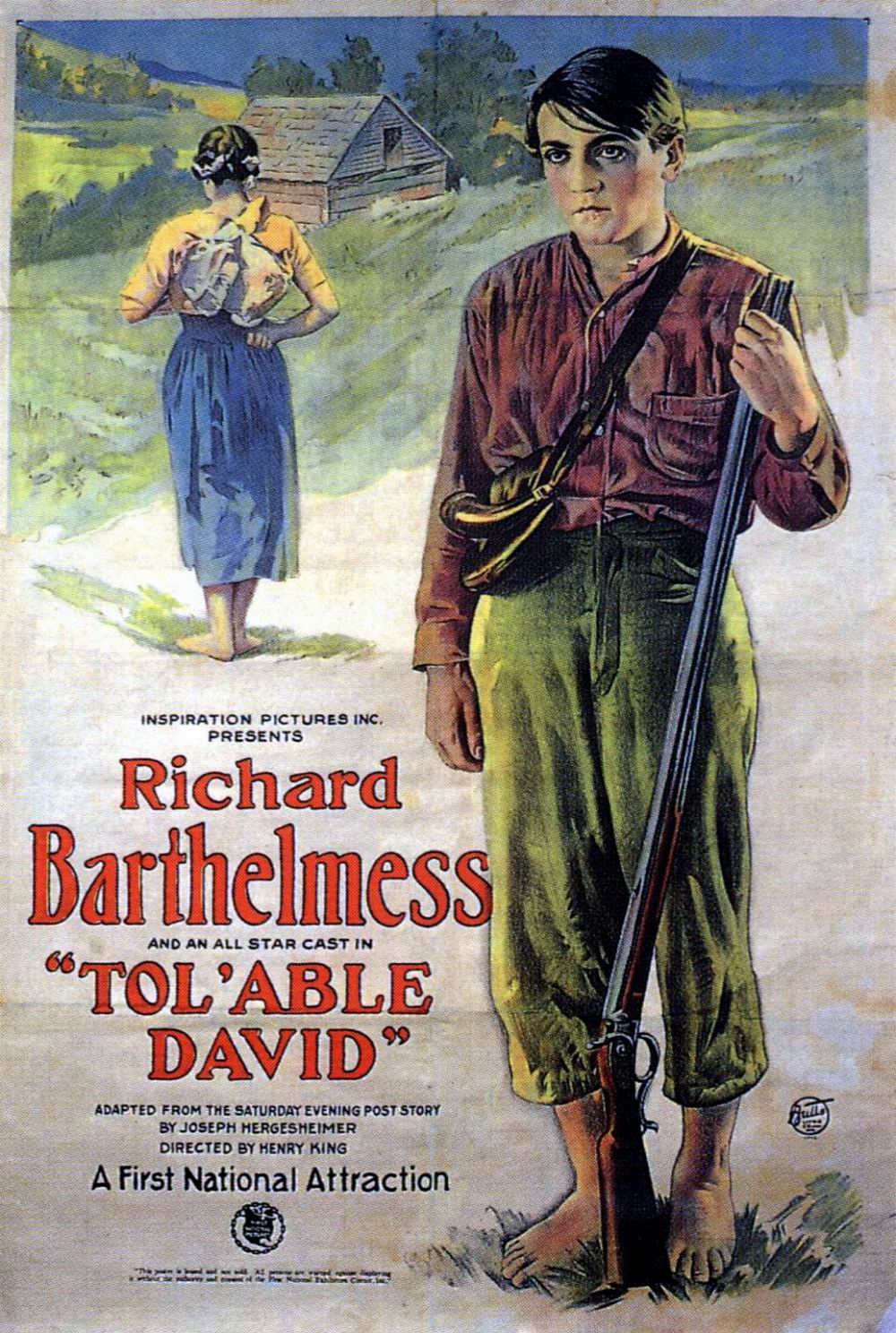
Tol'able David is a 1921 American silent drama directed and produced by Henry King for Inspiration Pictures. The picture stars Richard Barthelmess and adapts a short story by Joseph Hergesheimer. It is commonly cited as a landmark of early American cinema for its naturalistic performances and its focus on rural life and a young man's passage into maturity.
Image gallery
2 Images
Production and style
The film was made during the height of the silent era and reflects a turn toward realism in feature filmmaking. King emphasized location shooting and restrained acting, creating a mood that contrasted with more theatrical melodramas of the period. The cinematography highlights outdoor settings and everyday details to support the film's themes of family duty and personal courage.
Plot and themes
At its core, the story follows a youth in a small rural community who struggles to be taken seriously by his elders and neighbors. The narrative centers on his efforts to protect his family and home when faced with violent outsiders, and the film treats those events as a coming-of-age test. Major themes include masculine identity, communal bonds, and the tension between childhood and adult responsibility.
Reception and legacy
Upon release, the picture received strong critical praise for Barthelmess's performance and King’s direction. It earned popular and critical honors, including Photoplay Magazine's 1921 "Medal of Honor." Film historians note its influence on later portrayals of rural America and on directors who sought more subdued, realistic storytelling. In 2007 the film was added to the United States National Film Registry, recognized by the Library of Congress as culturally, historically, or aesthetically significant.
Notable facts
- Based on a literary story by Joseph Hergesheimer rather than an original screenplay.
- Directed and produced by Henry King for Inspiration Pictures.
- Praised for its naturalism and enduring influence on American film drama.
The film remains a frequent subject of study for its early use of location work, its portrayal of character-centered drama in silent cinema, and its role in establishing Richard Barthelmess as a leading actor of the 1920s.
Related articles
Author
AlegsaOnline.com Tol'able David (1921 film) Leandro Alegsa
URL: https://en.alegsaonline.com/art/100330