
Tonight We Sing (1953 film)
A 1953 American biographical musical directed by Mitchell Leisen, featuring opera and ballet stars in a dramatized account inspired by the 1946 novel Impresario.
Tonight We Sing is a 1953 American biographical musical film directed by Mitchell Leisen and released by 20th Century Fox. The screenplay adapts material from the 1946 novel Impresario and presents a dramatized portrait typical of mid-century Hollywood musicals: a blend of narrative biopic and staged performance sequences. The movie is remembered for assembling performers from the worlds of opera, stage and dance alongside established film actors.
Image gallery
1 Image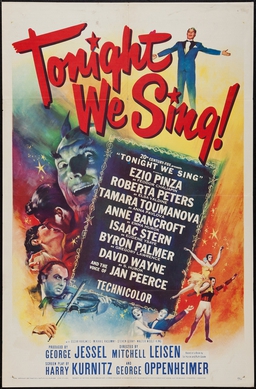
Principal cast and contributors
The cast mixes screen talent with classical artists: David Wayne leads among the actors, while celebrated operatic figures such as Roberta Peters and David Wayne share the bill with bass singer Ezio Pinza. Early in her career, future star Anne Bancroft appears in a supporting role, and the production includes dance contributions from the ballerina Tamara Toumanova. These casting choices reflect the film's intention to showcase authentic vocal and dance talent within a cinematic story.
Content and style
Structurally the picture alternates dramatic scenes with musical set pieces, allowing extended excerpts of operatic arias and choreographed dance numbers to be staged for the screen. The film follows the conventions of Hollywood biopics of the era: it emphasizes personal drama, professional milestones, and the spectacle of performance. Its musical content draws on classical repertoire and popularized arrangements designed to appeal to mid-century audiences.
Production context and release
Made during a period when major studios invested in musicals and star-driven biographies, the picture was produced and distributed by 20th Century Fox. Director Mitchell Leisen, known for his attention to visual detail and for working across comedy, drama and period pieces, brought a polished studio sensibility to the staging of operatic and dance material. The film was marketed to both general moviegoers and fans of classical music.
Legacy and notable aspects
- The film is notable for bringing real opera and ballet artists into a mainstream Hollywood production, bridging popular cinema and classical performing arts.
- It provided a screen credit for talents who were better known on stage, and represents an example of studio-era attempts to broaden musical programming with high-culture content.
- For viewers interested in the mid‑20th-century interaction between film and classical performance, Tonight We Sing remains an instructive case study.
For further reading on the performers and production, follow links to the principal cast and collaborators: David Wayne, Roberta Peters, Anne Bancroft, and Tamara Toumanova.
Related articles
Author
AlegsaOnline.com Tonight We Sing (1953 film) Leandro Alegsa
URL: https://en.alegsaonline.com/art/100545