
Burj Khalifa: overview, design, history and significance
Comprehensive summary of Burj Khalifa — its height, design, construction, history, uses and notable facts about the world's tallest completed building.
Overview
The Burj Khalifa (Arabic: برج خليفة) is a record-breaking skyscraper in Dubai, in the United Arab Emirates. Completed and opened in early 2010, it is widely recognised as the tallest completed structure ever constructed by humans and remains among the most prominent architectural landmarks in the world. The tower dominates Dubai's skyline and is a focal point for tourism, business and urban development.
Image gallery
10 Images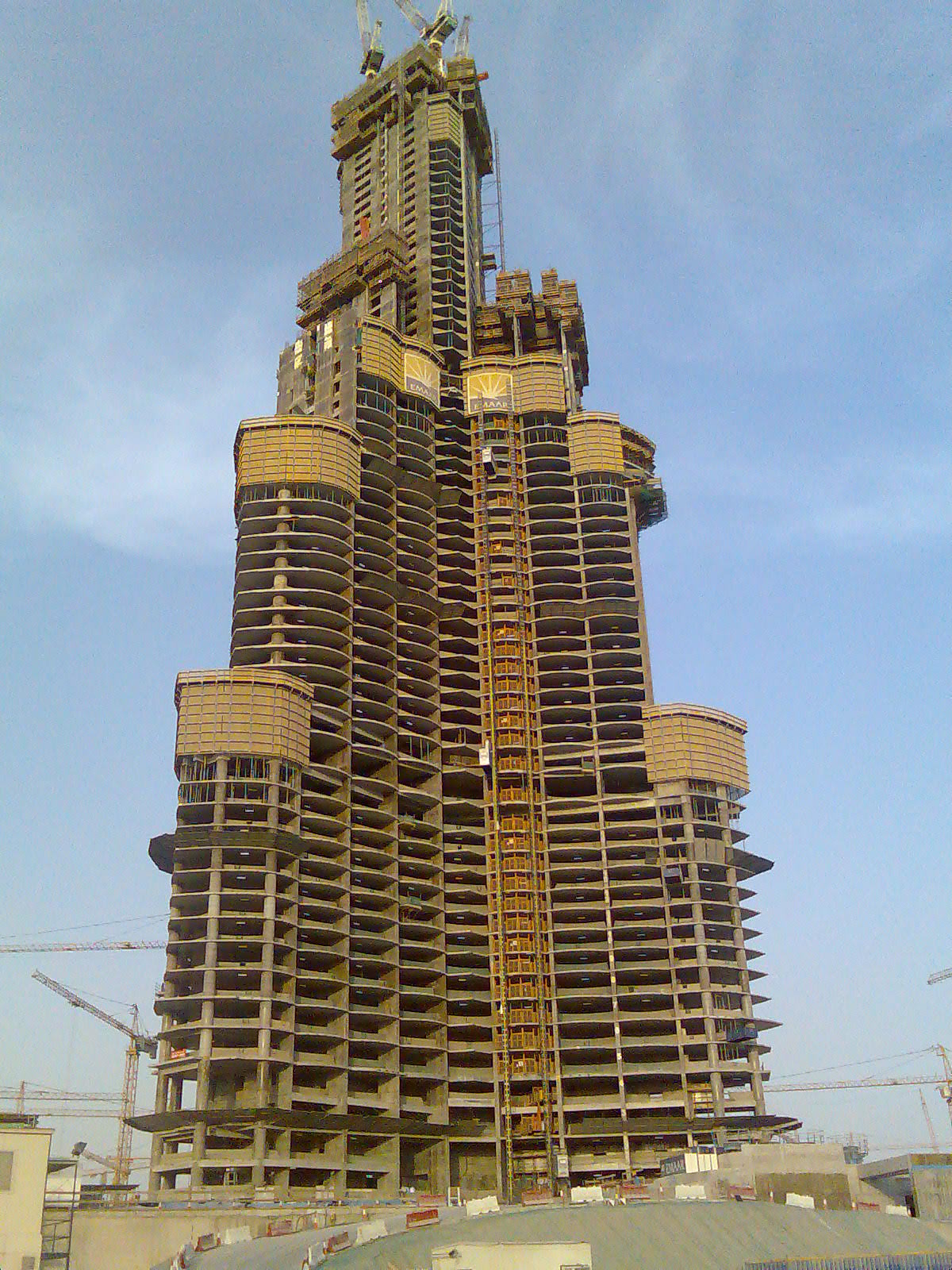




History and construction
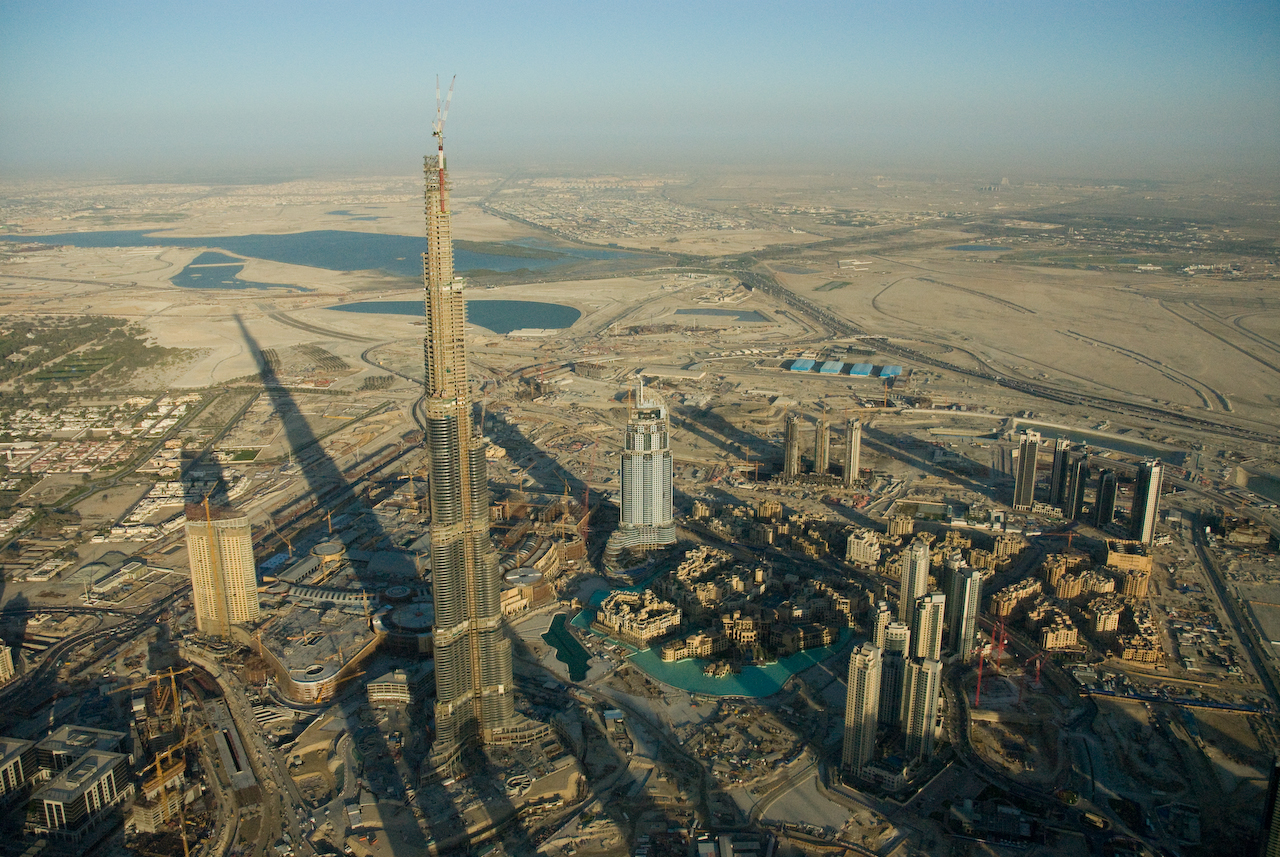
The project was announced as part of a larger development on a mixed-use site along Sheikh Zayed Road; before inauguration it was referred to as Burj Dubai. Groundworks and piling began in the first half of the 2000s and formal construction started in 2004, culminating in an official opening in January 2010 after nearly six years of work. Multiple international contractors were involved during construction and the overall cost has been reported at roughly US$1.5 billion, while additional investment supported the surrounding district and infrastructure.
Design and engineering
The tower was primarily designed by architect Adrian Smith during his tenure with Skidmore, Owings & Merrill. The form uses a bundled, setback arrangement inspired by traditional Islamic architecture, adapted with modern reinforced concrete and steel systems to achieve tremendous height while resisting wind and seismic forces. Its tapered silhouette and stepped terraces reduce wind loads and provide outdoor observation spaces at multiple levels.
Characteristics and features
Reported official height is 828 metres (2,717 feet). Depending on counting methods, the number of floors is typically described as around 162–163, with several mechanical levels and rooftop structures. The building contains offices, residential units, a luxury hotel, observation decks and service floors. High-speed elevators and extensive mechanical systems support vertical circulation, fire safety and environmental control. For scale, the Burj Khalifa rises more than 300 metres above the former tallest skyscraper, Taipei 101, illustrating the leap in vertical construction that it represents.
Uses, context and importance
Beyond housing and hospitality, the tower acts as an anchor for Downtown Burj Khalifa, a neighbourhood of retail, leisure and cultural amenities. Its prominence has economic and symbolic value: it attracts tourists, supports premium real estate, and signals Dubai's ambitions in global commerce and urban design. The building has hosted public events, seasonal light shows and special ceremonies that reinforce its role as a civic landmark.
Notable facts
- The project's international collaboration included design, engineering and construction firms from several countries and reflected contemporary large-scale construction practices.
- The structure's form and materials were chosen to balance height with wind performance and buildability.
- Its opening completed a multi-phase urban project along Sheikh Zayed Road and helped catalyse further development in the area.
- Common references and technical discussions about the tower often cite its Arabic name برج خليفة and its earlier working name Burj Dubai.
- For additional context on technical, cultural and historical aspects, see architect biographies and engineering case studies linked from authoritative sources (Adrian Smith, design documents, and project reports on construction and execution).
The Burj Khalifa remains a frequently cited example in discussions of tall building design, urban branding and contemporary construction capability, notable both for its dimensions and for the complex programme it accommodates. Further reading can explore its structural system, materials, sustainability measures and the development of the surrounding district.
Questions and answers
Q: What is Burj Khalifa?
A: Burj Khalifa is an extremely tall skyscraper located in Dubai, United Arab Emirates, named after Khalifa bin Zayed Al Nahyan.
Q: How tall is Burj Khalifa?
A: Burj Khalifa is 828 metres (2,717 feet) tall making it the tallest building ever built.
Q: What was Burj Khalifa called before the building was opened?
A: Before the building was opened, it was called Burj Dubai.
Q: How many stories high is Burj Khalifa?
A: Burj Khalifa is 162 stories high.
Q: When was the construction of Burj Khalifa started and when was it officially opened?
A: The construction of Burj Khalifa was started on 6 January 2004, and the building was officially opened on 4 January 2010, almost 6 years later.
Q: Who designed Burj Khalifa?
A: Adrian Smith designed Burj Khalifa. He worked with Skidmore, Owings, and Merrill (SOM) until 2006.
Q: By whom was Burj Khalifa built and how much did it cost to build?
A: Burj Khalifa was built by Samsung Engineering & Construction, Besix, and Arabtec. The tower cost US $1.5 billion to build.
Related articles
Author
AlegsaOnline.com Burj Khalifa: overview, design, history and significance Leandro Alegsa
URL: https://en.alegsaonline.com/art/15438
Sources
- skyscrapercenter.com : Burj Khalifa
- gulfnews.com : "Official Opening of Iconic Burj Dubai Announced"
- news.bbc.co.uk : "World's tallest building opens in Dubai"
- emaar.com : "EMAAR Press Release - Burj Dubai reaches a record high, Dubai, UAE, July 21, 2007"
- architectmagazine.com : "Architect Magazine: Adrian Smith Leaves SOM, Longtime Skidmore partner bucks retirement to start new firm"
- skyscraperpage.com : Burj Dubai - SkyscraperPage.com
- dubaitraveldesk.com : "What to see"
- turnerconstruction.com : "Turner International Projects – Burj Dubai"
- building.co.uk : "Burj Dubai: Top of the world"
- emporis.com : "Burj Dubai, Dubai, at Emporis.com"
- emaar.com : "Emaar brings world-class water, light and music spectacle to Burj Dubai Lake"
- emaar.com : "'Dubai Fountain' is winning name of Emaar's water spectacle in Downtown Burj Dubai"
- archive.gulfnews.com : "Burj Dubai completion delayed by another eight to nine months"