
Tōkaidō (historic Japanese highway)
The Tōkaidō was the principal coastal route linking Edo (Tokyo) and Kyoto in premodern Japan. It shaped travel, commerce, art and modern transport corridors along eastern Honshū.
Overview
The Tōkaidō (東海道, "East Sea Road") was the principal land route connecting the political capital of Edo and the imperial city of Kyoto in premodern Japan. Established and regulated during the Edo period as one of the five major roads of the Tokugawa state, it followed the Pacific-facing coast of eastern Honshū and became the busiest and most culturally prominent highway of its era. The road served government, commercial and private travel for centuries and remains an important cultural symbol.
Image gallery
7 Images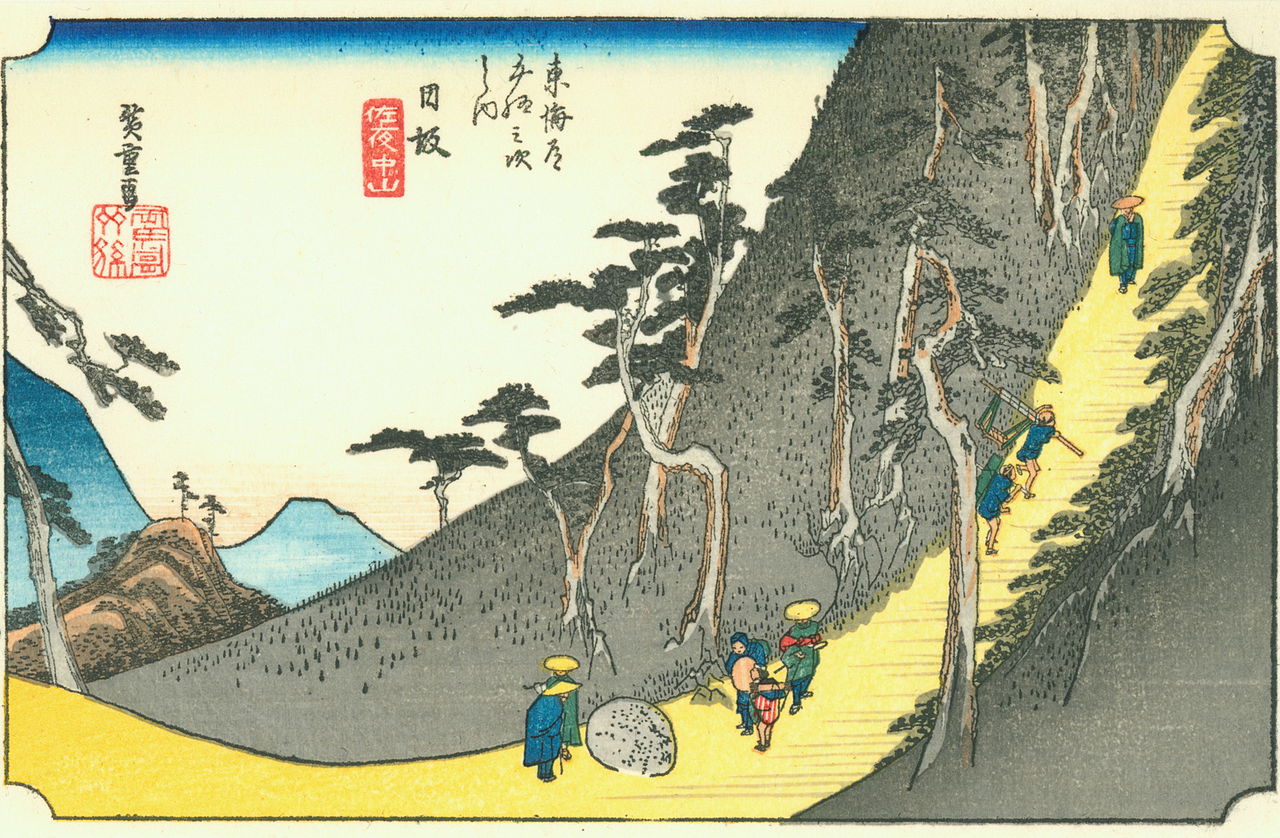


Route and characteristics
The traditional Tōkaidō began at Nihonbashi in Edo and terminated near Kyoto, passing through coastal plains, river crossings and several mountain passes. It ran along the eastern seaboard of central Honshū and was formally one of the five routes codified by the Tokugawa shogunate (Gokaidō). Travelers followed post stations where inns, stables and officials’ offices were located.
- Famous starting and ending points: Edo and Kyoto.
- Standard stop system: the 53 post stations that developed along the route.
- Terrain: coastal plains, steep passes such as Hakone, and multiple river crossings.
History and administration
Under the Tokugawa shogunate (17th–19th centuries) the Tōkaidō was standardized for administrative control, mail, and movement of officials. The shogunate maintained checkpoints and rules to regulate traffic and prevent unauthorized movement. The route predates Tokugawa rule in various forms but became a formal artery of state power and economy in the Edo period.
Uses and daily life
The road carried daimyo processions, merchants, pilgrims and common travelers. The sankin-kōtai system — requiring regional lords to alternate residence between their domains and Edo — produced predictable traffic and spurred services along the way. Post towns provided lodging, food, horse and porter services, and acted as hubs for local economies.
Cultural and artistic legacy
The Tōkaidō features prominently in Japanese literature, travel diaries and visual art. Utagawa Hiroshige’s woodblock series "The Fifty-three Stations of the Tōkaidō" popularized scenes from the road and influenced later perceptions of travel in Japan. The route became a subject for poets, painters and guidebooks that recorded landscapes, weather and the character of each station.
Modern continuities
Modern transportation corridors roughly follow the old Tōkaidō corridor: major highways and the high-speed rail line that connects contemporary Tokyo and Kyoto traverse the same densely populated coastal belt. While the original road is preserved in places as historical paths and museum exhibits, its legacy endures in urban networks, place names and cultural memory.
Further reading and resources: official histories and local guides record the Tōkaidō’s stations and monuments; for curated images and travel narratives see collections linked from general reference portals and museum pages (Gokaidō overview, regional maps).
Related articles
Author
AlegsaOnline.com Tōkaidō (historic Japanese highway) Leandro Alegsa
URL: https://en.alegsaonline.com/art/100279
Sources
- books.google.com : The Tokaido Road: Traveling and Representation in Edo and Meiji Japan.