
Titania (Shakespeare's Queen of the Fairies)
Titania is the fairy queen in Shakespeare's A Midsummer Night's Dream, central to themes of love, power, and transformation; renowned for the comic episode in which she falls for Bottom.
Overview
Titania is a principal character in William Shakespeare's comedy A Midsummer Night's Dream. She is introduced as the Queen of the Fairies and the consort of Oberon, the fairy king. In the play she figures prominently in a subplot that combines elements of romance, magic and comic misunderstanding, and her behaviour helps explore Shakespeare's larger questions about love, authority and illusion.
Image gallery
3 Images

Role and characteristics
As fairy queen, Titania commands a retinue of supernatural attendants and speaks with dignity and authority. Early in the play she and her husband, Oberon, are at odds over the custody of a human child — the so-called changeling — whom Titania refuses to surrender. Their quarrel disrupts the natural world in the play and sets the scene for the interventions of Oberon and his mischievous servant Puck, who deploys a magical herb to manipulate others' affections.
Key moments
- Titania's refusal to give up the child, which sparks the fairy quarrel.
- Oberon's decision to enchant Titania so she will fall in love while under the spell.
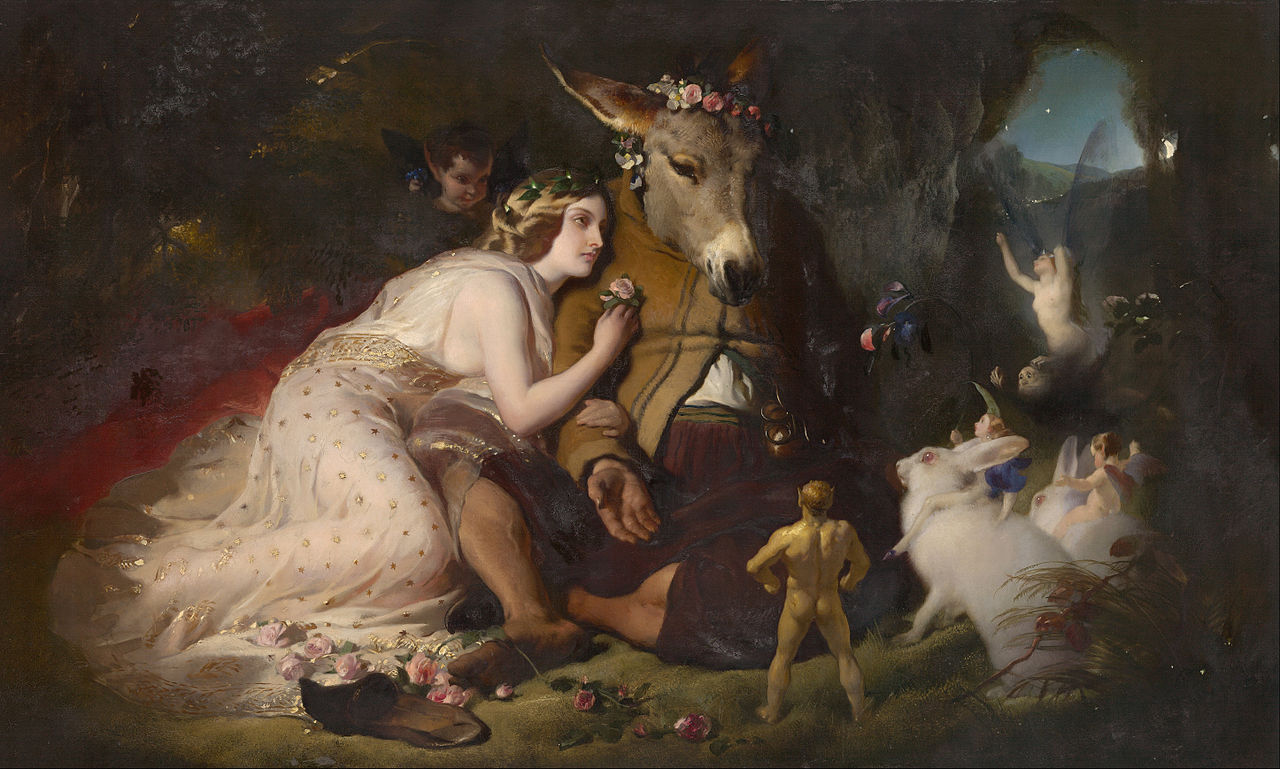
- The comic episode in which Titania wakes to adore the craftsman Bottom, whom Puck has altered by placing an ass's head on him — the transformed Bottom becomes the object of her enchanted affection.
- The eventual removal of the spell, reconciliation between Titania and Oberon, and the restoration of order by the play's end.
Origins, name and themes
The name Titania does not appear in classical myth as a fairy queen and is generally attributed to Shakespeare; it echoes classical terms such as "Titan" and thereby gives the character an elevated, mythic quality. The play itself is usually dated to the 1590s and blends English folk beliefs about fairies with courtly comedy. Critics and readers have long seen Titania's episode as a meditation on love's caprice: under the spell she behaves irrationally, which generates both humour and unease. The changeling subplot also invites readings that touch on questions of parenthood, power, and — in modern interpretation — colonial dynamics.
Performance, adaptations and significance
Titania has proved a rich role for actors and directors. She appears in stage productions, operas, films, ballets and other adaptations, often used to contrast the human lovers' follies with a more supernatural, elemental perspective. Directors vary in emphasis: some underline her regal authority and maternal attachment to the child; others stress the comic vulnerability revealed by the enchantment. Over centuries Titania has become an archetypal figure for discussions of magic, gender and sovereignty in Shakespearean drama.
Notable distinctions
Unlike many fairy‑queen figures drawn directly from folklore, Shakespeare's Titania is a dramatic invention tailored to the play's mixture of romance and satire. Her quarrel with Oberon functions as more than a plot device: it provides a lens through which the play examines how love, language and power can be transformed by artifice and by the theatre itself.
Related articles
Author
AlegsaOnline.com Titania (Shakespeare's Queen of the Fairies) Leandro Alegsa
URL: https://en.alegsaonline.com/art/100113