
Tower of Babel
Biblical account in Genesis explaining the origin of different languages and human dispersion; its interpretations, parallels with Mesopotamian ziggurats, and cultural reception.
Overview
The Tower of Babel is a brief narrative in the Hebrew Bible that attempts to explain why human communities speak different languages and why peoples were scattered across the earth. The episode appears in Genesis 11:1–9 and is known in Hebrew as Migdal Bavel. It has been widely discussed in religious, literary and scholarly traditions and has influenced art, architecture and thought about language and power.
Image gallery
10 Images




Narrative summary
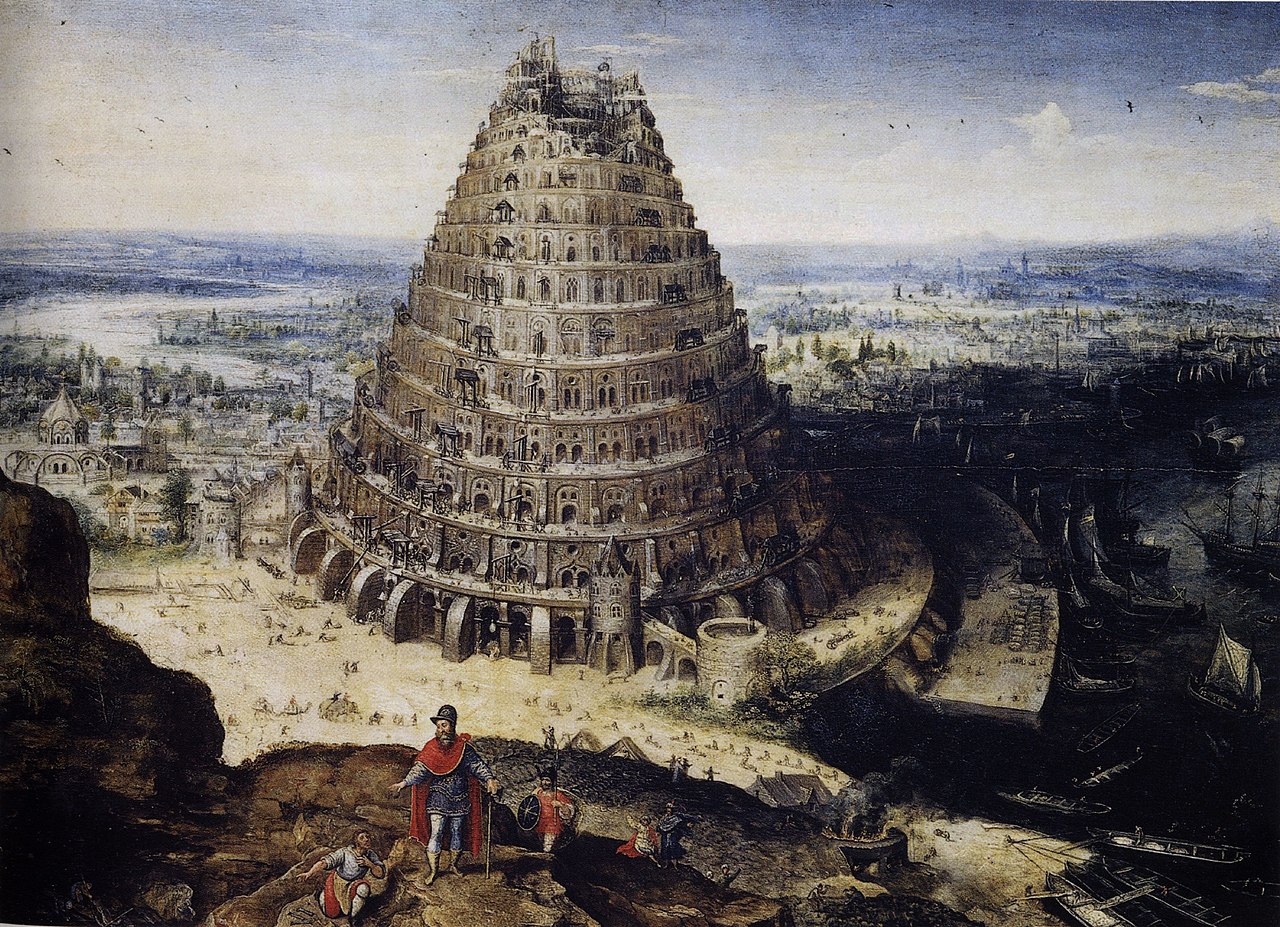
The biblical account describes a post‑flood humanity that shares one language and settles in the plain of Shinar. There they decide to build a city and a tall structure whose top would reach heaven, with motives framed as making a name for themselves and avoiding dispersion. Observing the undertaking, God intervenes by confusing their speech so the builders cannot understand one another, and scatters them over the face of the earth, halting the construction. The place is called Babel, a name the narrative links to the notion of confusion.
Textual history and sources
The story is preserved in the Priestly or Yahwist layers of Genesis in different scholarly reconstructions, and it has parallels and resonances across Near Eastern literature. Scholars note an echo of the theme of disrupted communication in the Sumerian tale Enmerkar and the Lord of Aratta, while the biblical account reflects later theological and editorial concerns about human ambition and divine limits.
Interpretations
- Theological: Traditional readings in Judaism and Christianity often view the story as a cautionary tale about pride, hubris and human attempts to rival the divine order.
- Historical‑critical: Many scholars treat the episode as an etiological myth composed or edited in the exilic or post‑exilic period to explain linguistic and ethnic diversity and to comment on imperial projects.
- Linguistic and literary: The narrative functions as an origin myth for language diversity and has been studied as a reflection on communication, cooperation and social fragmentation.
Archaeology and historical parallels
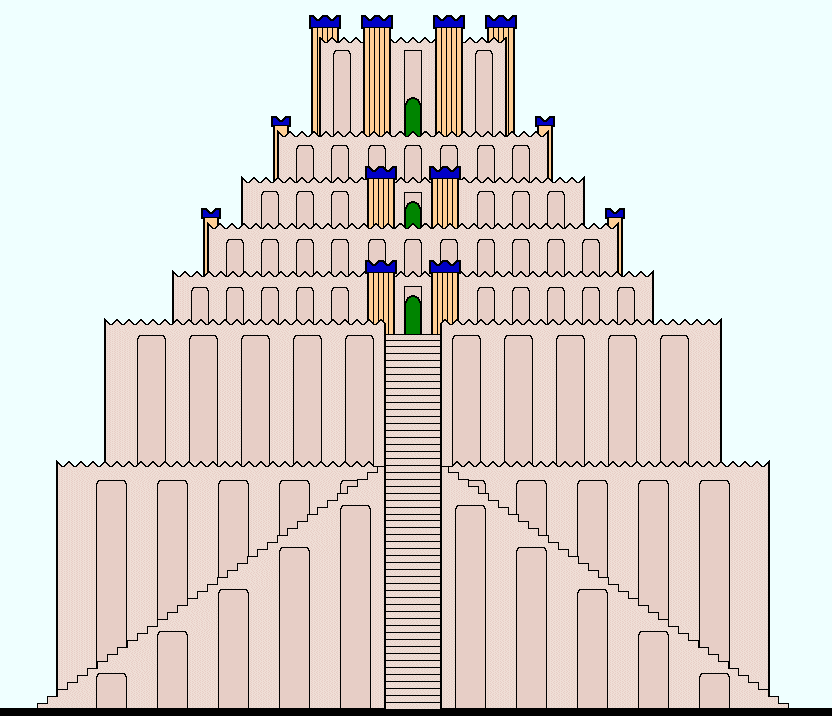
While the biblical text does not describe any single verifiable monument, some commentators have associated the tower motif with Mesopotamian stepped temple towers, or ziggurats. A prominent candidate for the cultural memory behind the tale is Etemenanki, the great ziggurat of Babylon dedicated to Marduk; archaeological and textual studies of ancient Babylonia, often summarized under Babylon studies, help situate the image of a high, terraced temple within the region's architecture and religion. The plain of Shinar in the text is commonly identified with southern Mesopotamia, a landscape shaped by urbanism and monumental temple construction.
Comparative mythology
Comparative work highlights motifs shared with other Near Eastern stories: rivalry among cities and rulers, divine responses to human projects, and tales that reflect on the origin of language. The Sumerian narrative Enmerkar and the Lord of Aratta contains episodes of communication difficulty and divine involvement that scholars discuss alongside the Genesis account. Such comparisons illuminate how ancient cultures explained diversity and the limits of human ambition.
Reception and cultural influence
The Tower of Babel has had a long afterlife in art and literature. From medieval and Renaissance depictions to modern literature and film, the image of a monumental tower has been used to explore themes of ambition, technological hubris, multilingualism and social fragmentation. Painters such as Pieter Bruegel the Elder created famous visualizations that shaped later imagination. Writers, philosophers and theologians have invoked the story in discussions about language, power and the ethics of human unity.
Symbolism and modern use
As a symbol the tower can denote confused or excessive human project, linguistic diversity, or the limits of centralized authority. In modern discourse the expression "Babel" or "Tower of Babel" often appears in commentary on multilingualism, global communication breakdowns, or the unintended consequences of large technical or political endeavors.
Further reading and resources
For study of the biblical text and its contexts consult commentaries on Genesis and introductions to ancient Near Eastern history. For archaeological and architectural background see surveys of Mesopotamian ziggurats and studies of the city and temple (city, tower) as sacred spaces. Comparative treatments of language and myth draw on Sumerian and Akkadian literature (Sumerian parallels) and on research into Babylonian memory (Babylon).
Scholarly discussions also consider the role of the narrative in religious traditions and in later interpretations across Judaism, Christianity and Islam, and examine how the story has been adapted in historiography, literature and the visual arts. For theological reflection on the meaning of confusion and diversity see works that focus on human identity, community and divine sovereignty.
Questions and answers
Q: What is the Tower of Babel?
A: The Tower of Babel is a story in Genesis 11:1–9 which explains why people around the world speak different languages. It tells of a united humanity that agree to build a city and tower tall enough to reach heaven, however God felt insulted and confused them by scattering them around the world.
Q: Where does the story take place?
A: According to the story, it takes place in Shinar (שִׁנְעָר).
Q: What is Etemenanki?
A: Etemenanki is a ziggurat dedicated to the Mesopotamian god Marduk in Babylon which has been associated with The Tower of Babel by some modern scholars.
Q: Is there another Sumerian story with similar elements?
A: Yes, there is another Sumerian story with similar elements called "Enmerkar and the Lord of Aratta".
Related articles
Author
AlegsaOnline.com Tower of Babel Leandro Alegsa
URL: https://en.alegsaonline.com/art/100922
Sources
- books.google.com : The Oxford Guide To People And Places Of The Bible
- books.google.com : The Jewish Study Bible
- books.google.com : Hebrew Myths: The Book of Genesis
- books.google.com : Tree of Souls: The Mythology of Judaism