
The Water Hole (1928 film)
1928 American Western directed by F. Richard Jones, adapted from Zane Grey, starring Jack Holt, Nancy Carroll and John Boles. Released by Paramount with early Technicolor sequences; no known copies survive.
Overview
The Water Hole is a 1928 American Western film directed by F. Richard Jones. Adapted from a novel by Zane Grey, it featured leading actors of the late silent era — Jack Holt, Nancy Carroll and John Boles — and was released by Paramount Pictures. The production is notable for including sequences photographed in early Technicolor, placing it among a small group of late-1920s films that experimented with color during the transition from silent to sound cinema.
Image gallery
2 Images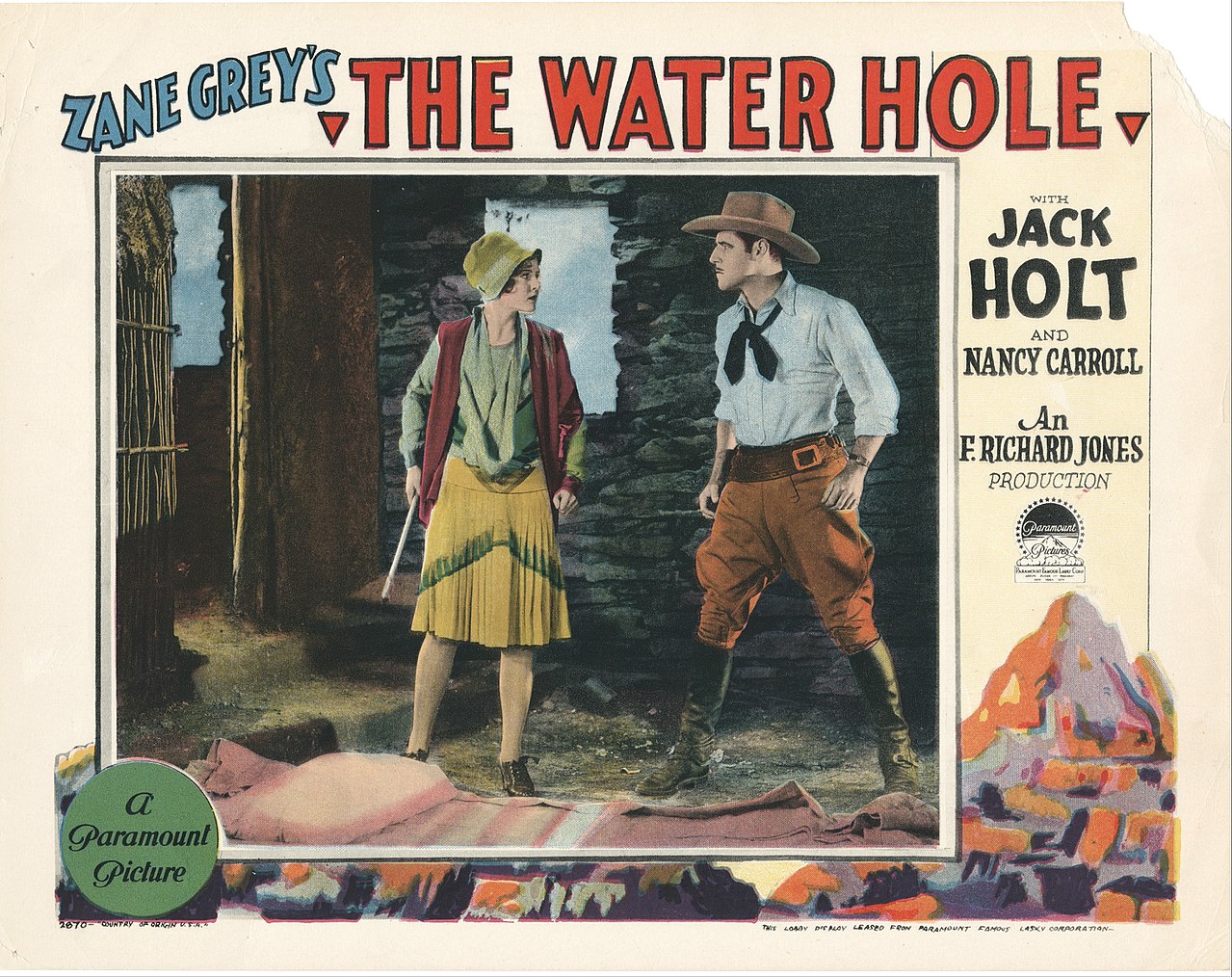

Production and location
Principal photography took place in July, with exterior work shot in Death Valley, California. Location shooting in harsh desert environments was relatively uncommon and presented logistical challenges, especially for early color processes and large studio units. The use of Technicolor required additional lighting and specialized camera equipment, which made on-location color cinematography a demanding choice at the time.
Cast and creative team
The film was directed by F. Richard Jones, a filmmaker active in both comedies and features during the 1920s. The principal cast included:
- Jack Holt — a prominent leading man in action and adventure pictures.
- Nancy Carroll — a rising actress who bridged silent and early sound films.
- John Boles — who appeared frequently in studio dramas and musicals of the era.
Preservation status and legacy
No film prints of The Water Hole are currently known to survive, and it is generally classified as a lost film. Many motion pictures from the 1920s have been lost for a variety of reasons: decomposition of nitrate film stock, studio vault fires, intentional destruction, and neglect during the early decades of film archiving. Early color footage is particularly vulnerable, because two-color and other experimental processes were less stable and more difficult to duplicate onto later film stocks.
Significance
Although the film itself cannot be viewed today, its production reflects several important trends of late-1920s American cinema: the popularity of Zane Grey western adaptations, studios' willingness to invest in on-location shoots, and experimentation with color during a technologically volatile period. The loss of titles like The Water Hole underscores ongoing efforts by archives and historians to locate, preserve, and study surviving materials from the silent and early sound eras, including production stills, promotional items, scripts and any extant film fragments.
Related articles
Author
AlegsaOnline.com The Water Hole (1928 film) Leandro Alegsa
URL: https://en.alegsaonline.com/art/99085
Sources
- silentera.com : Progressive Silent Film List: The Water Hole