
The Way West (1967 film)
1967 American western directed by Andrew V. McLaglen, adapted from A. B. Guthrie Jr.'s Pulitzer-winning novel. An ensemble cast includes Kirk Douglas, Robert Mitchum, Richard Widmark, Sally Field and Sam Elliott.
Overview
The Way West is a 1967 American western feature directed by Andrew V. McLaglen and adapted from the novel by A. B. Guthrie Jr. The book, which won the Pulitzer Prize for Fiction, provides the film’s foundation: a dramatised account of a wagon train and its settlers making the arduous journey across the North American plains toward Oregon. The motion picture translates the novel’s emphasis on leadership, survival and the clash of personalities into a studio-era epic.
Image gallery
1 Image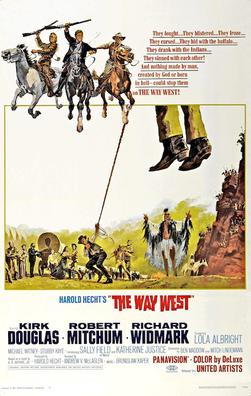
Cast and principal contributors
The picture assembles several leading actors of the time: Kirk Douglas, Robert Mitchum and Richard Widmark headline the ensemble. Early film appearances by younger performers are notable, including Sally Field and Sam Elliott. The female supporting cast includes Lola Albright. The film was released by United Artists.
Plot elements and themes
At its core, the story follows a diverse group of pioneers who join a wagon train and confront hardships such as illness, weather, scarcity and internecine disputes. The narrative focuses on competing styles of leadership and the personal costs of westward expansion, balancing action and character-driven episodes. While preserving much of the novel’s scope, the screenplay compresses events to fit a feature format and accentuates dramatic confrontations.
Production and historical context
Produced during a period when Hollywood staged many large-scale westerns, The Way West reflects 1960s filmmaking practices: location work, a star-driven cast and studio distribution. Director Andrew V. McLaglen was experienced with western material and television work, which informed the film’s straightforward, workmanlike approach to staging journeys and skirmishes. The movie interprets late 19th-century migration themes for contemporary audiences of the 1960s.
Reception and legacy
Upon release, the film drew mixed reviews. Critics praised the cast and the evocative scope of the wagon-train sequences but often noted that condensing the novel’s breadth into a single film left some characters and episodes underdeveloped. Over time it has been regarded as a representative example of studio westerns of its era, and it remains of interest to viewers who follow the careers of its prominent cast and the evolution of cinematic westerns.
Notable facts
- The source novel by A. B. Guthrie Jr. had previously been awarded the Pulitzer Prize, giving the film a prestigious literary pedigree.
- The film is an ensemble piece blending veteran stars with actors who would later become familiar names.
- Its treatment of pioneer life and leadership continues to be discussed in surveys of American western cinema.
Related articles
Author
AlegsaOnline.com The Way West (1967 film) Leandro Alegsa
URL: https://en.alegsaonline.com/art/99091