
Leatherface — the horror icon from The Texas Chain Saw Massacre
Leatherface is the masked, chainsaw-wielding antagonist of The Texas Chain Saw Massacre franchise, known for his human-skin mask, violent methods, and status as a longstanding horror icon across film and games.
Overview
Leatherface is a fictional character originating in the horror film The Texas Chain Saw Massacre. Created for the original film, he is usually portrayed as a hulking, emotionally unstable member of a cannibalistic family who wears a mask of human skin and uses a chainsaw to assault and kill victims. Many scenes place his attacks at the family’s rural property in Texas, and the character’s spectacle and brutality helped establish him as a central figure in American horror cinema.
Image gallery
6 Images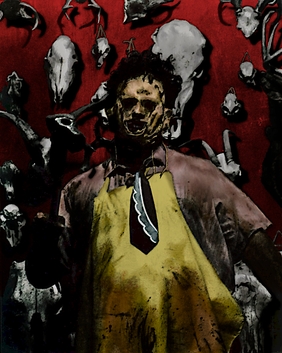


Characteristics
Leatherface is typically presented with a few recurring traits: he dons masks made from different human faces that reflect mood or role; he is physically powerful but often socially or mentally childlike; and he is closely controlled or influenced by his family. Cannibalism is implied or explicit in several films, and the leather mask is the defining visual element that gives the character his common name.
- Iconic weapon: chainsaw as signature tool of violence.
- Mask: sewn human-skin masks used to conceal identity and convey emotion.
- Behavior: unpredictable, sometimes pitiable, often obedient to family elders.
History and portrayals
The character first appeared in the groundbreaking film and has returned in multiple sequels, remakes, and reimaginings. He has been enacted by different performers across productions; the original and perhaps best-known portrayer was Gunnar Hansen, an Icelandic-born American actor. Subsequent films and reinterpretations have varied his age, motivations, and level of menace, ranging from a simple, brutal antagonist to a tragic figure shaped by abuse and family loyalty.
Media appearances and cultural impact
Beyond the film series, Leatherface has appeared in broader popular culture as a symbol of slasher horror. He has crossed into other entertainment forms, including video games: he appears as a guest fighter in titles such as Mortal Kombat X. In crossover and promotional contexts he is often mentioned alongside other horror icons, for example Jason Voorhees, The Predator, and The Alien, reflecting his place in the pantheon of genre antagonists.
Interpretations and legacy
Interpretations of Leatherface vary: some readings emphasize his role as a monstrous villain, while others treat him as a tragic, exploited character whose violence stems from family dynamics and psychological damage. His visual design—the human-skin mask and chainsaw—remains one of the most immediately recognizable images in horror, and the character continues to be studied in discussions of cinematic violence, the slasher genre, and representations of identity and monstrosity.
For further reading, see film histories and genre analyses that explore how Leatherface shaped and reflected fears in American horror cinema.
Victim accounts and scene summaries and production notes are commonly included in retrospectives and DVD/Blu-ray extras; several documentaries and interviews with cast and crew provide additional context.
Related articles
Author
AlegsaOnline.com Leatherface — the horror icon from The Texas Chain Saw Massacre Leandro Alegsa
URL: https://en.alegsaonline.com/art/56807
Sources
- richmond.com : Hansen on Leatherface and his family.