
The Tell-Tale Heart — Edgar Allan Poe's compact study of guilt
An overview of Edgar Allan Poe's 1843 short story 'The Tell-Tale Heart', its narrative techniques, themes of guilt and madness, publication history, and cultural influence in Gothic and psychological literature.
The Tell-Tale Heart is a tightly focused short story by Edgar Allan Poe first published in 1843. Narrated in the first person by an unnamed speaker, the tale recounts the careful planning and execution of a murder driven not by obvious motive but by an obsession with an old man's disturbing "vulture" eye. After the killing the narrator conceals the body beneath the floorboards; what follows is a brief but intense account of mounting tension as the narrator becomes convinced he can hear the victim's heart still beating — a sensation variously described as conscience, auditory hallucination, or metaphor.
Image gallery
3 Images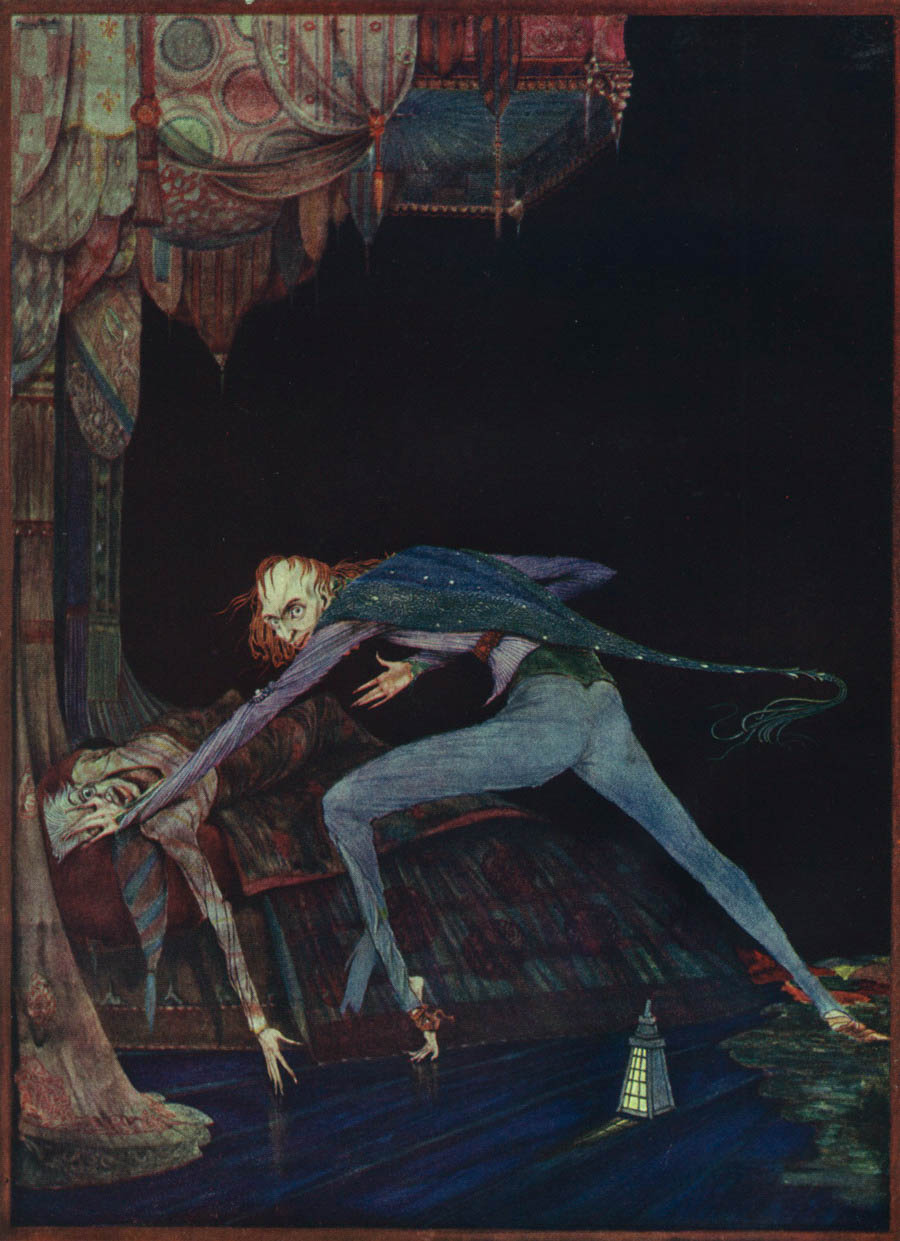


Structure and style
Poe employs a relentless, breathless voice to make the narrator both persuasive and unreliable. Short sentences, repeated clauses, and frequent appeals to the reader create immediacy and claustrophobia. The story unfolds in a single sustained scene with few characters, minimal physical description, and heavy reliance on sensory detail: the sound of the imagined heartbeat, the slow opening of a door, the feel of the floorboards. This compressed form heightens psychological tension and invites multiple readings.
Themes and interpretations
- Guilt and conscience: critics often treat the beating heart as an embodiment of the narrator's guilt, a physiological or symbolic confession that overwhelms rational control.
- Madness versus sanity: the narrator insists on sanity while describing irrational acts, prompting debate about self-deception and performance.
- Perception and obsession: the story explores how fixation on a single feature — the old man's eye — can distort moral judgment and motivate violence.
- Gothic atmosphere: atmospheric detail and an emphasis on terror link the tale to broader currents of Gothic fiction, even as the drama plays out in an otherwise ordinary domestic setting.
Publication and reception
The story first appeared in the periodical The Pioneer in January 1843 and was soon reprinted in other magazines and collections. Contemporary readers praised Poe's ability to fuse psychological insight with narrative compression, and subsequent generations have continued to anthologize the tale. Its brevity, charged tone, and ambiguous boundary between inner compulsion and external reality have made it a staple of literature courses and a frequent subject for critical analysis.
Legacy and adaptations
'The Tell-Tale Heart' has influenced a wide range of later works in literature, film, radio, theatre, and music. Its core elements — an unreliable confessor, an obsessive motive, and an audible sign of conscience — appear in crime fiction, psychological drama, and modernist explorations of subjectivity. The narrative's economy and symbolic density make it a favored text for adaptation and reinterpretation.
Notable facts and distinctions
Although brief, the story is often paired in discussion with other Poe pieces that examine culpability and self-delusion. Readers and scholars continue to debate whether the "heartbeat" should be read as a literal supernatural phenomenon, a mental auditory illusion (hallucination), or a rhetorical device exposing inner turmoil. Its enduring power lies in the way a small, precise narrative can open onto profound questions about conscience, identity, and the reliability of narrative voice.
Questions and answers
Q: What is "The Tell-Tale Heart"?
A: "The Tell-Tale Heart" is a short story by Edgar Allan Poe, published in 1843.
Q: Who is killed in the story?
A: The old man with a strange eye is killed in the story.
Q: How is the murder committed?
A: The murder is committed by pulling the old man's bed on top of him and hiding the body under the floor.
Q: How does the killer feel about the murder?
A: The killer feels guilty about the murder.
Q: What does the killer imagine he can hear after the murder?
A: The killer imagines he can hear the dead man's heart still beating under the floor.
Q: Do we know if the old man and the killer are related?
A: No, it is not known if they are related.
Q: What is "The Tell-Tale Heart" considered to be?
A: "The Tell-Tale Heart" is widely considered a classic of the Gothic fiction genre and one of Poe's most famous short stories.
Related articles
Author
AlegsaOnline.com The Tell-Tale Heart — Edgar Allan Poe's compact study of guilt Leandro Alegsa
URL: https://en.alegsaonline.com/art/98959
Sources
- eapoe.org : Available online
- eapoe.org : Index to Poe's tales
- imdb.com : "IMDb Title Search: The Tell-Tale Heart"
- imdb.com : The Tell-Tale Heart (1953/I)
- imdb.com : The Tell-Tale Heart (1960)