
The Parallax View (1974 film)
The Parallax View is a 1974 American political thriller directed by Alan J. Pakula and starring Warren Beatty. Adapted from Loren Singer's novel, it examines conspiracy, assassination and institutional paranoia.
The Parallax View is a 1974 American political thriller that examines conspiracy, political violence and institutional secrecy. Directed by Alan J. Pakula and adapted from a novel by Loren Singer, the screenplay was written by Lorenzo Semple Jr.. The film stars Warren Beatty as an investigative protagonist and features supporting performances by Hume Cronyn, William Daniels, Paula Prentiss, Richard Bull and Kenneth Mars.
Image gallery
3 Images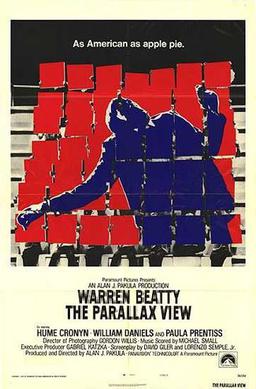


Overview and themes
The narrative follows a reporter‑figure drawn into a covert organization implicated in a series of political murders. Rather than a conventional action thriller, the film foregrounds atmosphere and suspicion: it explores how institutions can recruit, test and conceal violent operatives, and how an individual attempts to piece together evidence in a climate of denial. The story resonated in the early 1970s, when real‑world events had heightened public anxiety about assassination and governmental secrecy.
Style and production
Cinematography and sound design are central to the film's impact. The photographer’s use of stark composition and muted tones creates a cold, detached mood that supports the subject matter; the score and editing emphasize unease and disorientation. Pakula’s restrained direction favors implication over exposition, permitting the film’s ambiguities to remain in view rather than resolving them neatly.
Reception and significance
Upon release the film received generally positive notices and some controversy for its bleak outlook. Over time it has become regarded as a key example of 1970s American political cinema and is often mentioned alongside Pakula’s other works that address paranoia and institutional failure. Critics and scholars highlight the film’s atmosphere, pacing and its skeptical portrait of power.
Notable elements
- Adaptation: based on a political novel and reshaped by a seasoned screenwriter.
- Performances: a lead role that centers the audience’s investigation.
- Visual approach: deliberate framing and lighting to enhance alienation.
- Context: part of a broader trend of 1970s films addressing public mistrust.
The Parallax View remains studied for its technique and theme rather than for tidy answers. For readers interested in further biographical, production or critical materials, follow entries for the director, the novel and the principal cast via the links above.
Related articles
Author
AlegsaOnline.com The Parallax View (1974 film) Leandro Alegsa
URL: https://en.alegsaonline.com/art/98592