
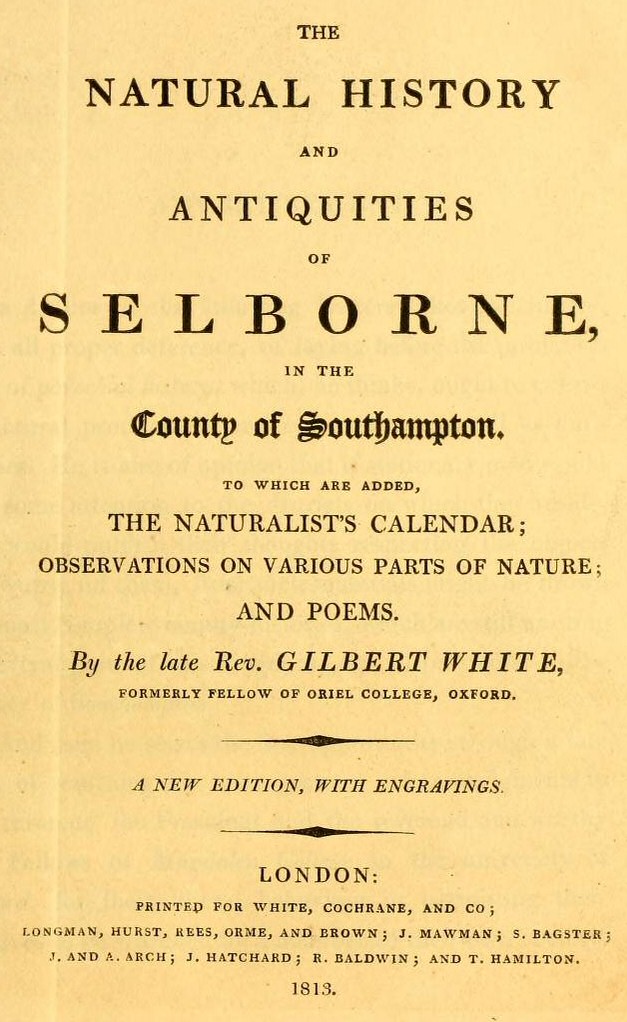
The Natural History and Antiquities of Selborne
A classic 1789 work by Gilbert White combining careful field observations, letters and local antiquarian notes from Selborne, England; foundational for nature writing and the study of everyday wildlife.
Overview
First published in 1789, The Natural History and Antiquities of Selborne is a compact yet influential book of observations about the plants, animals, seasons and antiquities of a single English parish. Its author, Gilbert White, wrote in a conversational, observational style that emphasized careful, repeated field notes rather than sweeping theoretical claims. The work remains celebrated for its vivid attention to ordinary species and seasonal detail, and for shaping the genre of natural history writing aimed at a general audience.
Image gallery
7 Images



Contents and structure
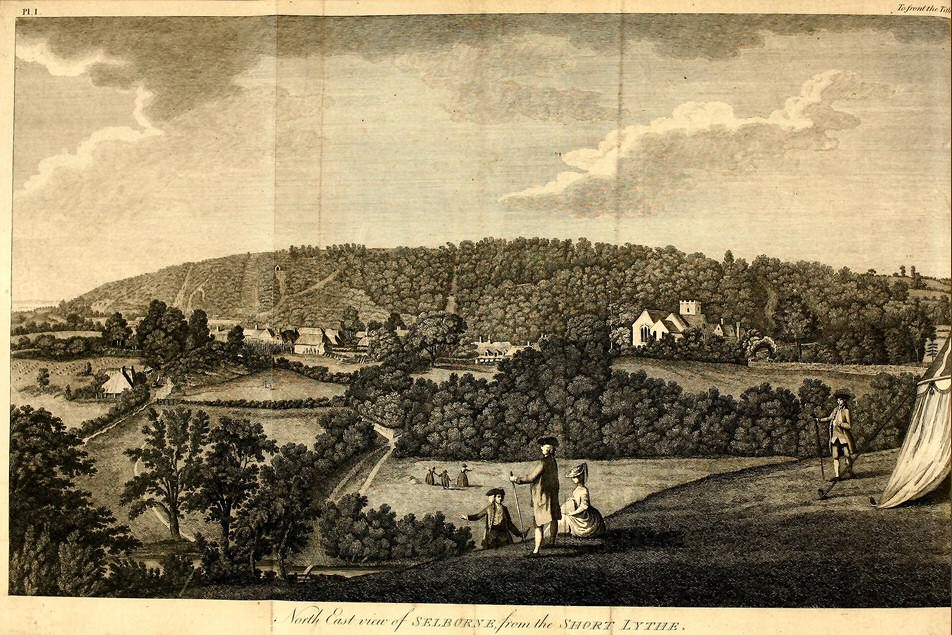
The book is organized as a series of dated letters and short naturalist notes. Many entries describe bird behaviour, insect life cycles, plant phenology and changes of the weather as observed around Selborne in Hampshire. White’s approach is local and cumulative: small, repeated observations are assembled into a portrait of the living parish across seasons. He also includes occasional antiquarian remarks—about earthworks, local monuments and historical curiosities—that give the work its dual title.
Historical context and publication
White was part of the tradition of the parson-naturalist: educated clergymen who recorded natural phenomena as part of their daily lives. Several letters in the book were originally addressed to fellow naturalists and antiquarians. The correspondence with other scholars informed the text and helped it reach a readership beyond Selborne. Over the centuries the book has been reprinted many times and became a cornerstone of popular natural history; by 2007 it had appeared in nearly 300 editions, including illustrated versions that emphasized its enduring appeal.
Style, methods and significance
White’s method is empirical and patient. Rather than attempting grand systems, he focused on accurate, repeated observation and careful description. This modest method influenced later naturalists and popular nature writers who valued field observation and the recording of ordinary species. The humane, anecdotal tone—mixing curiosity with sympathy for living creatures—helped broaden the audience for natural history.
Notable features and legacy
- Local focus: the book demonstrates how sustained study of one place can reveal seasonal patterns and ecological relationships.
- Accessible prose: White’s clear, anecdotal style made scientific observation readable to non-specialists.
- Influence on conservation and nature writing: many later writers and naturalists cite Selborne as formative.
- Antiquarian notes: alongside wildlife observations are short accounts of historic features of the parish.
Further reading and resources
Modern editions often include commentary, annotations and illustrations to help readers place White’s observations in historical and scientific context. For biographical background and editions consult resources on the author and on editions of the book: Author biography and context, Annotated editions and commentaries, and illustrated versions and bibliographies. These provide pathways to explore how a small English village became the setting for one of the most enduring works of nature writing.
Related articles
Author
AlegsaOnline.com The Natural History and Antiquities of Selborne Leandro Alegsa
URL: https://en.alegsaonline.com/art/98512
Sources
- thamesandhudson.com : "The Illustrated Natural History of Selborne"