
Tornado warning — meaning, issuance, and safety actions
A tornado warning is issued when a tornado or funnel cloud is sighted or detected by radar. This article explains how warnings are issued, how they differ from watches and emergencies, and what to do.
Overview
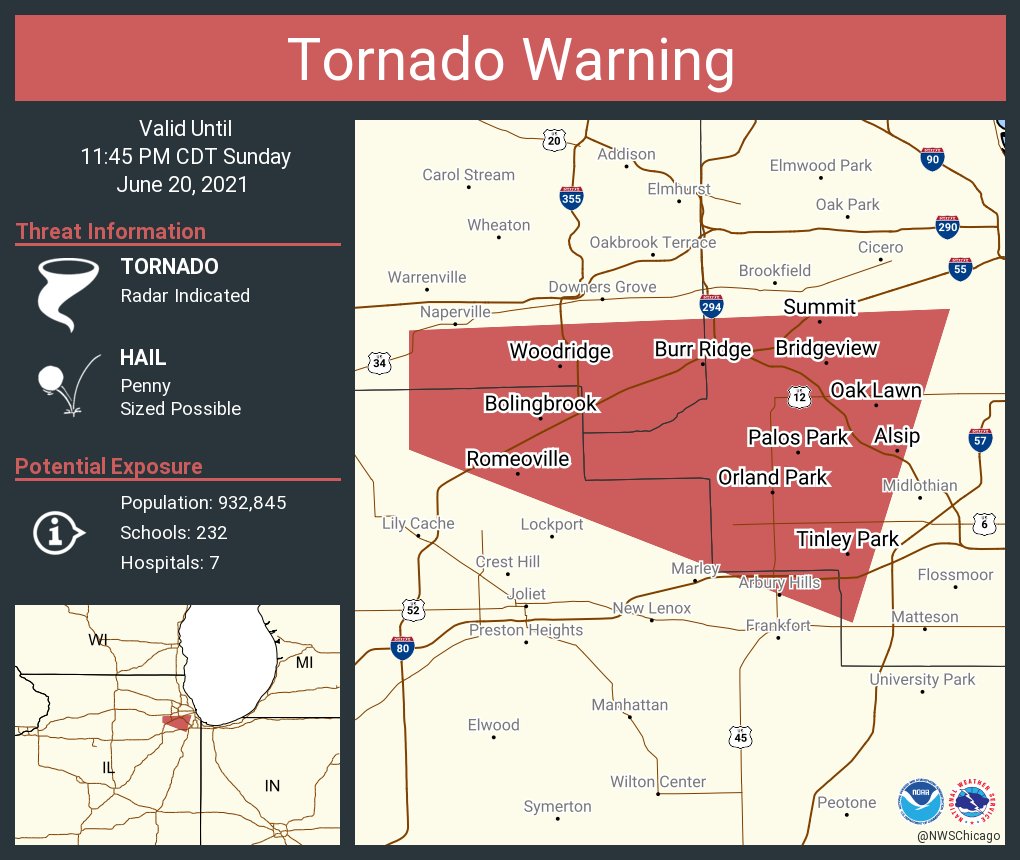
A tornado warning is a public alert indicating that a tornado or a visible funnel cloud has been observed or is strongly indicated by weather radar and is expected to affect the warned area. Warnings are intended to prompt immediate protective action because the hazard is imminent or occurring. They are issued for specific counties, portions of counties, or small urban areas and include a start and end time as well as location detail.
Image gallery
2 Images
How warnings are issued
Warnings are typically issued by national or regional meteorological services after confirmation by trained storm spotters, law enforcement, broadcast partners, or radar signatures that suggest a tornado is present (for example, a debris signature or strong rotational velocity). The exact criteria and format vary by country, but the core purpose is the same: to inform people in the path of an immediate threat so they can seek shelter.
Public alerts and dissemination
Authorities use multiple channels to distribute warnings so they reach as many people as possible. Common methods include outdoor sirens, emergency alerts on mobile phones, NOAA Weather Radio in the United States, local television and radio bulletins, social media posts by official accounts, and warning aggregators operated by broadcasters and apps. Outdoor sirens are designed to warn people outdoors and should not be relied on as the only notification method indoors.
Safety actions
- Take shelter immediately in a basement, storm cellar, or an interior room on the lowest floor away from windows.
- If in a mobile home or vehicle, move to a sturdy building or, if none is available, lie flat in a low-lying area and protect your head.
- Keep listening to official sources until the warning expires and authorities declare it is safe to leave shelter.
Relationship to watches and emergencies
A tornado warning is more urgent than a tornado watch, which means conditions are favorable for tornadoes to develop. In very rare and severe situations where a large tornado threatens a populated area with high confidence of catastrophic damage, forecasters may upgrade wording to a tornado emergency to emphasize extraordinary danger and the need for immediate action.
Notable facts and context
Watches and warnings are tools to reduce loss of life by increasing lead time and awareness. Lead time—the interval between warning issuance and impact—varies widely. False alarms occur because meteorological indicators are not perfect, but the system prioritizes public safety: issuing a warning when a threat is likely is usually the safer course. Communities are encouraged to have a family plan, know local shelter locations, and test their notification systems regularly.
Related articles
Author
AlegsaOnline.com Tornado warning — meaning, issuance, and safety actions Leandro Alegsa
URL: https://en.alegsaonline.com/art/100700