
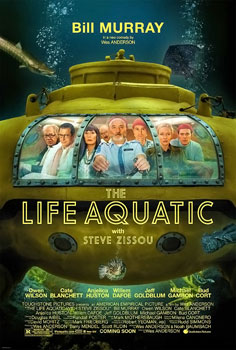
The Life Aquatic with Steve Zissou
Wes Anderson’s 2004 comedy-drama about eccentric oceanographer Steve Zissou, noted for its distinctive visual style, eclectic soundtrack and ensemble cast led by Bill Murray; initially divisive, later a cult favourite.
The Life Aquatic with Steve Zissou is a 2004 American comedy-drama film directed by Wes Anderson. The story follows the eccentric oceanographer and documentary-maker Steve Zissou as he undertakes a voyage to track down a mysterious sea creature and contend with personal and professional crises. The film mixes deadpan comedy, melancholic undertones and highly stylized production design to create a distinctive, slightly nostalgic world.
Image gallery
2 Images
Plot and themes
The narrative centers on Zissou’s attempt to avenge the apparent death of a close colleague and to restore his reputation. On board his ship, the Belafonte, a disparate crew of sailors, photographers and hangers-on encounters bureaucratic obstacles, rival explorers and the ambiguous legacy of exploration. Themes include ageing and legacy, friendship and rivalry, parenthood and the artifice of documentary representation. Anderson balances whimsical set pieces with moments of genuine emotional restraint.
Cast
- Bill Murray as Steve Zissou
- Cate Blanchett as Jane Winslett-Richardson, a journalist
- Willem Dafoe as Klaus, a loyal crewman
- Michael Gambon in a supporting role
- Jeff Goldblum among the ensemble
- Anjelica Huston as a member of Zissou’s circle
- Owen Wilson as Ned Plimpton
- Seymour Cassel in a smaller role
Style and production
The film is widely noted for its precise visual composition: symmetrical framing, a deliberate color palette and carefully constructed sets and miniatures that evoke mid-century oceanography and documentary aesthetics. Cinematography and production design work together to suggest a partly fabricated world, one that feels both handcrafted and cinematic. Costuming and props are used to develop character and mood rather than strict realism.
Music and soundtrack
Music is integral to the film’s tone. The score and soundtrack combine original compositions with unusual choices for on-screen performance. A recurring and much-discussed element is a series of acoustic covers sung in Portuguese by a performing character; these intimate performances add an elegiac layer that contrasts with the film’s visual whimsy. The soundtrack release helped broaden interest in the film beyond its initial audience.
Reception and legacy
Upon release the picture received mixed reviews: many critics praised the art direction, the lead performance and the film’s singular style, while others found its pacing and emotional distance challenging. Over time it has developed a devoted following and is frequently cited as a distinctive and influential entry in Wes Anderson’s body of work. Its combination of formal design, offbeat humor and emotional undercurrents make it a frequent subject of critical discussion and academic study.
For further reading on the director and principal cast, consult profiles and filmographies linked to the director and performers: film overview, director, and individual biographies for Bill Murray, Cate Blanchett, Willem Dafoe, Michael Gambon, Jeff Goldblum, Anjelica Huston, Owen Wilson and Seymour Cassel.
Related articles
Author
AlegsaOnline.com The Life Aquatic with Steve Zissou Leandro Alegsa
URL: https://en.alegsaonline.com/art/98342