
The Legend of Tarzan (2016 film)
A 2016 action-adventure film directed by David Yates, adapting Edgar Rice Burroughs' Tarzan for a modern, post-colonial thriller starring Alexander Skarsgård and Margot Robbie.
Overview
The Legend of Tarzan is a 2016 film presented in 3D and framed as an action-adventure story directed by David Yates. Rather than retelling Tarzan's origin, the screenplay follows the titular figure after he has left the jungle to live in Victorian society. The story draws on the long-running fictional Tarzan mythos and the literary character created by Edgar Rice Burroughs, updating it for contemporary audiences with location shooting, visual effects, and an emphasis on political dynamics in Africa during the late 19th century.
Image gallery
1 Image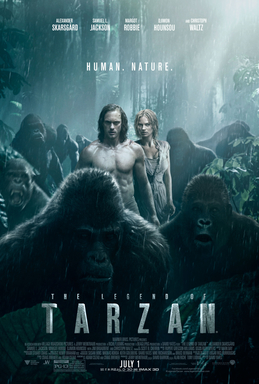
Cast and characters
The film stars Alexander Skarsgård as John Clayton III, Lord Greystoke (Tarzan) and Margot Robbie as Jane Porter Clayton, his wife. The antagonist is portrayed by Christoph Waltz, a ruthless figure whose actions drive much of the plot. Samuel L. Jackson appears as George Washington Williams, an African-American investigator and ally who brings a different perspective to the expedition. Additional supporting performers round out a cast tasked with balancing adventure set pieces and political intrigue.
Production and adaptation
Screenwriters Stuart Beattie, Craig Brewer, John Collee, and Adam Cozad developed a screenplay that is less a straight remake than another adaptation of Burroughs' material, borrowing themes and characters from earlier films while introducing new plot elements. Some viewers compare it to previous cinematic takes, including Greystoke: The Legend of Tarzan, Lord of the Apes (1984), though the 2016 picture aims for a modern tone, with digital effects used to create animal behavior and dense jungle environments and practical stunts for the human action sequences.
Themes and distinctions
Rather than focusing solely on the 'jungle hero' trope, the film explores post-colonial tensions, the exploitation of natural resources and local populations, and questions of identity as Tarzan navigates British high society and his place in Africa. It mixes pulpy adventure with political undertones, attempting to balance spectacle—chases, fights, and large set pieces—with commentary on the historical era it evokes.
Release and reception
Released in mid-2016, the movie attracted attention for its visual design and big-name cast. Critical responses were mixed: reviewers often praised the production values and performances while noting that the screenplay and tone did not satisfy all expectations. Audiences were drawn to the film's action elements and the familiar appeal of the Tarzan character, leading to a broad international release and discussions about how classic adventure characters are reinterpreted for modern viewers.
Notable facts
- The film is part of a long lineage of Tarzan adaptations that span silent cinema, serialized films, animated features, and modern blockbusters.
- Its approach treats Tarzan as a returnee to the jungle rather than a newcomer—an angle that allows exploration of cultural and personal reintegration.
- Cast and crew interviews and production features provide context for the choices made in tone and visual style; readers seeking more detail can consult official press materials and interviews linked by studios and film outlets.
For further details about the cast, production history, and analysis of themes and historical context, see studio notes and reputable film criticism sources linked from promotional materials and film archives.
Related articles
Author
AlegsaOnline.com The Legend of Tarzan (2016 film) Leandro Alegsa
URL: https://en.alegsaonline.com/art/98332
Sources
- hollywoodreporter.com : "Warner Bros. Sets Release Date for Its 3D 'Tarzan' Movie"